


Table of Contents
When we think of cars, we often imagine speed, power, and performance. Automakers around the world are constantly racing to build the fastest vehicles on the planet. But what about the other end of the spectrum, the slowest car in the world? Surprisingly, these cars are not just quirky or outdated. They play important roles in transportation, urban design, and environmental awareness. Let’s take a fun, simple, and detailed look at these slow-moving legends and what makes them special.
What Does “Slowest Car” Really Mean?
Being the slowest car doesn’t just mean bad performance or weak engines it’s usually a deliberate design choice. These vehicles are built for specific purposes where speed isn’t needed like small city commutes or license-free driving.
Most slow cars share a few things in common:
- Very small engines
- Lightweight designs
- Focus on efficiency and practicality instead of power
They may not win any races, but they excel in simplicity, affordability, and convenience.
Historic Slow Cars: Where It All Began
The Peel P50 – The Famous Tiny Car
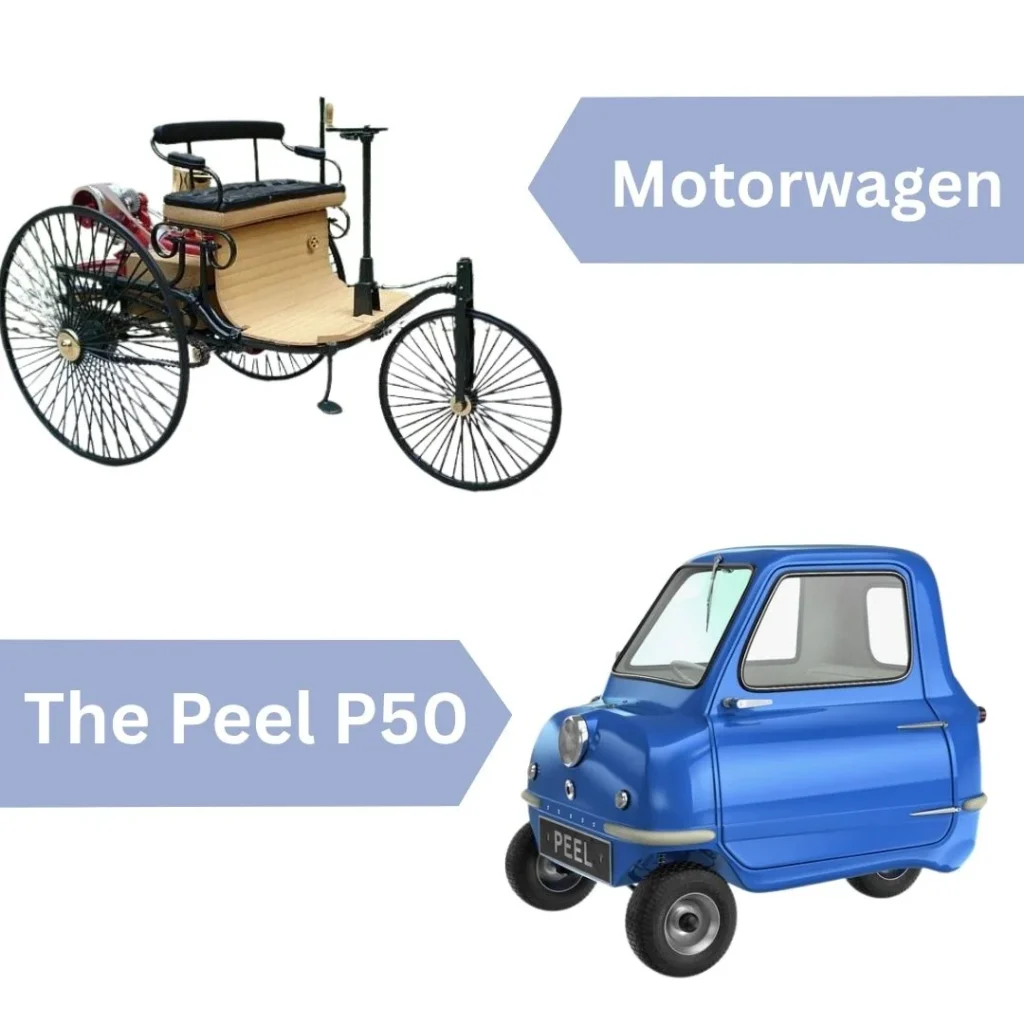
If we’re talking about the slowest cars ever made, we have to start with the Peel P50. Built between 1962 and 1965 on the Isle of Man, this little car still holds the Guinness World Record for the smallest production car. Powered by a 49cc single-cylinder engine producing just 4.2 horsepower, the P50 can reach a “blistering” top speed of 28 mph (45 km/h). It’s so small that you can literally park it indoors!
Early Cars – The First Slow Movers
The earliest cars were also incredibly slow. For example, Karl Benz’s Patent-Motorwagen from 1885 could only go about 10 mph. But that didn’t matter; it was revolutionary at the time, proving that cars could replace horse-drawn carriages.
Famous Slow Cars Compared
| Vehicle Model | Top Speed | Engine Power | Production Years | Purpose |
| Peel P50 | 28 mph | 4.2 hp | 1962–1965 | Urban commuting |
| Peel Trident | 28 mph | 4.2 hp | 1965–1966 | City transport |
| Aixam Coupe | 28 mph | 5.4 hp | 1983–present | License-free driving |
| Renault Twizy | 50 mph | 17 hp | 2012–present | Urban mobility |
| Citroën Ami | 28 mph | 8 hp | 2020–present | City/teenage transport |
From the tiny Peel P50 to the Renault Twizy, these slow-speed vehicles prove design matters more than power — but if your own ride feels underpowered, a tested used transmission might be exactly what it needs to move smoothly again.
Modern Slow Cars: Built for Today’s Cities
License-Free Microcars
In many parts of Europe, you can drive small “microcars” like Aixam or Ligier without a full driver’s license. These vehicles are limited to around 28 mph (45 km/h), making them safe and practical for short city trips. They’re especially popular among teenagers or people who can’t get a regular driver’s license.
Electric City Cars
New electric cars like the Citroën Ami are also redefining slow mobility. They’re compact, eco-friendly, easy to park, and ideal for busy city streets. In short, they show that slow driving can be smart driving.
Why Slow Cars Still Matter?
Even though they’re not fast, slow cars come with plenty of benefits:
- Safer – Lower speeds mean fewer and less severe accidents.
- Fuel-Efficient – Small engines use less fuel or electricity.
- Perfect for Cities – Great for traffic, parking, and short trips.
- Eco-Friendly – Lower emissions and smaller carbon footprints.
- Affordable – Both to buy and maintain.
The Challenge of Designing a Slow Car
Designing the world’s slowest car isn’t as simple as putting in a small engine. Engineers have to make sure the car is:
- Safe enough for roads
- Comfortable and practical to use
- Affordable to produce and maintain
- Compliant with local driving laws
Balancing all these factors makes creating a good slow car quite an engineering challenge.
The Future of Slow Cars
As cities become more crowded and the world focuses on sustainability, slow cars might be making a comeback. The future of slow cars is likely to focus on sustainability, nostalgia, and community rather than speed or performance. As electric vehicles dominate the market, many enthusiasts and manufacturers may embrace slower cars both classic and purpose-built for their charm, efficiency, and connection to simpler driving experiences.
Urban environments, with lower speed limits and eco-friendly policies, could encourage the rise of compact, low-speed electric vehicles designed for short commutes and minimal environmental impact. Additionally, slow cars may find renewed cultural value as symbols of mindfulness and enjoyment, offering a counterpoint to the fast-paced nature of modern life and technology.
Conclusion
The world’s slowest cars remind us that speed isn’t everything. From the tiny Peel P50 to modern electric microcars like the Citroën Ami, these vehicles prove that practicality, safety, and sustainability can matter more than horsepower. Built for efficiency and urban life, slow cars highlight how smart design can make transportation simpler, greener, and more accessible.
As cities evolve and environmental awareness grows, the slow car stands not as a relic of the past, but as a thoughtful vision of the future where driving slowly might just be the smartest move of all. Beyond their modest speeds, these cars encourage us to slow down, appreciate the journey, and embrace a lifestyle that values balance over rush. In a world constantly chasing speed and progress, slow cars remind us that sometimes, taking it slow can lead us exactly where we need to go.
Frequently Asked Questions
-
What’s the slowest car in the world?
The Peel P50 is widely recognized as one of the slowest cars ever, with a top speed of just 28 mph.
-
Can you drive a slow car on regular roads?
Yes, but some are restricted to local or urban areas depending on the country’s regulations.
-
Why would anyone buy such a slow car?
They’re cheap, fuel-efficient, easy to drive, and perfect for short city trips.
-
Are slow cars allowed on highways?
Usually not. Most are too slow to safely drive on highways.
-
How much does one cost?
Prices vary around $6,000 for used models to $10,000–$15,000 for new electric versions like the Citroën Ami.

