


Table of Contents
If you own a Ford truck with a diesel engine, chances are you’ve heard about the PowerStroke. This legendary diesel engine has powered Ford’s heavy-duty trucks for decades, earning a reputation for incredible towing power and durability. Whether you’re hauling equipment for work or towing your family’s camper on weekend adventures, understanding your PowerStroke engine helps you maintain it properly and get the best performance possible.
In this comprehensive guide, we’ll explore everything you need to know about the PowerStroke diesel engine, including the most popular versions like the 7.3 PowerStroke, 6.0 PowerStroke, 6.4 PowerStroke, and the modern 6.7 PowerStroke. Let’s dive into what makes these engines special and how to keep them running strong.
What is a PowerStroke Diesel Engine?
The PowerStroke is Ford’s brand name for diesel engines used in their Super Duty trucks. Ford introduced the Power Stroke name in 1994, and it quickly became one of the most recognized diesel engines in America. These engines are designed specifically for heavy-duty work, offering massive torque for towing and hauling.
Unlike regular gasoline engines, the Power Stroke diesel engine uses compression ignition, which means it doesn’t need spark plugs. Instead, it compresses air until it’s hot enough to ignite the diesel fuel automatically. This process creates incredible pulling power, which is why diesel trucks are so popular for construction, farming, and recreational towing.
The PowerStroke has evolved through several generations, each bringing improvements in power, fuel efficiency, and emissions control. From the legendary 7.3 PowerStroke that started it all to today’s advanced 6.7 Power Stroke, these engines have consistently delivered the performance truck owners demand.

The Legendary 7.3 PowerStroke (1994-2003)
The 7.3 PowerStroke holds a special place in diesel truck history. Many enthusiasts consider it the most reliable Power Stroke ever built. This engine powered Ford Super Duty trucks from 1994 through 2003, and you’ll still see plenty of them on the road today.
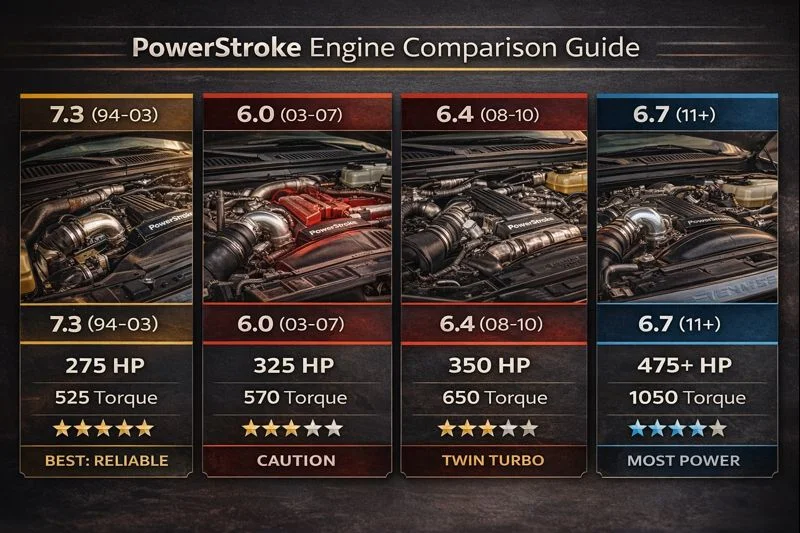
The 7.3 PowerStroke produced between 210 to 275 horsepower and 425 to 525 lb-ft of torque, depending on the year and configuration. While those numbers might seem modest compared to modern diesels, the 7.3 Power Stroke was known for its bulletproof reliability and simple design.
What made the 7.3 Power Stroke so dependable? It used a mechanical fuel injection system called HEUI (Hydraulically actuated Electronically controlled Unit Injector), which was simpler than today’s high-pressure common rail systems. The engine had fewer emission controls and electronic components that could fail.
Many 7.3 Power Stroke engines have exceeded 300,000 miles with proper maintenance. Truck owners love these engines because they’re relatively easy to work on and parts are still readily available. If you’re looking for a used diesel truck, a well-maintained 7.3 Power Stroke is still an excellent choice. Just like maintaining other critical engine components such as the Ford F-250 engine, regular care keeps these diesels running forever.
The Controversial 6.0 PowerStroke (2003-2007)
The 6.0 Power Stroke replaced the beloved 7.3 in 2003, and it had a rocky start. This engine introduced several new technologies to meet stricter emissions standards, but many of these systems caused reliability problems for owners.
The 6.0 Power Stroke produced 325 horsepower and 570 lb-ft of torque initially, with later versions reaching 365 horsepower. The increased power was impressive, but the engine gained a reputation for expensive repairs.
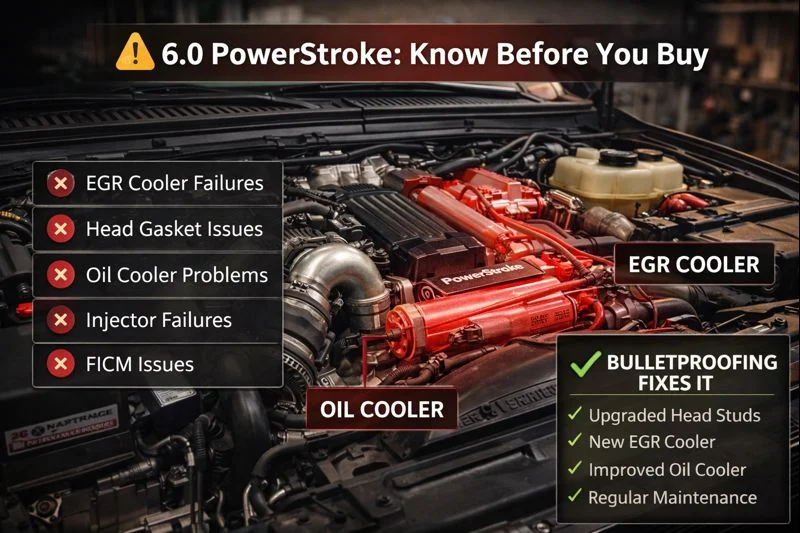
Common problems with the 6.0 Power Stroke included:
EGR cooler failures – The exhaust gas recirculation cooler would crack and leak coolant into the exhaust system, causing overheating and potential engine damage.
Head gasket issues – The factory head bolts were prone to stretching, leading to blown head gaskets and coolant mixing with oil.
Oil cooler problems – The oil cooler could clog and restrict oil flow, causing serious engine damage.
Injector failures – The high-pressure fuel injectors would stick or fail, causing rough running and poor performance.
FICM issues – The Fuel Injection Control Module could fail, preventing the engine from starting or running properly.
Despite these problems, the 6.0 PowerStroke can be reliable when properly maintained and “bulletproofed.” Many owners install upgraded head studs, improved EGR coolers, and better oil coolers to address the weak points. A bulletproofed 6.0 Power Stroke can be a strong performer, but it requires investment and knowledge.
The Improved 6.4 PowerStroke (2008-2010)
Ford introduced the 6.4 Power Stroke in 2008, hoping to address the problems that plagued the 6.0 PowerStroke. This engine featured a compound turbocharger system with two turbos working together, delivering impressive power and quick throttle response.
The 6.4 PowerStroke produced 350 horsepower and 650 lb-ft of torque, making it the most powerful Power Stroke at that time. The twin-turbo setup meant less turbo lag and stronger acceleration compared to previous diesel engines.
However, the 6.4 Power Stroke brought its own set of challenges. The engine used a diesel particulate filter (DPF) to reduce emissions, which required periodic regeneration cycles. During regeneration, the engine would inject extra fuel to burn off soot in the filter, dramatically reducing fuel economy.
Common 6.4 PowerStroke problems included:
DPF and emissions issues – The regeneration system was complex and prone to problems, sometimes clogging the filter completely.
Cracked pistons – Some 6.4 Power Stroke engines experienced piston failures, especially in trucks used for heavy towing.
Radiator problems – The radiators were prone to cracking at the plastic end tanks, causing coolant leaks.
Turbocharger failures – The compound turbo system, while powerful, could be expensive to repair when problems occurred.
The 6.4 PowerStroke only lasted three years in production before Ford moved on to a completely new design. While it offered great power, the reliability concerns and poor fuel economy during regeneration made it less popular than other PowerStroke generations.
The Modern 6.7 PowerStroke (2011-Present)
In 2011, Ford made a major change by designing and building their own diesel engine in-house. The 6.7 PowerStroke was Ford’s first completely self-manufactured diesel, and it represented a fresh start after the troubled 6.0 and 6.4 engines.
The 6.7 PowerStroke has been continuously improved since its introduction. Current versions produce over 475 horsepower and an incredible 1,050 lb-ft of torque, making it one of the most powerful diesel engines available in any pickup truck.
The 6.7 PowerStroke features several advanced technologies:
Compacted graphite iron block – This material is stronger than regular cast iron, allowing the engine to handle extreme cylinder pressures.
Reverse-flow head design – Coolant flows through the head before the block, improving temperature management and reducing emissions warm-up time.
Single sequential turbocharger – Unlike the 6.4’s twin turbos, the 6.7 Power Stroke uses one variable-geometry turbo for reliability and efficiency.
High-pressure common rail injection – Fuel pressure reaches 29,000 PSI, enabling precise injection timing and better fuel economy.
The 6.7 PowerStroke has proven much more reliable than its immediate predecessors. While no engine is perfect, owners report far fewer catastrophic failures compared to the 6.0 and 6.4 generations. Regular maintenance, especially keeping up with transmission fluid changes, helps these modern diesels last for hundreds of thousands of miles.
PowerStroke Performance and Towing Capability
One of the biggest reasons truck owners choose a Power Stroke is for towing capacity. Diesel engines produce maximum torque at low RPMs, making them ideal for pulling heavy trailers, equipment, and campers.
A modern Ford Super Duty with a 6.7 PowerStroke can tow over 37,000 pounds when properly equipped. Even older 7.3 PowerStroke trucks could tow 12,000 to 15,000 pounds, which was impressive for their time.
The Power Stroke diesel engine delivers its power differently than gas engines. While a gasoline engine might need to rev to 4,000 or 5,000 RPM for maximum power, a Power Stroke makes peak torque around 1,800 RPM. This low-end grunt means you can pull heavy loads up steep grades without constantly downshifting or running the engine hard.
This characteristic makes the Power Stroke perfect for work trucks. Whether you’re hauling construction materials, towing a horse trailer, or pulling a fifth-wheel camper across the country, the diesel torque makes the job easier and less stressful on the engine.
PowerStroke Fuel Economy
Diesel engines typically get better fuel economy than comparable gasoline engines, and the Power Stroke is no exception. However, actual mileage varies significantly depending on the generation, how you drive, and what you’re towing.
The 7.3 PowerStroke typically achieved 14-18 MPG highway when not towing, with city mileage around 10-12 MPG. These numbers were good for a heavy-duty truck in the 1990s and early 2000s.
The 6.0 PowerStroke and 6.4 Power Stroke generally saw similar economy, though the 6.4’s DPF regeneration cycles could drastically reduce mileage during those periods. Some owners reported fuel economy dropping to single digits during active regeneration.
The modern 6.7 Power Stroke offers the best fuel economy of any Power Stroke generation. Owners typically report 15-20 MPG highway and 12-15 MPG in mixed driving when not towing. When pulling heavy trailers, expect mileage to drop to 8-12 MPG depending on trailer weight and terrain.
Remember that diesel fuel costs fluctuate, and sometimes diesel is more expensive than gasoline. Calculate your total fuel costs based on current prices in your area, not just MPG numbers.
Common PowerStroke Maintenance Requirements
Proper maintenance is critical for Power Stroke longevity, regardless of which generation you own. Diesel engines require more frequent oil changes than gas engines because diesel fuel creates more combustion byproducts.
Oil changes should happen every 5,000 miles for older Power Stroke engines and every 10,000 miles for newer 6.7 PowerStroke models (though many owners change oil more frequently). Always use the correct diesel-rated oil with the proper viscosity.
Fuel filter changes are essential every 10,000-15,000 miles. The Power Stroke fuel system operates at extremely high pressures, and contaminated fuel can damage expensive injectors. Some owners change fuel filters even more often, especially when fueling at questionable stations. Keeping up with maintenance items like checking your valve cover gasket for leaks prevents bigger problems down the road.
Coolant system maintenance prevents many Power Stroke problems, especially on 6.0 engines prone to EGR cooler failures. Flush and replace coolant according to Ford’s schedule using the correct diesel coolant.
Air filter changes should happen regularly, especially if you drive in dusty conditions. The Power Stroke moves a lot of air, and a restricted air filter reduces performance and fuel economy.
Transmission service is equally important since Power Stroke trucks put tremendous stress on transmissions during towing. Change transmission fluid according to the maintenance schedule, or more frequently if you tow heavy loads regularly.
PowerStroke vs Other Diesel Engines
How does the Power Stroke stack up against competitors like the Cummins (found in Ram trucks) and Duramax (found in GM trucks)? Each diesel has its strengths and loyal following.
The Cummins, particularly the 5.9L and 6.7L versions, has an excellent reputation for longevity and simple inline-six design. Many consider Cummins the most reliable diesel available, though the Power Stroke has closed the gap with the 6.7 generation.
The Duramax, especially newer models, offers impressive power and refinement. GM trucks with Duramax engines often feel smoother and quieter than Power Stroke trucks, though some argue they sacrifice durability for refinement.
The Power Stroke’s biggest advantage is Ford’s superior truck platform. Many buyers prefer Ford’s chassis, interior, and towing features, making the Power Stroke the best diesel choice specifically for Ford trucks. Similar to how different engines serve different purposes, like the LS engines in performance applications, each diesel has its ideal use case.
Should You Buy a Used Power Stroke?
Buying a used truck with a Power Stroke can be a great value, but you need to be careful about which generation you choose and the truck’s maintenance history.
Best used PowerStroke: The 7.3 PowerStroke (1994-2003) is generally the safest bet for a used diesel. These engines are proven reliable, and most problems have been addressed over the years. Look for trucks with maintenance records showing regular oil changes and cooling system service.
Use caution: The 6.0 PowerStroke (2003-2007) can be a good deal if it’s been bulletproofed with upgraded components. However, avoid 6.0 trucks without documented repairs unless you’re prepared to invest in prevention. An unmaintained 6.0 PowerStroke is a ticking time bomb.
Proceed carefully: The 6.4 PowerStroke (2008-2010) is the riskiest used purchase. These engines have expensive failure points, and replacement costs can exceed the truck’s value. Only consider a 6.4 if it’s been meticulously maintained and you get a great price.
Good value: Used 6.7 PowerStroke trucks (2011-present) are becoming more affordable and represent good value. Early 6.7 engines had some teething issues, but 2015 and newer models are generally reliable. These trucks offer modern power and technology at used prices.
Always get a pre-purchase inspection by a diesel mechanic familiar with Power Stroke engines before buying any used diesel truck.
PowerStroke Modifications and Upgrades
Many Power Stroke owners enjoy modifying their trucks for increased performance. Diesel tuning can significantly boost horsepower and torque, but modifications come with risks and considerations.
Tuners and programmers can add 50-150+ horsepower by adjusting fuel delivery, turbo boost, and timing. While this extra power is exciting, aggressive tuning can shorten engine life and void warranties.
Cold air intakes allow the engine to breathe better, potentially adding small power gains and improved throttle response. They also make the turbo sound more aggressive, which many owners enjoy.
Exhaust upgrades reduce backpressure and lower exhaust gas temperatures during towing. A good exhaust system can improve towing performance and fuel economy while adding a deeper sound.
Lift pumps supplement the factory fuel system, ensuring adequate fuel pressure for modified injectors or tuning. They’re especially popular on 6.0 and 6.7 Power Stroke trucks.
Remember that deleting emissions equipment (DPF, EGR, etc.) is illegal for on-road vehicles and can result in significant fines. While some owners do this for performance or reliability reasons, it violates federal law and most state regulations.
PowerStroke Reliability: What to Expect
Power Stroke reliability varies dramatically depending on which engine you have and how well you maintain it.
The 7.3 PowerStroke is legendary for reliability, with many trucks exceeding 400,000 miles. Proper maintenance is key, but these engines are forgiving and simple to work on.
The 6.0 PowerStroke has the worst reliability reputation, but bulletproofed examples can be very dependable. Expect to invest $3,000-$5,000 in preventive upgrades if you want peace of mind with a 6.0.
The 6.4 PowerStroke falls somewhere in the middle. It’s more reliable than the 6.0 but less proven than the 7.3 or modern 6.7. Budget for potential repairs if you own one.
The 6.7 PowerStroke has proven reliable in real-world use, especially 2015 and newer models. Ford addressed early issues, and current 6.7 engines are holding up well to high mileage and heavy use.Regardless of which Power Stroke you own, following the maintenance schedule religiously gives you the best chance of trouble-free ownership. Understanding your truck’s needs, similar to knowing how often to rotate tires, prevents expensive surprises.
For more in-depth insights on engine reliability, common engine problems, and replacement decisions, explore our complete collection of engine guides.
Conclusion
The PowerStroke diesel engine has powered millions of Ford trucks through decades of hard work and adventure. From the bulletproof 7.3 PowerStroke that started the legacy to the powerful modern 6.7 PowerStroke dominating today’s market, these engines represent some of the best diesel technology available.
Each PowerStroke generation has its own character, strengths, and weaknesses. The 7.3 PowerStroke offers unmatched simplicity and reliability. The 6.0 PowerStroke provides good power when properly maintained. The 6.4 PowerStroke delivers impressive performance despite some reliability concerns. And the 6.7 PowerStroke combines modern technology with strong durability.
Frequently Asked Questions
-
What is the best PowerStroke engine ever made?
Most diesel enthusiasts agree the 7.3 PowerStroke (1994-2003) is the most reliable and durable version ever built. Its simple mechanical design and lack of complex emissions equipment made it nearly bulletproof.
-
How long do PowerStroke engines last?
With proper maintenance, Power Stroke engines can easily exceed 300,000 miles. The 7.3 PowerStroke commonly reaches 400,000+ miles, while well-maintained 6.7 PowerStroke engines are showing similar longevity potential.
-
What are the common problems with 6.7 PowerStroke?
The 6.7 PowerStroke is generally reliable, but common issues include CP4 fuel pump failures (which can contaminate the entire fuel system), turbocharger problems on early models, EGR cooler clogging, and DPF regeneration issues.
-
Is the 6.0 PowerStroke really that bad?
The 6.0 PowerStroke earned its poor reputation due to multiple design flaws affecting head gaskets, EGR coolers, oil coolers, and injectors. However, a “bulletproofed” 6.0 with upgraded components can be reliable and powerful.
-
How much does it cost to maintain a PowerStroke?
Basic maintenance costs $150-300 per oil change for diesel-rated oil and filters, plus fuel filter changes every 10,000-15,000 miles at $50-100. Budget $500-1,000 annually for routine maintenance.