
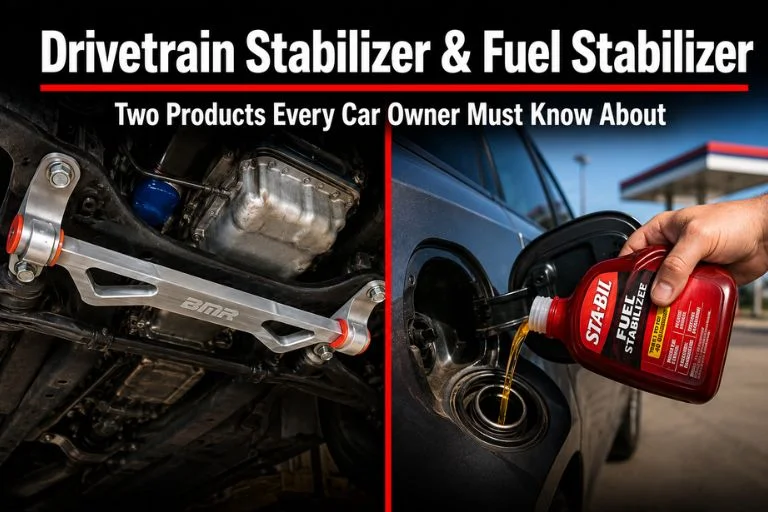

Most vehicle owners spend considerable time and money on visible maintenance items — oil changes, tire rotations, brake pads. But two products that sit quietly beneath the radar of most service checklists deliver enormous value to vehicle longevity, performance, and protection: the drivetrain stabilizer and the fuel stabilizer. Although these two products serve entirely different purposes and address completely different systems within the vehicle, together they form one of the most powerful maintenance combinations any car owner can implement.
This complete guide explains exactly what a drivetrain stabilizer is, how it works, when you need one, and everything you need to know about fuel stabilizer for car fuel systems — from what gas stabilizer does chemically to how to use petrol stabilizer correctly for extended vehicle storage.
What Is a Drivetrain Stabilizer?
A drivetrain stabilizer — commonly abbreviated as DTS — is an aftermarket mechanical component that limits excessive torsional movement of the engine and transmission assembly under load. It is typically constructed from CNC-machined aircraft-grade aluminum or high-tensile steel and uses polyurethane or rubber bushings to mount rigidly between the drivetrain and the vehicle’s undercarriage using existing factory mounting points.
To understand why a drivetrain stabilizer matters, you first need to understand what the drivetrain actually does under load. Every time you accelerate, your engine generates torque. That torque is transmitted through the transmission and into the drivetrain to turn the wheels. Under this rotational load, the engine and transmission assembly naturally attempts to rotate in the opposite direction of the crankshaft — a phenomenon called torque reaction. In vehicles with standard rubber engine mounts, this torque reaction causes the entire powertrain assembly to shift, rock, and twist noticeably during acceleration, braking, and aggressive driving.
A drivetrain stabilizer adds a fixed, rigid connection point between the drivetrain and the chassis that prevents this excessive movement from occurring. By limiting unwanted drivetrain rotation, the DTS keeps the engine and transmission in a more consistent, controlled position throughout all driving conditions — directly improving the mechanical precision of every drivetrain input.
What Does a Drivetrain Stabilizer Do? — Key Benefits
The benefits of installing a drivetrain stabilizer extend beyond simply reducing vibration. Here is what a well-designed DTS delivers to any vehicle it is fitted to:
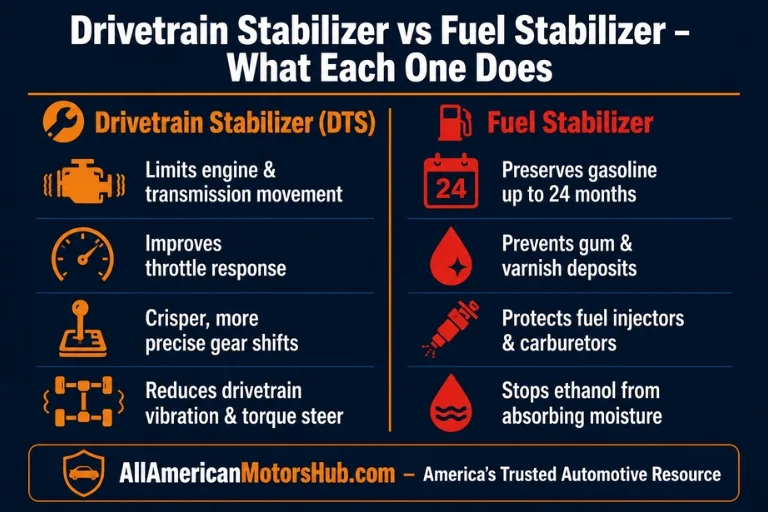
Crisper, More Precise Gear Shifts When the drivetrain moves excessively under acceleration, the shift linkage geometry changes momentarily because the entire transmission has shifted position. This produces vague, imprecise gear changes that feel sloppy and require more effort. A drivetrain stabilizer holds the transmission in its correct geometric position at all times, resulting in dramatically crisper and more positive gear engagement on both manual and automatic transmissions.
Improved Throttle Response Excessive drivetrain movement under acceleration absorbs a small but meaningful amount of energy as the mounts flex and the assembly rocks. A drivetrain stabilizer eliminates this energy loss by holding everything rigidly in place, allowing throttle inputs to translate more immediately and directly into wheel power. Drivers who install a DTS consistently report a noticeably sharper and more responsive throttle feel compared to the stock configuration.
Reduced Torque Steer In front-wheel-drive and all-wheel-drive vehicles, excessive drivetrain movement under hard acceleration contributes directly to torque steer — the tendency of the steering wheel to pull toward one side during aggressive acceleration. By controlling drivetrain movement, the DTS reduces this tendency and delivers a more composed, predictable steering response under power.
Less Vibration in the Cabin While this may seem counterintuitive — adding a rigid component to a system designed with flexible mounts — a properly engineered drivetrain stabilizer actually reduces cabin vibration by controlling the chaotic, unpredictable drivetrain movement that occurs without it. The result is a noticeably more refined and settled feel from the driver’s seat during acceleration and deceleration cycles.
More Power to the Ground By eliminating the energy absorbed by flexing mounts and drivetrain rocking, more of the engine’s power output reaches the wheels more efficiently. This is particularly noticeable on modified or high-output engines where drivetrain movement under load is more pronounced than on stock applications.
Who Needs a Drivetrain Stabilizer?
A drivetrain stabilizer is most beneficial in specific situations where drivetrain movement under load is pronounced or where precision drivetrain response is particularly valuable:
Modified or High-Performance Vehicles Any engine producing significantly more torque than the original factory specification — through turbocharger upgrades, engine swaps, or performance tuning — will generate a more severe torque reaction than the stock motor mounts were designed to control. A drivetrain stabilizer is an essential complement to any power-adding modification.
High-Mileage Vehicles With Worn Motor Mounts As rubber motor mounts age, they soften, crack, and allow increasingly excessive drivetrain movement. While the correct fix is motor mount replacement, a drivetrain stabilizer can support aging mounts and partially compensate for their reduced effectiveness while extending their remaining service life.
Manual Transmission Enthusiasts Drivers who value precise, mechanical-feeling gear changes benefit most directly from the DTS’s transmission positioning advantage. If you are a driver who takes satisfaction in clean, rifle-bolt gear shifts, a drivetrain stabilizer is one of the most meaningful mechanical upgrades you can make to a manual transmission vehicle.
Track and Autocross Competitors In competitive driving environments, every element of drivetrain precision matters. A DTS reduces the variables that compromise consistent power delivery and shift quality when the drivetrain is under sustained high-load conditions during lap after lap.
If your vehicle is exhibiting rough shifting symptoms or drivetrain vibration, it is worth checking whether worn transmission components are contributing to the issue. Explore our signs your transmission is going bad to identify whether the problem is mount-related or whether the transmission itself requires attention.
What Is a Fuel Stabilizer for Car Fuel Systems?
While the drivetrain stabilizer protects your vehicle’s mechanical drivetrain components, the fuel stabilizer protects your vehicle’s fuel system chemistry. These are entirely separate products addressing entirely different problems — but both are critical to long-term vehicle health.
A fuel stabilizer for car applications is a petroleum-based chemical additive that is mixed directly into the fuel tank to slow the natural degradation process that gasoline undergoes when stored for extended periods. Modern gasoline — particularly ethanol-blended fuels — begins breaking down through oxidation in as little as 30 days when left sitting in a tank or container. As gasoline degrades, it forms sticky gum and varnish deposits that clog fuel injectors, coat carburetor passages, and leave residue throughout the fuel delivery system.
A fuel stabilizer works by introducing a concentrated blend of antioxidants and lubricants into the fuel that chemically bonds with the gasoline molecules. This bonded protective layer dramatically slows the oxidation and evaporation processes, keeping the fuel chemically stable and combustible for significantly longer than untreated gasoline would remain usable.
How Does Gas Stabilizer Work — The Chemistry Explained
Understanding the chemistry behind a gas stabilizer explains why it is genuinely effective rather than simply a marketing claim:
Oxidation Prevention Gasoline naturally reacts with oxygen in the air above the fuel in a process called oxidation. Over time, this oxidation transforms certain hydrocarbon compounds in the gasoline into heavier, gummy substances. Antioxidant compounds in the fuel stabilizer interrupt this chemical reaction by reacting with the oxidizing agents before they can attack the fuel itself — sacrificing themselves chemically to protect the gasoline from degradation.
Evaporation Reduction The most volatile, highly flammable components of gasoline evaporate first when fuel sits unused. As these light components leave, the remaining fuel becomes increasingly difficult to ignite reliably. The lubricant component of fuel stabilizer reduces evaporation by coating the fuel surface, reducing the rate at which volatile compounds escape into the air above the tank.
Water Separation and Protection Ethanol-blended fuels — which now represent the vast majority of gasoline sold at US pumps — are hygroscopic, meaning they actively absorb moisture from the surrounding air. This water absorption leads to phase separation, where the water-ethanol mixture separates from the pure gasoline and sinks to the bottom of the tank. Water in the fuel causes starting problems, corrosion of metal fuel system components, and poor combustion. Quality fuel stabilizers for gasoline include water-dispersing agents that prevent phase separation and protect metal components from moisture-induced corrosion.
Injector and Carburetor Protection As degraded gasoline flows through the fuel system, it deposits gum and varnish residue on injector tips, needle valves, carburetor jets, and other precision fuel delivery components. These deposits restrict fuel flow, upset the air-fuel ratio calibration, and ultimately cause hard starting and rough running. By preventing fuel degradation in the first place, a fuel stabilizer for car applications eliminates the source of these deposits entirely.
Petrol Stabilizer for Extended Vehicle Storage — When and How to Use It
The primary use case for petrol stabilizer and gas stabilizer is long-term vehicle storage — any situation where a vehicle will sit unused for 30 days or longer without being driven regularly.
Classic car owners, seasonal vehicle collectors, motorcycle owners storing through winter, boat owners at season end, and anyone deploying away from their vehicle for an extended period all benefit directly from adding a fuel stabilizer before parking the vehicle.
When to Add Fuel Stabilizer The optimal time to add fuel stabilizer is at the beginning of the storage period with a full or near-full tank of fresh fuel. Adding stabilizer to fresh gasoline — not fuel that has already been sitting for weeks — provides the maximum protective benefit. Starting with fresh, high-quality fuel gives the stabilizer the best possible base to protect.
How Much to Use Most quality fuel stabilizers for gasoline follow a dosing ratio of approximately one ounce of stabilizer per two to two-and-a-half gallons of fuel. Always follow the specific product instructions, as concentration ratios vary between brands and formulations. Under-dosing reduces effectiveness; over-dosing beyond the recommended concentration provides minimal additional benefit.
How to Apply It Correctly Add the correct measured amount of fuel stabilizer directly into the fuel tank before the final fuel fill-up. Fill the tank to near capacity to minimize the air space above the fuel — reducing oxygen exposure helps the stabilizer work most effectively. Start the engine and run it for five to ten minutes after adding the stabilizer to allow the treated fuel to circulate completely through the fuel pump, injectors, and entire fuel delivery system. This ensures the protective compounds reach every component in the circuit rather than only protecting fuel sitting in the tank.
How Long Does Fuel Stabilizer Last? Quality fuel stabilizers protect stored gasoline for up to 12 to 24 months depending on the brand, concentration used, and storage conditions. Vehicles stored in cool, dry environments with minimal temperature fluctuation benefit from the longest protection windows. Vehicles stored in humid, warm environments experience faster fuel degradation and should use the higher end of the recommended stabilizer dose for maximum protection.
For vehicles being returned to service after extended storage, understanding what other maintenance items may need attention after a long sit is important. Our full car maintenance checklist covers every system that should be inspected and refreshed before returning a stored vehicle to active use.
Fuel Stabilizer for Gasoline vs. Other Fuel Types
Fuel stabilizers are not one-size-fits-all products. The correct formulation depends on the fuel type used in your specific vehicle:
Gasoline Stabilizer Standard gasoline stabilizers are formulated for regular and premium unleaded gasoline, including ethanol-blended fuels up to E10 and E15. Most mainstream brands — including STA-BIL, Sea Foam, and Star Tron — are specifically optimized for gasoline applications.
Ethanol Fuel Stabilizer For vehicles running higher ethanol blends such as E85 flex-fuel, specialized ethanol-compatible stabilizers are available that address the accelerated oxidation and water absorption rates characteristic of high-ethanol content fuels. Using a standard gasoline stabilizer with E85 provides limited protection compared to an ethanol-specific formulation.
Diesel Fuel Stabilizer Diesel fuel degrades differently than gasoline — the primary concerns are microbial growth, paraffin wax crystallization in cold temperatures, and oxidation. Diesel-specific stabilizers address all three issues simultaneously and should never be substituted with a gasoline-formulated product.
Always match the fuel stabilizer to your vehicle’s fuel type for maximum effectiveness and to avoid potential chemical incompatibility with fuel system components.
Using Drivetrain Stabilizer and Fuel Stabilizer Together
For vehicle owners who want complete mechanical and fuel system protection, combining a drivetrain stabilizer installation with a fuel stabilizer regimen creates a comprehensive maintenance approach that covers both the mechanical drivetrain and the fuel chemistry simultaneously.
The drivetrain stabilizer is a one-time installation that permanently improves drivetrain precision for the life of the vehicle. The fuel stabilizer is a periodic addition used whenever the vehicle will be stored for 30 days or more or when the existing tank of gasoline is approaching its usable age limit.
Together, these two products address two completely different vulnerability points in any vehicle — the mechanical stress on drivetrain components under load, and the chemical degradation of the fuel that powers the engine. For classic car enthusiasts, fleet managers, and performance-oriented drivers, implementing both represents a genuinely comprehensive approach to vehicle preservation and performance optimization.
If your vehicle has suffered drivetrain or engine damage from a period of neglect — whether mechanical or fuel-related — our full selection of quality used engines for sale and used transmissions offers reliable, inspected replacement components at a fraction of the cost of new parts.
Conclusion
The drivetrain stabilizer and the fuel stabilizer are two of the most underappreciated yet genuinely impactful products available to any vehicle owner. The drivetrain stabilizer protects your mechanical drivetrain from the damaging effects of torque reaction under load — delivering crisper shifts, sharper throttle response, reduced torque steer, and more precise power delivery to the wheels. The fuel stabilizer for car applications protects the chemical integrity of your gasoline — preventing oxidation, gum formation, injector deposits, and ethanol-related moisture damage during any period of extended vehicle storage.
Whether you are a daily driver looking to sharpen your vehicle’s mechanical feel, a classic car owner protecting a prized seasonal vehicle, or a performance enthusiast extracting every possible advantage from a modified drivetrain, understanding and using both of these products keeps your vehicle performing at its absolute best. Explore our full engine swap guide and serpentine belt complete guide for more in-depth coverage of the mechanical systems that work alongside your drivetrain every day.
Frequently Asked Questions
What is a drivetrain stabilizer?
A drivetrain stabilizer is an aftermarket mechanical component — typically made from CNC-machined aluminum or steel with polyurethane bushings — that bolts between the vehicle’s drivetrain assembly and the chassis. Its purpose is to limit excessive torsional movement of the engine and transmission under acceleration and braking, improving shift precision, throttle response, and overall drivetrain stability.
What does a fuel stabilizer for car applications do?
A fuel stabilizer for car use is a chemical additive mixed into the fuel tank that slows the natural oxidation and degradation of gasoline during extended storage. It prevents the formation of gum, varnish, and sticky deposits that clog fuel injectors and carburetor passages, and it protects against moisture absorption in ethanol-blended fuels. Quality fuel stabilizers keep gasoline usable for up to 12 to 24 months.
What is a gas stabilizer and when should I use it?
A gas stabilizer is the same product as a fuel stabilizer — a petroleum-based chemical additive designed to preserve gasoline quality during storage periods of 30 days or more. You should use it whenever storing a vehicle, seasonal equipment, generator, motorcycle, or boat for any extended period to prevent fuel degradation from causing hard starting and fuel system damage.
Does a drivetrain stabilizer add noise or harshness to the ride?
A properly designed drivetrain stabilizer should not add significant harshness to daily driving. Quality units use polyurethane or rubber bushing materials specifically chosen to isolate normal engine vibration while still providing the structural rigidity needed to limit excessive torque reaction movement. On heavily modified performance vehicles, firmer bushing durometers may transmit slightly more drivetrain feel into the cabin — which most performance drivers consider desirable feedback.
What is petrol stabilizer and is it the same as gas stabilizer?
Yes. Petrol stabilizer and gas stabilizer are the same product described using different regional terminology. Petrol is the term used in the United Kingdom, Australia, and other Commonwealth markets for the same fuel referred to as gasoline or gas in the United States. The product itself functions identically regardless of the regional name used.
How much fuel stabilizer for gasoline should I add to my tank?
The standard dosing ratio for most quality fuel stabilizers is one fluid ounce of stabilizer per two to two-and-a-half gallons of gasoline. Always follow the specific instructions on your chosen product, as concentration recommendations vary between brands. After adding the stabilizer, run the engine for five to ten minutes to circulate the treated fuel through the complete fuel delivery system.
Can a drivetrain stabilizer work alongside upgraded motor mounts?
Yes. A drivetrain stabilizer and upgraded motor mounts are complementary rather than redundant. Upgraded solid or stiffer motor mounts reduce drivetrain movement from the mount side, while the drivetrain stabilizer adds an additional bracing point at the chassis level. Many performance and track-oriented builders use both simultaneously for maximum drivetrain rigidity.
What happens if I do not use fuel stabilizer during storage?
Without fuel stabilizer, untreated gasoline begins degrading through oxidation within 30 days. By 60 to 90 days of storage, significant gum and varnish deposits begin forming throughout the fuel system. Ethanol-blended fuels absorb moisture and can phase-separate within weeks. The result is hard starting or complete no-start conditions, rough idle, clogged injectors, corroded fuel system components, and potentially costly fuel system cleaning or component replacement.

