
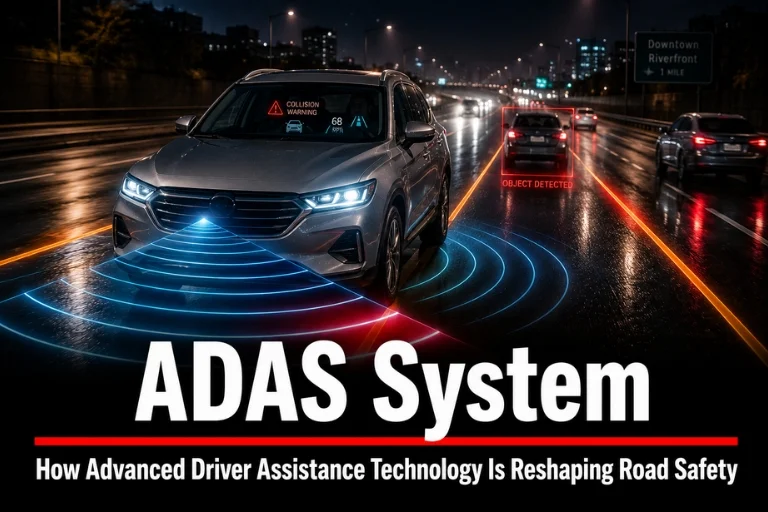

Thousands of casualties on the road cause preventable deaths every year, which could have been avoided with advanced technology. The clogged highways and the roadways are more difficult to navigate and safety innovations are no longer an option — in fact it plays a crucial role. Advanced Driver Assistance System (ADAS System) is one of the most transformative developments in the modern automobiles sector that aims to minimize human errors, enhance driver visibility and prevent crashes before they occur.
Automatic emergency braking systems, lane-keeping assist, adaptive cruise control and parking sensors are transforming how we drive with ADAS. The more vehicles incorporate this intelligent technology as the norm, the more important it is to understand how ADAS works and its effect on road safety. In this blog, we will delve into what ADAS technology is exactly, its benefits in improving driving safety, and how it will contribute to making roads safer in the future.
What Is ADAS in Cars? A Closer Look at the Technology
The ADAS is a set of electronic technologies designed to support the driver in more safely navigating and operating his or her vehicle. They employ various sensors, cameras, radar, lidar, and AI technologies to track the vehicle’s environment and either warn the driver of potential dangers or intervene automatically to prevent them. They ask what ADAS is in cars and the answer ranges from a wide variety of features.
- Automatic Emergency Braking (AEB): Senses potential crashes and provides automatic braking
- Lane Departure Warning (LDW) — warns the driver of a lane change that they are leaving the lane involuntarily
- Blind Spot Monitoring (BSM) — alerts the driver to vehicles that are in the blind spots next to and behind their car
- Rear Cameras and Parking Sensors — help when backing up and parking
- Adaptive Cruise Control with Lane Centering — keeps a safe distance behind and keeps the vehicle centered in the lane
- Curve Adaptive Headlights — beam control according to the handlebar angle, providing increased light in the nighttime
Together, these capabilities are referred to as advanced driver assistance system technology, designed to function as a co-pilot, but not a driver, and will serve as a powerful safety safeguard to complement any driver’s reaction time and the speed of the modern traffic scenario. Understanding how this technology works alongside your vehicle’s other systems — including its engine and drivetrain — is key to getting the most from your vehicle. You can learn more about how modern automotive technology interacts with your vehicle’s core systems in our internal combustion engine guide.
ADAS Technology Adoption: Where Are We Now?
New cars with these systems are coming off the assembly lines ready for use, but the rest of the passenger car market is another matter. The average age of passenger cars in the United States is currently 9.7 years, up 10.3% from 10 years ago. This implies that millions of vehicles on the road today were built before the widespread adoption of the ADAS technology. The Highway Loss Data Institute estimates that six major features of all ADAS systems will be in 50% or higher of all registered vehicles by 2029. The following is a breakdown of what is expected:
| ADAS Feature | Est. Vehicle Coverage (2024) | Est. Vehicle Coverage (2029) |
| Rear Camera | ~65% | ~78% |
| Rear Parking Sensors | ~50% | ~68% |
| Front Crash Prevention | ~42% | ~59% |
| Blind Spot Monitoring | ~38% | ~56% |
| Front Auto Emergency Braking | ~37% | ~55% |
| Lane Departure Warning | ~35% | ~54% |
| Adaptive Cruise Control + Lane Centering | ~14% | ~24% |
| Curve-Adaptive Headlights | ~9% | ~16% |
More advanced features like adaptive cruise control with lane centering and curve-adaptive headlights remain in the minority, reflecting the higher cost and complexity involved in integrating these capabilities into the ADAS system at scale. As ADAS technology becomes more mainstream, it is worth comparing how it differs across vehicle types — our AWD vs FWD vs 4WD guide explains how different drivetrain configurations interact with these active safety systems.
The Life-Saving Potential of ADAS Systems Through 2050
The true test of an automotive safety technology is its ability to prevent crashes, injuries and deaths. The study, conducted by the AAA Foundation for Traffic Safety, involved modeling the long-term safety effects of the ADAS technology when applied to the U.S. vehicle fleet from 2021 to 2050.
The results are important. In the most probable scenario, the technology of ADAS cars is expected to:
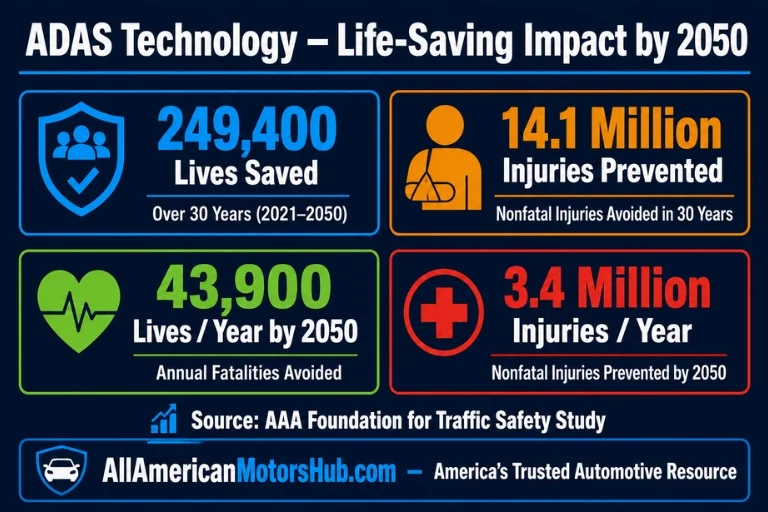
- Save 249,400 lives in 30 years
- Preventing 14,138,000 nonfatal injuries over a like time period
- Annually: fatalities avoided is approximately 28,700 annually in 2030; approximately 43,900 fatalities avoided annually by 2050
- Prevent more than 3.4 million nonfatal injuries each year by 2050; reduce to more than 2.5 million by 2030
Under a worst-case scenario, the advanced driver assistance system will save more than 152,100 lives and 8.6 million injuries. When ADAS technology is scaled up, these figures translate to almost 298,300 lives saved and 16.8 million injuries averted — a powerful testament to the impact of such technology on the level of safety for the drivers of the future. Although these improvements have occurred, the total number of annual deaths has not differed significantly over the study period, as the number of vehicle miles traveled and population have increased over this time. In this context, the ADAS system is saving what would be a lot of lives lost in crashes, which is a quiet but important win.
Challenges to Full ADAS Integration
Although the ADAS system is promising, there are certain hurdles in its widespread adoption in the existing vehicle fleet:
- Fleet Age: The average age of vehicles on the road in the U.S. is 12.8 years, and when it comes to the adoption of full ADAS tech, that will likely take decades
- Cost Barriers: Collision avoidance technology including adaptive cruise control (ACC) with lane centering and curve-adaptive headlights are still pricey extras, which budget-conscious shoppers don’t want to pay for
- Lack of Consumer Awareness: Many drivers have no idea what ADAS means in the car, and do not know how to use the features properly, which diminishes their value
- Technology Reliability: Ongoing engineering challenges for ADAS vehicle makers are technology reliability (sensor calibration, adverse weather performance, and system updates)
Addressing these challenges will need to be done in a coordinated manner among automakers, policy makers and consumer education efforts. The addition of certain ADAS system features as standard equipment — as some regulators are starting to require — is a key step towards getting the systems rolled out across the fleet. For drivers keeping older vehicles on the road while waiting for ADAS to become more affordable, maintaining the fundamentals of their existing vehicles remains critical. Our car maintenance checklist covers every essential service item to keep your current vehicle safe and reliable.
Why ADAS Technology Matters for Every Driver Today
From drivers looking to purchase their next car to anyone who wants to know more about the safety of today’s roads, the role of the ADAS system can’t be overstated. When it comes to car safety features, ADAS comes with a lot of value for new car buyers, especially when it comes to retaining its value in the long run. The advanced driver assistance system (ADAS) landscape is critical to policy and fleet operators for the design of infrastructure, insurance, and safety programs designed to meet the needs of the future of automotive technology.
In the real world of driving, understanding the concept of ADAS can foster a more informed and safety-conscious driving culture, where technology cooperates with human judgment, not replacing it.
ADAS technology is also increasingly integrated with what is traction control in modern vehicles — working alongside stability and traction systems to deliver a comprehensive active safety net. Learn more about how these systems interact in our what is traction control guide.
Conclusion
The ADAS system is one of the biggest strides in automotive safety that has occurred in years. Today advanced driver assistance system technology is saving lives, and its ability to save even more lives in the coming years is well proven — including by preventing rear-end collisions and maintaining vehicles in their lane at highway speeds. The overall safety benefits will continue to increase as the vehicles gradually change over and the features of ADAS become more common as they become more affordable. The figures speak for themselves: investing in ADAS technology is not only an advance in technology, it’s a public health issue.
When you are looking to buy a new car, you should keep ADAS system features at the top of your list. If you are already driving a newer ADAS car, take the time to understand and properly use the systems at your disposal. Combined, smart technology and informed drivers can make all journeys measurably safer.
For drivers looking to keep any vehicle — ADAS-equipped or not — running at peak performance, explore our full selection of quality used engines for sale for reliable, cost-effective replacements across all makes and models.
Frequently Asked Questions
What does ADAS stand for in the automotive industry?
The word ADAS is an abbreviation for Advanced Driver Assistance System. It refers to a suite of electronic safety technologies in modern vehicles designed to assist drivers, reduce human error and prevent accidents.
What is the function of ADAS in a car and how does it work?
ADAS systems use different sensors, cameras, radar and sometimes LIDAR to monitor the vehicle’s environment in real time. These systems help the driver to stay alert of the potential dangers and apply brakes or adjust steering accordingly.
Do all new cars have the ADAS system?
Nearly 33 percent of the vehicles across the USA, Europe, Japan and China often feature the ADAS system.
Is the ADAS feature good?
The ADAS features help a lot in a car, letting you keep your car in a lane, giving you blind spot warning and applying automatic emergency braking.
Which ADAS level is in Tesla?
The Tesla Autopilot is an advanced driver assistance system developed by Tesla, that provides partial vehicle automation, leading to level 2 automation.

