
Table of Contents
A failing shift solenoid is one of the most common causes of automatic transmission shifting problems. If your vehicle is experiencing delayed shifting, hard gear engagement, or transmission warning lights, a faulty transmission shift solenoid may be the reason.
Modern automatic transmissions rely on electronic solenoids to control hydraulic fluid pressure and manage gear changes. When a solenoid valve fails, the transmission may slip, hesitate, or become stuck in a single gear.
Before assuming your transmission has failed, it helps to know what solenoid valve do, spot the symptoms, and decide if replacement is needed.
What Is a Shift Solenoid?
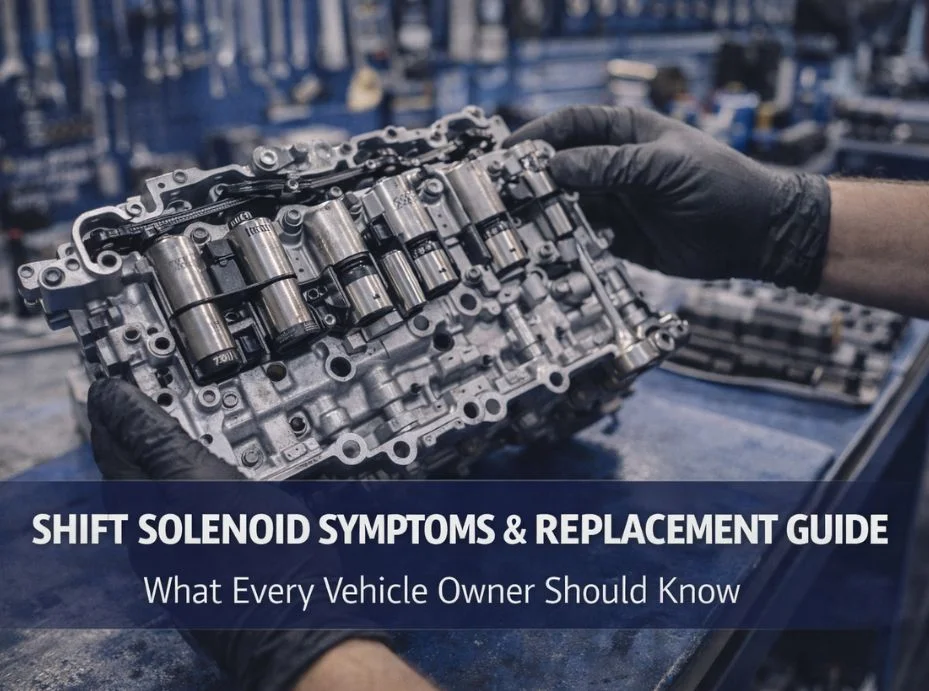
A shift solenoid is an electronically controlled valve located inside the transmission valve body. It regulates the flow of transmission fluid, which controls gear changes.
When you speed up, the car’s Transmission Control Module (TCM) tells the shift solenoid what to do. The solenoid then opens or closes to send fluid to the right parts, helping the gears shift smoothly.
Most automatic transmissions contain multiple solenoids, each responsible for controlling different gear shifts.
How a Transmission Shift Solenoid Works
Inside the transmission:
- The TCM detects vehicle speed and throttle position.
- It sends an electrical signal to the appropriate solenoid valve.
- The solenoid adjusts hydraulic pressure.
- The transmission changes gears smoothly.
If the solenoid becomes stuck, electrically damaged, or clogged with debris, proper hydraulic pressure cannot be maintained. This disrupts normal shifting patterns.
Common Shift Solenoid Symptoms
Recognizing early symptoms can prevent further damage.
1. Delayed Gear Shifting
Your vehicle may hesitate before shifting into the next gear.
2. Hard or Rough Shifting
Gear changes may feel abrupt or jerky.
3. Stuck in One Gear (Limp Mode)
The transmission may remain locked in a single gear to prevent further damage.
4. Transmission Warning Light
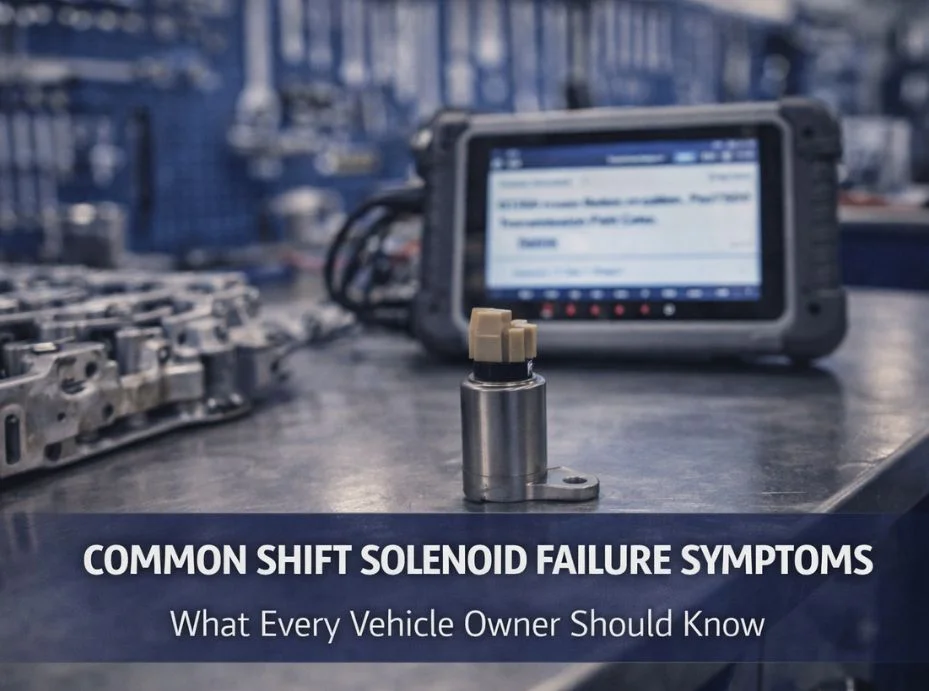
Diagnostic trouble codes such as P0750 may indicate a solenoid valve malfunction. The National Highway Traffic Safety Administration (NHTSA) provides guidance on understanding vehicle diagnostic warning systems.
5. Slipping Gears
The engine revs increase, but the vehicle doesn’t accelerate properly.
What Causes Shift Solenoid Failure?
Several factors can contribute to a solenoid valve malfunction:
- Dirty or contaminated transmission fluid
- Overheating transmission
- Electrical wiring issues
- Valve body wear
- Internal transmission debris
- High mileage wear
In many cases, fluid neglect is a primary contributor.
Can You Drive with a Bad Shift Solenoid?
Driving with a faulty solenoid valve is not recommended.
While the vehicle may remain drivable temporarily, continued operation can:
- Cause clutch pack damage.
- Increase internal wear
- Lead to full transmission failure.
- Trigger limp mode
If symptoms persist, professional inspection is necessary.
Shift Solenoid Replacement Cost
Replacement costs vary depending on vehicle make and labor requirements.
Typical cost breakdown:
- Shift solenoid part: $50 – $200
- Labor cost: $150 – $400
- Total repair cost: $200 – $600
However, if internal transmission damage is present, replacement costs increase significantly.
In severe cases, a complete replacement transmission may be more cost-effective than repeated repairs.
When Is Full Transmission Replacement Needed?
A faulty shift solenoid does not always require full transmission replacement. However, replacement becomes necessary when:
- Metal debris contaminates fluid.
- Multiple solenoids fail
- The valve body is severely worn.
- Internal clutch damage is present.
- High mileage wear affects multiple components.
If internal damage is confirmed, obtaining a used transmission with verified compatibility may provide the most reliable long-term solution.
Diagnosing a Bad Shift Solenoid
Proper diagnosis includes:
- OBD-II diagnostic scan
- Checking transmission fluid condition
- Electrical resistance testing
- Solenoid activation test
- Valve body inspection
A qualified technician should confirm failure before replacement.
Preventing Shift Solenoid Problems
Preventive maintenance helps extend transmission life.
Recommended steps:
- Regular transmission fluid changes
- Use the manufacturer-recommended fluid type.
- Avoid excessive towing beyond vehicle rating.
- Address overheating immediately
- Flush the transmission cooler during replacement.
The Environmental Protection Agency (EPA) provides guidance on proper automotive fluid handling and disposal practices.
Used Transmission vs Solenoid Repair: Making the Right Choice
If your transmission has high mileage and shows multiple symptoms beyond solenoid malfunction, replacing the entire unit may provide better reliability.
When evaluating options:
- Compare repair cost vs full replacement cost.
- Consider vehicle age
- Assess mileage
- Review warranty coverage
Choosing a used transmission with warranty coverage can reduce financial risk.
All American Motors Hub verifies VIN compatibility prior to shipping to ensure the correct transmission configuration.
How Compatibility Affects Shift Solenoid Function
Even if the shift solenoid itself is new, incorrect transmission compatibility can cause shifting issues.
Before ordering a replacement transmission, confirm:
- VIN match
- Transmission code
- Drivetrain configuration
- Production year range
An incorrect gear ratio or electronic mismatch can result in poor performance.
Should You Replace All Solenoids at Once?
In some cases, replacing multiple solenoids simultaneously may be recommended, especially if:
- The transmission has high mileage.
- Fluid contamination affected multiple valves.
- Labor access requires full valve body removal.
Consult a qualified mechanic to evaluate available options before proceeding.
Warranty Considerations
When replacing a transmission instead of just a solenoid, ensure written warranty documentation is provided.
A reliable OEM used transmission typically includes:
- Parts warranty
- Clear return policy
- Documented compatibility confirmation
Written warranty terms should be requested prior to purchase.
Need Help Choosing the Right Solution?
If your vehicle is experiencing shifting problems and diagnostic testing confirms internal transmission wear, replacing the entire transmission may be the most cost-effective long-term solution.
All American Motors Hub provides:
- VIN-based compatibility verification
- Tested used transmissions
- Written warranty coverage
- Nationwide insured freight shipping
For assistance in determining whether to repair a solenoid valve or replace the transmission, the team can confirm compatibility and availability prior to ordering.
Frequently Asked Questions
What does a shift solenoid do?
A transmission solenoid controls hydraulic fluid flow inside the transmission to enable smooth gear changes.
How much does it cost to replace a transmission solenoid?
Typical replacement costs range from $200 to $600, depending on labor and vehicle model.
Can a bad transmission solenoid ruin a transmission?
Yes. Continued driving with a faulty solenoid can cause internal damage over time.
How do I know if my transmission solenoid is bad?
Common signs include hard shifting, delayed engagement, limp mode, and transmission warning lights.
Is it better to replace the transmission instead?
If internal damage or high mileage wear is present, replacing the transmission may be more reliable than repeated repairs.