

Table of Contents
Introduction
When it comes to keeping your vehicle running smoothly, transmission fluid change is one of the most critical yet often overlooked maintenance tasks. Your transmission fluid acts as a lubricant and coolant for the transmission system, helping it shift gears effortlessly while preventing overheating and wear.
Neglecting a changing transmission fluid can lead to serious issues like slipping gears, poor acceleration, or even complete transmission failure. Whether you’re driving a daily commuter or a high-performance vehicle, making sure you change transmission fluid at the right time can extend the life of your transmission and save you from costly repairs down the line.
In this guide, we’ll walk you through everything you need to know about changing transmission fluid, from signs it’s time for a change to a complete DIY step-by-step process. Let’s get started.
What is a Transmission Fluid Change?
A transmission fluid change involves draining the old transmission fluid from a vehicle’s transmission system and replacing it with fresh fluid to maintain optimal performance. The process typically includes removing the transmission pan or drain plug, allowing the old fluid to drain, and refilling with new fluid that meets the vehicle’s specifications. This maintenance, recommended every 30,000–60,000 miles, lubricates gears, reduces friction, and prevents overheating.
In contrast, a transmission fluid flush uses specialized equipment to force out all old fluid, including from the torque converter and cooler lines, and replace it entirely with new fluid. A flush is more thorough but can dislodge debris in older transmissions, potentially causing issues. A change transmission fluid procedure is less invasive, only replacing fluid in the pan (about 40–60% of total fluid), making it safer for high-mileage vehicles but less comprehensive.
| Feature | Transmission Fluid Change | Transmission Fluid Flush |
| Method | Draining and refilling | Pressurized full system flush |
| Amount of Fluid Replaced | Partial (~40–60%) | Almost 100% |
| Cost | Lower | Higher |
| Tools Needed | Basic tools | Professional equipment |
| Recommended For | Routine maintenance | Heavily contaminated fluid |
Whether you’re planning a fluid change or a flush, always make sure you use a reliable transmission unit. Browse our selection of used Honda transmissions or Chevy automatic transmissions for best results.
Importance of Changing Transmission Fluid
Changing transmission fluid is critical for maintaining a vehicle’s transmission system and ensuring optimal performance. Transmission fluid serves multiple roles: it lubricates gears and moving parts, reduces friction, cools the transmission, and facilitates smooth gear shifts. It also helps transmit power from the engine to the wheels, ensuring efficient operation. Over time, transmission fluid degrades, losing its viscosity and ability to protect components due to heat, contaminants, and wear.
Neglecting a transmission fluid change can lead to serious issues. Degraded fluid may cause overheating, as it fails to dissipate heat effectively, damaging transmission components.This is especially common in models like the Dodge Ram transmission or Jeep Grand Cherokee transmission, where high torque output makes fluid condition critical.It can also result in gear slipping, where the transmission struggles to stay in gear, leading to jerky or delayed shifts. Other risks include increased wear on internal parts, reduced fuel efficiency, and, in severe cases, complete transmission failure, requiring costly repairs. Regular transmission oil change intervals, typically every 30,000–60,000 miles, prevent these problems, extending the transmission’s lifespan and maintaining vehicle reliability.
How to Check Transmission Fluid
Regular fluid checks are essential for transmission health. Here’s the proper procedure:
For vehicles with a dipstick: Start your engine and let it reach normal operating temperature. Park on level ground and leave the engine running. Locate the transmission dipstick, usually marked with a red or yellow handle near the back of the engine. Pull it out, wipe it clean, reinsert it fully, then remove it again to check the level. The fluid should be between the minimum and maximum marks and should appear bright red and smell slightly sweet. Dark brown or black fluid with a burnt smell indicates it’s time for a change.
For sealed transmissions: Many modern vehicles don’t have a dipstick. These require checking fluid from underneath the vehicle through a fill plug, which is best done by a professional. Consult your owner’s manual to determine if your transmission has a dipstick or requires professional servicing.
What to look for: Healthy transmission fluid is typically bright red or pink and translucent. It should have a slightly sweet or tart smell. If your fluid is dark brown or black, has a burnt odor, or contains metal particles, your transmission needs immediate service.
Signs You Need a Transmission Fluid Change
Critical Signs of Transmission Problems
1. Delayed or Rough Shifting
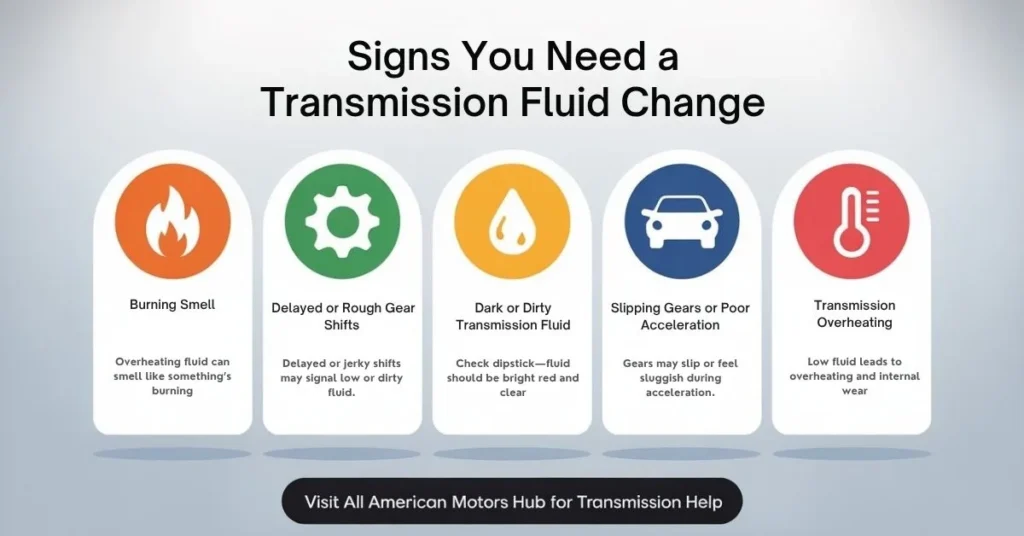
One of the most common indicators of transmission trouble is hesitation or harshness when changing gears. Your vehicle might pause for a second or two before engaging into drive or reverse, or you might feel a noticeable jolt during shifts. These symptoms often indicate internal wear or fluid-related issues that need immediate attention.
2. Slipping Gears
If your transmission slips out of gear while driving, or if the engine revs without a corresponding increase in speed, you’re experiencing a serious problem. This dangerous condition can occur due to worn clutch plates, low fluid levels, or internal component failure. Never ignore slipping gears, as they can lead to complete transmission failure and potentially unsafe driving conditions.
3. Unusual Noises
Strange sounds coming from your transmission are never a good sign. Whining, humming, clunking, or grinding noises when in neutral or during gear changes indicate internal damage or insufficient lubrication. Manual transmissions might produce grinding sounds during shifting if the clutch or synchronizers are worn.
4. Transmission Fluid Leak
A transmission fluid leak is a serious issue that requires immediate attention. You might notice red or brown puddles under your vehicle after it’s been parked. These leaks can occur from various points including the pan gasket, seals, cooler lines, or the torque converter. Even small leaks can lead to low fluid levels and subsequent transmission damage.
5. Warning Lights
Modern vehicles are equipped with sophisticated sensors that monitor transmission performance. If your check engine light or transmission warning light illuminates, don’t ignore it. These warnings often indicate detected problems with shift solenoids, speed sensors, or other electronic components before they cause complete failure.
6. Burning Smell
A burning odor coming from your transmission typically indicates overheated fluid or friction material. This smell, often described as burnt toast, suggests your transmission is running too hot due to low fluid, old degraded fluid, or mechanical problems creating excessive friction.
How to Replace Transmission Fluid – Step-by-Step Guide
If you’re experiencing rough gear shifts or suspect your transmission fluid is old or dirty, it’s time for changing transmission fluid. Here’s a step-by-step DIY guide that walks you through the entire process:
Step 1: Prepare Your Tools and Work Area
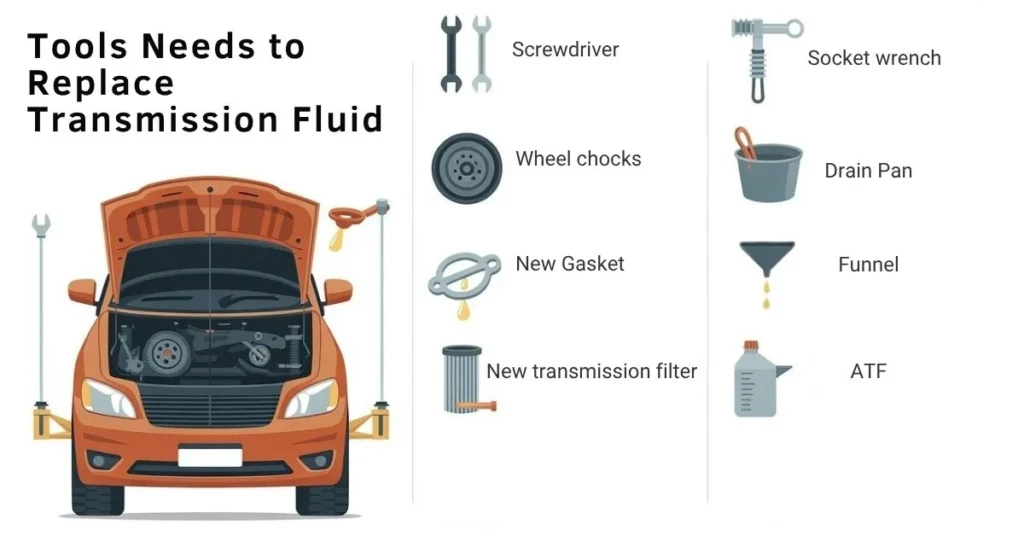
Before starting, make sure your vehicle is parked on a flat surface. Gather all necessary tools:
- Car jack and jack stands
- Wheel chocks
- Drain pan
- Socket wrench
- Screwdriver
- New transmission filter and gasket
- Funnel
- Use only manufacturer-recommended ATF. For example, Ford F-150 transmissions require a specific ATF formulation for best results.
- Rags and gloves
Step 2: Safely Lift the Vehicle
Use the jack to raise your car and place it securely on jack stands. Don’t forget to use wheel chocks to prevent the car from rolling. Safety is key.
Step 3: Locate and Remove the Transmission Pan
Put the drain pan beneath the transmission. Using a socket wrench, carefully loosen and remove the bolts around the transmission pan. Fluid will start to drain as you loosen it.
Step 4: Drain the Old Transmission Fluid
Allow the fluid to drain completely into the pan. This step is crucial for a clean transmission fluid change. Be prepared — it can get messy.
Step 5: Remove the Old Filter and Gasket
Once drained, remove the old transmission filter and gasket. These parts often collect debris and should be replaced during every transmission oil change.
Step 6: Install the New Filter and Gasket
Install your new filter and gasket exactly how the old ones were positioned. This ensures a proper seal and clean fluid circulation.
Step 7: Reattach the Transmission Pan
Carefully bolt the transmission pan back into place. Avoid overtightening. Use a torque wrench if available.
Step 8: Add New Transmission Fluid
Use a funnel to slowly pour new automatic transmission fluid into the dipstick tube. Refer to your vehicle’s manual for the correct type and amount.
Not sure what transmission fits your vehicle? Use our VIN Decoder Tool to find the right match instantly
Step 9: Start the Engine and Check Fluid Levels
With the engine running, cycle through all gears and then place the gear in Park. Check the fluid level using the dipstick and add more if necessary.
Step 10: Take a Short Test Drive
Drive for about 10–15 minutes and pay attention to how the vehicle shifts. Recheck the fluid level afterward and top off if needed.
Low Transmission Fluid Symptoms
Transmission fluid serves multiple purposes including lubrication, hydraulic pressure, and cooling. When fluid levels drop, you’ll experience several telltale symptoms that shouldn’t be ignored.
Immediate symptoms of low transmission fluid include:
Gear engagement problems are often the first sign, with delays when shifting from park to drive or reverse. You might also notice the transmission slipping between gears during acceleration or the vehicle surging forward unexpectedly. These issues occur because low fluid reduces hydraulic pressure needed for proper gear engagement.
Overheating becomes a major concern with insufficient fluid. The transmission temperature gauge might climb higher than normal, and you may notice the burning smell mentioned earlier. Without adequate fluid for cooling, internal components can warp or seize.
Unusual noises emerge when metal components lack proper lubrication. You might hear whining, buzzing, or humming sounds that change with vehicle speed or gear position. These sounds indicate components are grinding against each other without sufficient fluid cushioning.
Rough or erratic shifting happens because the transmission control unit can’t maintain proper pressure. Shifts might feel harsh or occur at incorrect times, and the vehicle might struggle to maintain consistent power delivery.
When to Change Transmission Fluid
A transmission fluid change is essential for maintaining a vehicle’s transmission health. Typically, you should change transmission fluid every 30,000 to 60,000 miles, but this interval varies based on driving conditions and vehicle type. Always consult the vehicle’s owner’s manual for manufacturer-specific recommendations, as some modern transmissions, like those in high-performance or heavy-duty vehicles, may require more frequent changes or specialized fluids.
Harsh driving conditions—such as towing, stop-and-go traffic, or extreme temperatures—can accelerate fluid degradation, necessitating earlier changes. Signs like slipping gears, unusual noises, or a burning smell also indicate the need for a fluid change. Regular maintenance within the 30,000–60,000-mile range ensures the transmission remains lubricated, cools effectively, and operates smoothly, preventing costly repairs. Checking the owner’s manual and monitoring driving habits are key to determining the optimal timing for changing transmission fluid.
DIY vs Professional Transmission Fluid Change
Deciding whether to perform changing transmission fluid yourself or hire a professional depends on your skills and resources. How to do transmission fluid change at home involves draining old fluid, replacing the filter (if applicable), and refilling with the correct fluid. DIY saves money but requires tools, a clean workspace, and mechanical knowledge to avoid mistakes like using the wrong fluid or improper sealing, which can harm the transmission. It’s time-consuming and messy, with risks of incomplete fluid replacement.
Hiring a professional ensures expertise, proper equipment, and warranty on work. At All American Motors Hub, our skilled technicians handle changing transmission fluid efficiently, using high-quality fluids and parts. For related needs, explore our used transmissions page. Professionals minimize risks but cost more.
| Option | Pros | Cons |
| DIY | Cost-effective, hands-on control | Time-consuming, requires tools, risk of errors |
| Professional | Expert service, warranty, efficiency | Higher cost, less hands-on involvement |
Understanding the Transmission Oil Cooler System
The transmission oil cooler diagram reveals an often-overlooked component that’s crucial for transmission longevity. This system works by routing hot transmission fluid through a heat exchanger, usually built into your vehicle’s radiator or mounted as a separate unit in front of it.
Hot fluid enters the cooler through metal or rubber lines after circulating through the transmission. Inside the cooler, the fluid passes through small channels surrounded by cooling fins. As air flows over these fins (from vehicle movement or the radiator fan), heat dissipates and the cooled fluid returns to the transmission.
Problems with the cooling system can cause serious transmission damage. A clogged cooler restricts fluid flow, leading to overheating. Leaking cooler lines result in fluid loss. Most serious is a ruptured cooler inside the radiator, which can allow coolant to mix with transmission fluid, causing catastrophic failure.
If you tow heavy loads or drive in extreme conditions, consider adding an auxiliary transmission cooler. This supplemental unit provides extra cooling capacity, significantly extending transmission life under demanding conditions.
To better understand transmission problems, repair limitations, and replacement considerations, explore our full collection of transmission guides.
Conclusion
A regular changing transmission fluid is one of the simplest yet most important maintenance tasks to keep your vehicle running smoothly. It helps your transmission operate efficiently, prevents overheating, and extends the life of internal components.
Neglecting to change transmission fluid can lead to costly repairs and sudden breakdowns, especially if you’re driving in tough conditions or towing heavy loads. Don’t wait until shifting becomes rough or your transmission fails.
Check your owner’s manual, inspect your fluid condition, and if it’s time, either do it yourself or consult a professional. Need help with a failing transmission? Visit All American Motors Hub to explore high-quality used transmissions at competitive prices.
Take action today to protect your vehicle’s performance and your wallet.
Frequently Asked Questions
-
How Often to Change Transmission Fluid?
Most manufacturers recommend changing transmission fluid every 30,000 to 60,000 miles under normal driving conditions. If you frequently tow, drive in extreme temperatures, or experience heavy stop-and-go traffic, change it every 15,000 to 30,000 miles. Even vehicles with “lifetime” fluid benefit from at least one change around 100,000 miles.
-
How Much Do Transmissions Weigh?
Manual transmissions typically weigh 60 to 120 pounds, while automatic transmissions range from 100 to 250 pounds for passenger cars. Truck and SUV automatics weigh 200 to 400 pounds, and heavy-duty diesel transmissions can exceed 500 pounds. This weight includes the fluid, which adds 10 to 20 pounds.
-
What Color Should Transmission Fluid Be?
Healthy transmission fluid is bright red or pink and translucent with a slightly sweet smell. If your fluid is dark brown or black with a burnt odor, it needs immediate changing. Metal particles in the fluid indicate serious internal wear requiring professional inspection.
-
Can I Drive With Low Transmission Fluid?
No, you should never drive with low transmission fluid. It can cause immediate and severe damage including overheating, gear slipping, and complete transmission failure. If you suspect low fluid, check the level immediately and add the correct type if needed, or have it towed to a repair shop.
-
How Much Does Transmission Repair Cost?
Minor transmission repairs like seal or solenoid replacement typically cost $150 to $400. More extensive repairs range from $1,000 to $3,500. A complete transmission rebuild costs $1,800 to $3,500, while replacement with a remanufactured unit runs $2,500 to $5,000 depending on your vehicle and transmission type.