
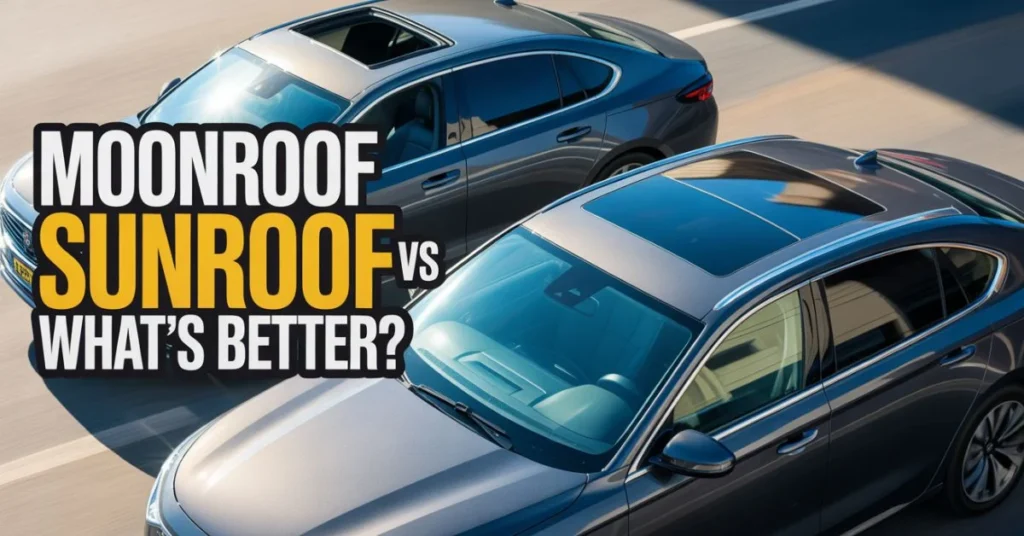

When car shopping or considering upgrades, the moonroof vs sunroof decision often confuses buyers. Both features add fresh air and openness to your driving experience, but they work differently and offer unique benefits. At All American Motors Hub, we help car owners understand these options while providing quality used engines and used transmissions for all your automotive needs.
Understanding the Main Difference
The moonroof vs sunroof debate comes down to one key difference: what you can see when it’s closed. A sunroof is made from solid materials like metal or vinyl that match your car’s roof. When closed, it blocks all light and gives you complete privacy. A moonroof uses clear or tinted glass, so you get natural light and can see the sky even when it’s not open.
Both systems slide backward when you want fresh air, making any car feel more open and airy. The sunroof completely opens up to let in air and light, while the moonroof gives you that plus the bonus of continuous visibility and natural lighting throughout your drive.
How Each System Works
A traditional sunroof operates like a sliding window on your roof. You can open it manually with a crank handle or electrically with the push of a button. The solid panel slides back along tracks, creating an opening for air circulation. This sliding roof car feature works great for quick ventilation without the complexity of glass systems.
Moonroofs typically come with electric operation and include an interior shade. This dual-layer system lets you control both light and privacy independently. You can keep the glass closed but slide back the interior shade for natural light, or open both layers for full fresh-air experience. Many drivers love having these options, especially during long commutes with Honda Civic engine efficiency or highway cruising with Ford F-150 engine power.
Feature Comparison Table
| Feature | Sunroof | Moonroof |
| Material | Solid metal/vinyl | Clear/tinted glass |
| Light when closed | None | Natural light |
| Privacy when closed | Complete | Needs interior shade |
| Operation | Manual or electric | Usually electric |
| View of sky | Only when open | Always |
| Installation cost | $800-$1,500 | $1,500-$3,000 |
| Maintenance | Simpler | More complex |
| Weather resistance | Better in harsh climates | Good with proper care |
Different Types and Sizes
The moonroof vs sunroof choice expands when you consider size options. Standard systems cover just the front seating area, while panoramic sunroof installations can span most of your roof. These large glass panel systems create an incredibly open feeling throughout your car, making even compact vehicles feel spacious.
Some car manufacturers offer factory panoramic sunroof options that integrate seamlessly with your vehicle’s design. These systems often feature multiple glass panels, with some sections that open and others that remain fixed for structural support. The fixed sections still provide natural light and sky views for rear passengers.
In regions like Chicago, where weather varies dramatically, choosing the right system becomes more important. A chicago sunroof installation needs to handle snow loads, ice formation, and extreme temperature changes. Traditional sunroofs often perform better in harsh conditions due to their simpler sealing systems and solid construction.
Converting your car to have either feature requires professional expertise. The process involves cutting your roof and installing tracks, seals, and drainage systems. Modern vehicles with complex electrical systems, like those with BMW engines or Mercedes-Benz engines, need careful electrical integration to avoid problems.
Installation and Compatibility
The installation affects your car’s structural integrity, which is especially important for performance vehicles. Cars with Ford Mustang engine setups or Dodge Challenger engine configurations need proper reinforcement to maintain safety ratings and handling characteristics.
Professional installers assess your specific vehicle before starting work. They consider factors like roof construction, existing wiring, and interior space. Some cars work better for aftermarket installations than others, particularly those with Honda Accord engine layouts that provide easier access to roof structures.
Cost Analysis by Vehicle Type
| Vehicle Category | Sunroof Cost | Moonroof Cost | Panoramic Cost |
| Compact Cars | $800-$1,200 | $1,200-$2,000 | $2,000-$3,500 |
| Mid-size Sedans | $1,000-$1,500 | $1,500-$2,500 | $2,500-$4,000 |
| SUVs/Trucks | $1,200-$1,800 | $1,800-$3,000 | $3,000-$5,000 |
| Luxury Vehicles | $1,500-$2,500 | $2,500-$4,000 | $4,000-$7,000+ |
Factory vs Aftermarket Options
Many car buyers face the moonroof vs sunroof decision when ordering a new vehicle. Factory installations typically cost less and integrate better with your car’s design and warranty. However, aftermarket installation gives you more choices and can add these features to any compatible vehicle.
Factory panoramic sunroof options often include advanced features like automatic rain sensors, one-touch operation, and integration with your car’s climate control system. These systems work seamlessly with everything from efficient Toyota Camry engine setups to powerful Chevy Silverado engine configurations.
Aftermarket installations offer flexibility for owners of older vehicles or those wanting specific features not available from the factory. Professional shops can often retrofit systems onto cars with used engines or used transmissions, giving new life to reliable older vehicles.
Maintenance and Long-term Ownership
The moonroof vs sunroof decision affects your long-term maintenance schedule. Both systems need regular care, but moonroofs require more attention due to their glass construction and complex mechanisms.
Monthly maintenance involves cleaning tracks and checking drainage systems. Leaves, dirt, and debris can accumulate and cause operational problems or water leaks. This is especially important in areas with heavy tree coverage or during fall seasons.
Glass systems need regular cleaning with proper automotive glass cleaners to maintain clarity and prevent scratching. The interior shade mechanisms also require occasional lubrication to ensure smooth operation.
Annual professional inspections help identify potential problems before they become expensive repairs. This preventive approach proves particularly valuable for complex panoramic sunroof systems with multiple moving parts and electrical components.
Performance Impact on Different Engines
Adding roof systems affects vehicle weight distribution and aerodynamics. The impact varies depending on your engine type and driving style. Performance cars with Ford Mustang engine configurations may notice handling changes more than family cars with standard Honda Accord engine setups.
Fuel economy typically decreases slightly when roof systems are open due to increased wind resistance. However, using natural ventilation instead of air conditioning during moderate weather can offset this impact. This proves especially beneficial for efficient engines like those in cars with Toyota Camry engine technology.
Trucks and SUVs with Ford F-150 engine or Chevy Silverado engine configurations handle the additional weight and aerodynamic changes better due to their robust construction and higher power output.
Making the Right Choice
Your moonroof vs sunroof decision should consider your driving habits, local climate, and budget. If you enjoy natural light during daily commutes and want to see the sky while driving, a moonroof provides the best experience despite the higher cost.
For budget-conscious buyers or those in harsh climates, traditional sunroof systems offer reliable performance with simpler maintenance requirements. The solid construction handles extreme weather better and costs less to repair if problems occur.
Consider how often you’ll actually use the system. Some drivers rarely open their roof systems but enjoy the natural light that moonroofs provide. Others prefer the complete privacy and weather protection that sunroofs offer when closed.
The panoramic sunroof option works best for families or luxury car buyers who want maximum impact. These systems create impressive interior ambiance but require commitment to regular maintenance and higher repair costs.
Resale Value Considerations
Both sunroof and moonroof installations typically add resale value to your vehicle, with moonroofs generally providing better returns due to their premium appeal. The actual value depends on your local market conditions and buyer preferences.
Luxury vehicles benefit most from moonroof or panoramic sunroof installations, as buyers in this segment often expect these features. Economy cars see less dramatic value increases, but the features still appeal to many buyers.
Conclusion
The difference between a moonroof and a sunroof mainly lies in design, materials, and convenience. Sunroofs are simple and functional, while moonroofs bring a touch of luxury and light to your cabin. Your choice will depend on your budget, comfort preference, and the type of car you own.
Both options enhance the driving experience, but moonroofs are now more common in modern vehicles, offering drivers the perfect blend of style and function.
Frequently Asked Questions
Is a moonroof better than a sunroof?
Yes, in terms of convenience and style. A moonroof is electric, stylish, and offers more light.
Do all cars have moonroofs now?
No, moonroofs are common in mid-range and premium vehicles, but not all models include them.
Can you add a moonroof to a car?
Yes, aftermarket installations are possible, though they can be costly.
Which lasts longer: sunroof or moonroof?
Both can last years if properly maintained, but moonroofs may require more attention due to electronics.
Does a moonroof affect resale value?
Yes, cars with moonroofs often have higher resale appeal compared to those with basic sunroofs.

