
Table of Contents
Understanding the difference between long block and short block engines is essential before purchasing a replacement. Both are based on the engine block but differ in included components, installation complexity, and overall cost. Selecting the right configuration can save time, reduce labor costs, and prevent compatibility issues.
At All American Motors Hub, we help car owners, repair shops, and dealerships figure out whether a long block, short block, or complete engine assembly is the right choice. This guide explains the differences to help you decide.
What Is a Short Block Engine?
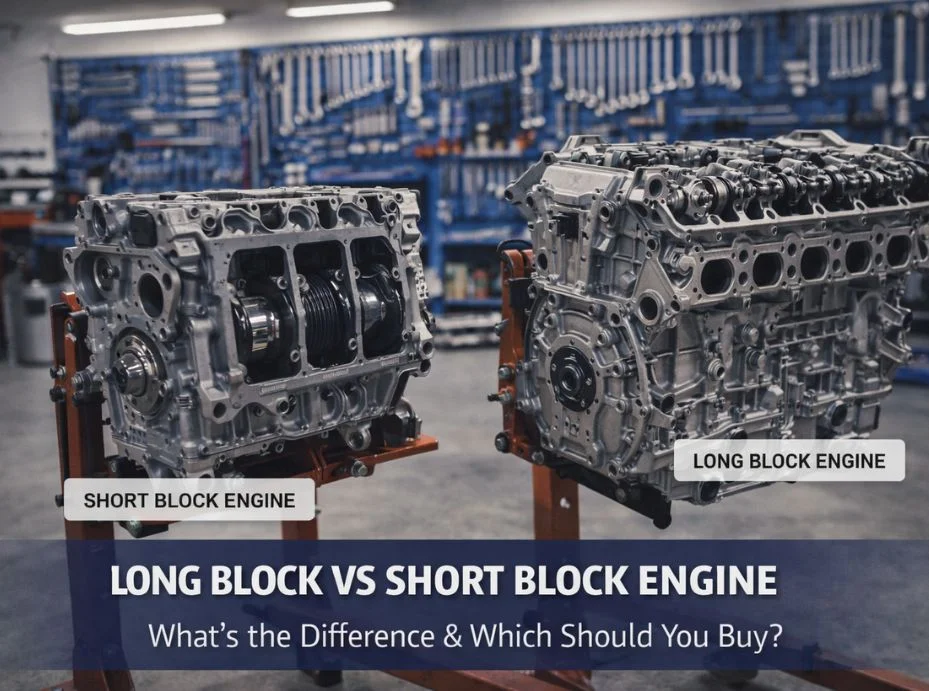
A short block engine is the lower part of the engine. It has the main moving parts inside the engine block.
A typical short block engine includes:
- Engine block
- Crankshaft
- Connecting rods
- Pistons
- Main bearings
- Camshaft (in some configurations)
It does NOT include:
- Cylinder heads
- Valvetrain components
- Intake manifold
- Exhaust manifold
- Fuel system components
Because it includes fewer components, a short block engine is generally less expensive upfront. However, it requires transferring additional parts from your existing engine or purchasing them separately.
Short blocks are often chosen when upper engine components are still in good condition.
What Is a Long Block Engine?
A long block engine includes the engine block plus additional upper engine components.
A typical long block engine includes:
- Engine block
- Crankshaft
- Pistons
- Connecting rods
- Cylinder heads
- Valves
- Camshaft(s)
- Timing components (varies by model)
It does NOT usually include:
- Intake manifold
- Exhaust manifold
- Alternator
- Starter
- Fuel injectors
A long block engine offers a more complete assembly and reduces installation time compared to a short block.
Many people prefer long block engines when replacing their engine because they don’t have to move as many parts over.
Long Block vs Short Block Engine: Key Differences
When comparing a long block vs short block engine, the primary difference lies in how much of the engine assembly is included beyond the basic engine block.
| Feature | Short Block | Long Block |
| Engine Block | ✔ | ✔ |
| Crankshaft & Pistons | ✔ | ✔ |
| Cylinder Heads | ✘ | ✔ |
| Valvetrain | ✘ | ✔ |
| Installation Time | Higher | Lower |
| Cost | Lower upfront | Higher upfront |
| Labor Required | More | Less |
Short block engines require more labor and part transfers. Long block engines simplify installation but cost more initially.
When Should You Choose a Short Block Engine?
A short block engine may be appropriate if:
- Your cylinder heads are undamaged
- Valvetrain components are reusable
- Budget is a primary concern
- You have access to professional installation
Repair shops sometimes choose short blocks when upper engine components are salvageable.
However, if cylinder head damage occurred due to overheating or internal failure, upgrading to a long block engine is often safer.
When Is a Long Block Engine the Better Option?
A long block engine is usually recommended when:
- There is a head gasket failure.
- Cylinder heads are cracked or warped.
- Valves are damaged
- Overheating occurred
- You want reduced installation time.
For many customers purchasing a used engine for sale, the long block configuration provides a balanced solution between cost and convenience.
Cost Comparison: Long Block vs Short Block Engine
Pricing varies depending on engine type and vehicle model.
Typically used engine ranges:
- Short Block Engine: $800 – $2,000
- Long Block Engine: $1,200 – $3,500
- Complete Engine Assembly: $1,500 – $4,500
While short blocks appear cheaper, additional labor and parts may increase the total repair cost.
In many cases, a long block engine reduces installation labor hours, making it cost-effective overall.
What About a Complete Engine Assembly?
A complete engine assembly (sometimes referred to as a “drop-in engine”) includes nearly all major components required for installation.
This option typically includes:
- Long block components
- Intake manifold
- Fuel system
- Sensors
- Wiring harness (varies by model)
Complete assemblies reduce downtime for repair shops and dealerships.
If you’re unsure which option fits your vehicle, verifying compatibility before ordering is critical.
The National Highway Traffic Safety Administration (NHTSA) explains how Vehicle Identification Numbers (VIN) help determine proper engine compatibility.
Compatibility Matters More Than Configuration
Whether choosing a short block engine or a long block engine, compatibility verification is essential.
Before ordering a replacement engine, confirm:
- VIN 8th digit
- Engine code
- Production date range
- Emissions specification (Federal vs California)
The Environmental Protection Agency (EPA) provides guidance on emissions classifications that may impact compatibility.
At All American Motors Hub, VIN compatibility is verified before confirming an order to reduce installation issues.
Installation Considerations
Short Block Installation Requires:
- Transferring cylinder heads
- Replacing gaskets
- Head bolt torque procedures
- Timing calibration
Long Block Installation Requires:
- Transferring intake & exhaust
- Reconnecting wiring & sensors
- Fluid refill & priming
Warranty & Risk Considerations
When purchasing a used engine, always confirm written warranty coverage.
A used engine with a warranty provides protection against unforeseen internal issues.
Minimum recommended coverage:
- 30–90 days parts warranty
Always request documentation before purchase.
Why Buyers Choose All American Motors Hub
We serve:
- Individual vehicle owners
- Independent repair shops
- Automotive dealerships
Our process includes:
- VIN compatibility verification
- Clear engine configuration details
- Written warranty documentation
- Secure payment processing
- Nationwide insured freight shipping
If you are currently evaluating a low-mileage used engine, our team can confirm compatibility before processing your order.
Need Help Choosing Between Long Block vs Short Block Engine?
If you’re unsure which configuration is right for your vehicle, provide your VIN and engine details for verification.
Choosing the correct replacement engine saves time, labor costs, and prevents installation delays.
Contact All American Motors Hub today for assistance and nationwide sourcing.
Frequently Asked Questions
-
What is the difference between a long block and short block engine?
A short block includes the engine block and internal rotating parts, while a long block also includes cylinder heads and valvetrain components.
-
Is a long block engine better than a short block?
A long block is often easier to install and reduces labor time, making it ideal for full engine replacement.
-
Which is cheaper: long block or short block?
A short block costs less upfront, but total repair costs may increase due to additional parts and labor.
-
Does a long block engine include all parts?
No. A long block does not usually include intake, exhaust, or external accessories.
-
How do I know which engine is compatible with my vehicle?
Verify your VIN, engine code, and production year before ordering to ensure proper compatibility.