


Table of Contents
Getting a flat tire is one of those inevitable situations every driver faces at some point. Whether you’re cruising down the highway or navigating city streets, knowing how to change a tire can save you time, money, and a whole lot of stress. This essential skill empowers you to handle roadside emergencies confidently without waiting hours for assistance. Trust me, there’s nothing worse than being stuck on the side of the road watching the sun set while you’re still waiting for a tow truck. In this comprehensive guide, we’ll walk you through everything you need to know about how to change a tire, from gathering the right tools to completing the job safely and efficiently.

Tools Needed to Change a Tire
Before you start, make sure you have these essential tools in your vehicle. I learned this the hard way after getting stranded without a proper lug wrench not fun!
- Spare tire (properly inflated, check it monthly!)
- Car jack (usually tucked away in your trunk)
- Lug wrench (sometimes called a tire iron)
- Vehicle owner’s manual (surprisingly helpful)
- Wheel wedges or even bricks will work
- Flashlight (because flats never happen in broad daylight, right?)
- Gloves (unless you enjoy black hands)
- Rain poncho (Murphy’s Law guarantees rain)
- Reflective triangles or road flares (so you don’t become someone else’s problem)
Having these items readily available in your trunk ensures you’re prepared when a flat tire strikes unexpectedly. Think of it like having the right parts for your engine, you wouldn’t want to work on your 5.3 LS engine without the proper tools, and the same goes for changing tires.
Safety Precautions Before Changing a Tire
Safety should always be your top priority when learning how to change a tire. I can’t stress this enough, I’ve seen too many close calls with people changing tires in dangerous spots.
Find a safe location. If possible, pull over to a flat, stable surface away from traffic. A parking lot or wide shoulder works best.
Turn on your hazard lights immediately to alert other drivers. Do this the second you realize you’ve got a problem.
Apply the parking brake firmly to prevent your vehicle from rolling.
Place wheel wedges behind or in front of tires to add extra stability. This is crucial for any vehicle.
Never change a tire on a slope or soft ground where the jack could slip. Seriously, don’t risk it.
If you’re on a busy highway and can’t safely change the tire yourself, it’s better to call for roadside assistance. Your safety is more important than saving a few bucks or feeling self-sufficient.
Step-by-Step Guide: How to Change a Tire
Alright, now let’s get into the actual process of how to change a tire on your car. I’ll walk you through this like I’m right there with you.
Step 1: Loosen the Lug Nuts
Before jacking up the vehicle, use your lug wrench to loosen the lug nuts on the flat tire. Turn them counterclockwise, “lefty loosey” as they say. Don’t remove them completely yet. The tire should still be on the ground so it doesn’t spin when you’re applying force. Sometimes these things are on there tight, so you might need to use your body weight.
Step 2: Position the Jack
Consult your vehicle’s manual to find the proper jacking points. This is really important. Place the jack under the vehicle frame near the flat tire. Most vehicles have reinforced metal ribs specifically designed for jack placement. Using the wrong spot can actually damage your car’s frame.
Step 3: Raise the Vehicle
Pump or crank the jack to lift the vehicle until the flat tire is about six inches off the ground. Make sure the jack remains perpendicular and stable. Go slow and steady here.
Step 4: Remove the Lug Nuts and Tire
Now fully unscrew the lug nuts and set them aside somewhere they won’t roll away (inside the hubcap works great). Pull the tire straight toward you to remove it from the wheel hub. It might be heavier than you expect. Place it flat on the ground so it doesn’t roll into traffic.
Step 5: Mount the Spare Tire
Align the spare tire’s rim with the wheel bolts and push it onto the hub. The holes in the rim should line up perfectly with the bolts. This can be a bit awkward, sometimes you need to lift and wiggle it at the same time.
Step 6: Hand-Tighten the Lug Nuts
Put the lug nuts back on and tighten them by hand as much as possible. Make sure they’re all threaded correctly, cross-threading them is a rookie mistake that’ll cost you.
Step 7: Lower the Vehicle
Use the jack to lower your vehicle until the spare tire touches the ground but doesn’t bear the full weight yet. Just enough that the tire is making contact.
Step 8: Fully Tighten the Lug Nuts
Using the lug wrench, tighten the lug nuts in a star pattern to ensure even pressure. This prevents the wheel from becoming misaligned or causing vibrations when you drive. Once you’ve gone around the pattern once, go around again to make sure they’re secure. Don’t skip this step!
Step 9: Lower Completely and Remove Jack
Lower the vehicle all the way to the ground and remove the jack. Give the lug nuts one final tightening to ensure they’re completely secure.
Step 10: Check Tire Pressure
If possible, check the spare tire’s pressure at the nearest gas station. Most compact spares require 60 PSI, but check your manual for specific requirements.
How to Change a Flat Tire vs Regular Tire Replacement
There’s an important distinction to understand here. When you learn how to change a flat tire on the roadside, you’re typically installing a temporary spare, often called a “donut.” These compact spares are designed for short-term use and usually have speed and distance limitations. Think 50 mph maximum and no more than 50-70 miles.
Regular tire replacement at a shop involves mounting and balancing a full-size tire, which requires professional equipment. The process of how to change a flat tire in an emergency is just a temporary fix to get you safely to a tire shop.
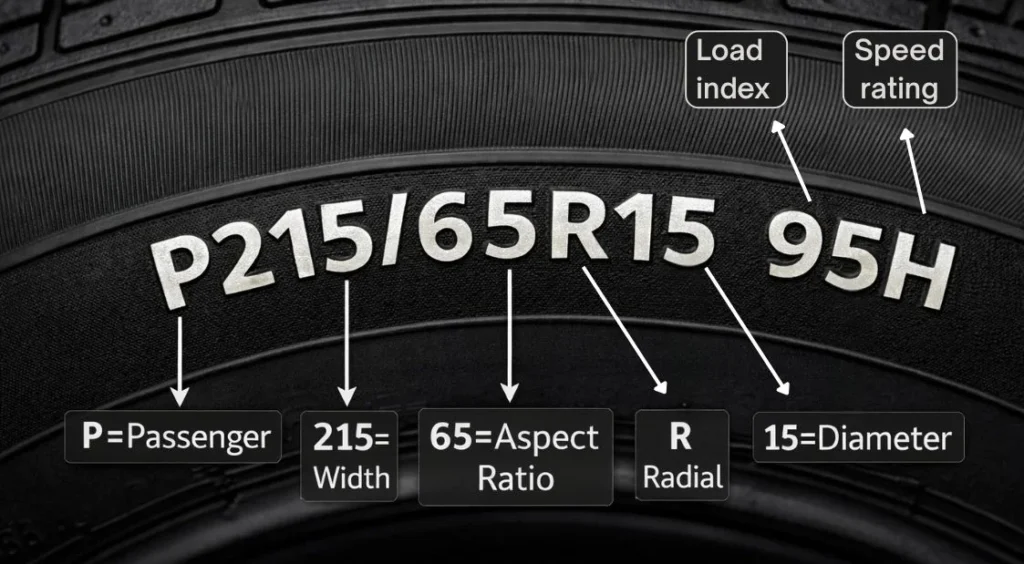
How to Read Tire Size (Explained Simply)
Understanding how to read tire size helps you purchase the correct replacement when the time comes. Let’s decode a typical tire size marking: P215/65R15 95H
Here’s what it all means:
- P = Passenger vehicle (LT would mean Light Truck)
- 215 = Tire width in millimeters
- 65 = Aspect ratio (sidewall height as percentage of width)
- R = Radial construction
- 15 = Wheel diameter in inches
- 95 = Load index (how much weight it can carry)
- H = Speed rating (how fast you can safely go)
This information is printed on your tire’s sidewall. Knowing how to read tire size ensures you get the right match when buying new tires. It’s like matching the right parts to your vehicle, you need to get it exactly right.
How Long Do Tires Last?
Mileage
Most tires last between 25,000 and 50,000 miles, though some high-quality tires can reach 80,000 miles.
Driving habits
Aggressive acceleration, hard braking, and fast cornering wear tires faster. If you’re constantly pushing your car hard, expect to replace tires more frequently.
Climate
Extreme temperatures and UV exposure degrade rubber over time. Living in Arizona versus Minnesota makes a real difference.
Maintenance
Regular rotation, proper inflation, and wheel alignment significantly extend tire life. Just like you need to maintain your Honda Accord engine with regular oil changes, your tires need attention too.
Even if tread depth looks adequate, tires older than six years should be inspected annually, and most manufacturers recommend replacement after ten years regardless of condition. Understanding how long do tires last helps you plan for replacement and avoid dangerous blowouts. This is part of basic car care, similar to following a proper car maintenance checklist to keep your vehicle running smoothly.
How Long Does It Take to Change a Tire?
For someone experienced with how to change a tire, the process typically takes 15-30 minutes under ideal conditions. However, if you’re learning how to change a tire for the first time, realistically allow 30-45 minutes. Don’t feel bad if it takes longer, you’re learning!
Factors affecting time include:
- Weather conditions (rain slows everything down)
- Your experience level
- Location and safety concerns
- Condition of lug nuts (rusty nuts are the worst)
- Type of jack you’re using
- Vehicle size
Professional tire shops can change a tire in about 10-15 minutes because they have power tools and experience. Don’t rush through the process, taking your time ensures the job is done safely and correctly.
Common Mistakes to Avoid When Changing a Tire
Even when you know how to change a tire, these common errors can cause serious problems:
- Not engaging the parking brake. This can cause the vehicle to roll off the jack, which is dangerous and potentially deadly.
- Jacking up the vehicle before loosening lug nuts. The tire will just spin, making it impossible to loosen them. Do it while the tire’s still on the ground!
- Using the wrong jack points. This can damage your vehicle’s frame or cause the jack to slip. Your vehicle has specific reinforced points for a reason.
- Over-tightening lug nuts. While they need to be secure, excessive force can strip threads or warp the brake rotor.
- Forgetting to check spare tire pressure. A flat spare won’t get you anywhere- check it monthly!
- Driving too far or too fast on a compact spare. These aren’t designed for extended use or highway speeds.
When to Replace a Tire Instead of Fixing It
Not every damaged tire can or should be repaired. Replace your tire if:
- The puncture is larger than 1/4 inch
- Damage is on the tire’s sidewall (this is structural)
- The tire has multiple punctures
- Tread depth is below 2/32 inch (use the penny test-stick a penny upside down in the tread; if you can see all of Lincoln’s head, it’s time)
- The tire shows visible cords or bulges
- The tire is more than six years old with any damage
Safety should always come first. If you’re unsure whether a tire is safe to repair, have it inspected by a professional. Your vehicle deserves proper care-whether it’s tires, regular maintenance, or even replacing major components like a Ford F-150 transmission when needed.
Conclusion
Learning how to change a tire is an essential skill every driver should master. While it might seem intimidating at first, following these steps makes the process straightforward and manageable. Remember to prioritize safety above everything else, take your time, and never hesitate to call for professional help if conditions are unsafe or you’re just not comfortable doing it yourself.
Keep your spare tire properly inflated, your tools accessible, and honestly, practice the process once in a safe environment like your driveway. Knowing how to rotate tires regularly and understanding basic tire maintenance will help you avoid emergencies in the first place. But when a flat does happen, with this knowledge you’ll be prepared to handle it confidently whenever and wherever it occurs. Stay safe on the road, and remember-being prepared beats being stranded every single time!
Frequently Asked Questions
-
How long does it take to change a tire?
Most people need 15–30 minutes depending on experience and conditions.
-
Can I drive long distances on a spare tire?
Temporary spares are designed for short distances only-usually under 70 miles.
-
Do I need special tools to change a tire?
No. Basic tools included with your car are usually enough.
-
Is it safe to change a tire on the highway?
Only if you can safely pull over to a wide, stable shoulder. Otherwise, wait for help.
-
Should I replace all tires at once?
It depends on wear level. Many vehicles benefit from replacing tires in pairs.

