
Table of Contents
Modern vehicles use increasingly advanced transmission systems to improve fuel efficiency, performance, and driving comfort. Two terms that often confuse drivers are DSG and DCT transmissions. Many people assume they are completely different technologies, while others believe they are exactly the same.
In reality, DSG and DCT transmissions are closely related, but they are not identical. Understanding how they work helps drivers choose the right vehicle, diagnose transmission problems, and maintain their drivetrain properly.
This guide explains the DSG vs DCT transmission debate in simple terms for beginners. We’ll explore how these systems work, their differences, advantages, reliability, and which one might be better for your driving needs.
What Is a DCT Transmission?
A DCT (Dual-Clutch Transmission) is an advanced type of automatic transmission that uses two separate clutches to shift gears quickly and efficiently.
Instead of using a torque converter like traditional automatic transmissions, a dual-clutch system operates more like two manual gearboxes working together.
How DCT Works
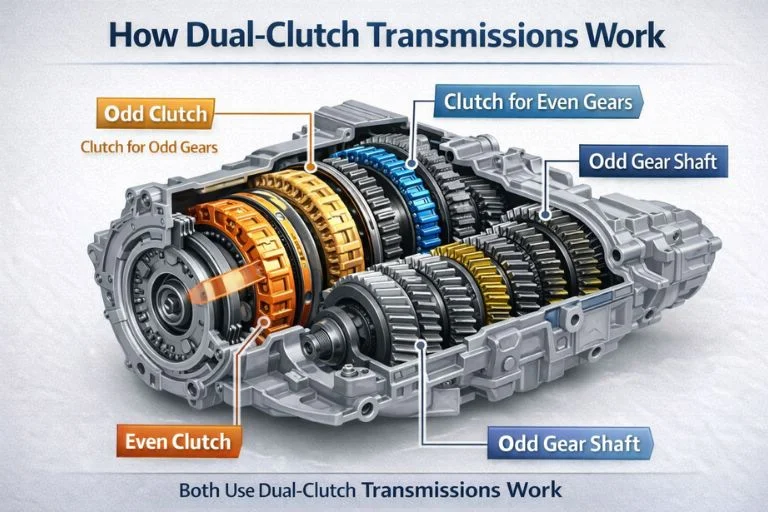
A dual-clutch transmission splits the gear sets into two groups:
- One clutch controls odd-numbered gears (1, 3, 5, etc.)
- The other clutch controls even-numbered gears (2, 4, 6, etc.)
When the car shifts gears, the transmission pre-selects the next gear before the shift occurs. This allows nearly instant gear changes.
The result is:
- Faster acceleration
- Improved fuel efficiency
- Smooth power delivery
Dual-clutch transmissions are widely used in performance vehicles because they allow lightning-fast shifts.
Manufacturers like Porsche and BMW have used DCT technology extensively in sports cars and high-performance models.
What Is DSG Transmission?
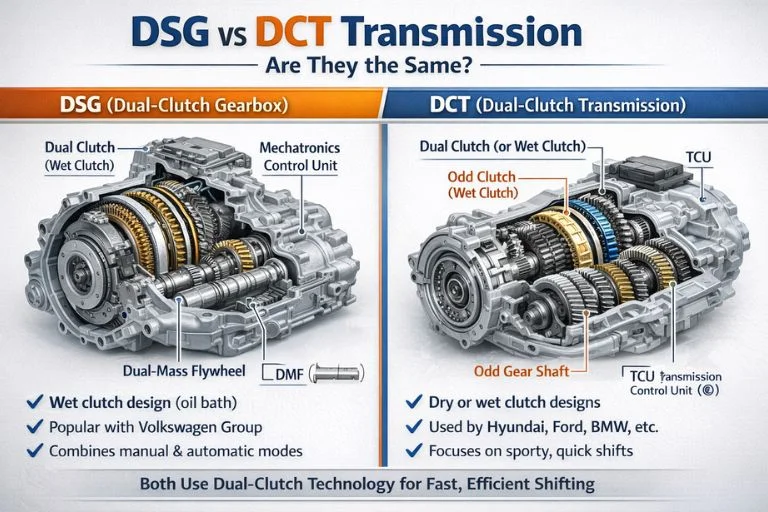
DSG stands for Direct-Shift Gearbox, a specific type of dual-clutch transmission developed by Volkswagen.
In simple terms:
DSG is a branded version of DCT technology.
Volkswagen introduced DSG transmissions in the early 2000s to improve shifting performance and fuel efficiency.
Today, DSG transmissions are used across many vehicles from brands within the Volkswagen Group, including:
- Audi
- Škoda
- SEAT
Although DSG systems use dual-clutch technology like other DCT systems, Volkswagen engineered its own control software and mechanical components.
DSG vs DCT Transmission: Key Differences
Although DSG and DCT share similar principles, there are subtle differences between them.
| Definition | Generic dual-clutch transmission technology | Volkswagen’s branded dual-clutch system |
| Manufacturer | Used by many automakers | Developed by Volkswagen Group |
| Gear Shifting | Very fast shifts | Very fast shifts |
| Driving Feel | Sporty and responsive | Smooth and performance-focused |
| Applications | Many sports and performance vehicles | Volkswagen, Audi, Skoda, Seat models |
In summary, DSG is essentially a specialized type of DCT transmission.
How Dual-Clutch Transmissions Improve Performance
Dual-clutch technology was designed to solve a common problem with traditional automatic transmissions.
Traditional automatic transmissions use a torque converter, which can cause power loss and slower gear changes.
Dual-clutch systems eliminate this delay.
Benefits of Dual-Clutch Technology
1. Faster Gear Changes
DCT and DSG transmissions can shift gears in milliseconds.
2. Improved Fuel Efficiency
Because they reduce power loss, these transmissions can improve fuel economy.
3. Sportier Driving Experience
Drivers experience faster acceleration and more responsive throttle input.
These advantages explain why dual-clutch systems are widely used in performance vehicles.
DSG vs DCT Reliability
Reliability depends on many factors, including maintenance, driving style, and vehicle design.
Some early DSG transmissions experienced issues related to mechatronic control units and clutch wear.
However, newer designs have improved reliability significantly.
According to research and technical documentation from the Society of Automotive Engineers, dual-clutch transmissions can provide strong performance when properly maintained.
Common Reliability Factors
- Transmission fluid maintenance.
- Driving conditions.
- Software updates.
- The clutch wears over time.
Like any drivetrain component, regular maintenance plays a key role in long-term durability.
Advantages of DSG and DCT Transmissions
Dual-clutch systems offer several benefits compared to traditional automatic transmissions.
Faster Gear Shifts
Dual-clutch transmissions deliver near-instant gear changes, improving acceleration.
Better Fuel Economy
Reduced energy loss leads to improved fuel efficiency.
Performance-Oriented Driving
Sports cars often use dual-clutch systems because they provide precise gear control.
Automatic Convenience
Drivers get automatic shifting without needing to operate a clutch pedal.
Disadvantages of DSG and DCT Transmissions
Despite their advantages, dual-clutch transmissions also have limitations.
Higher Repair Costs
DCT and DSG systems contain complex electronic components and specialized clutches.
Low-Speed Driving Behavior
Some drivers notice slight hesitation or jerky shifts during slow traffic conditions.
Maintenance Requirements
Dual-clutch transmissions require specialized transmission fluid and proper service intervals.
When major drivetrain components fail, replacing the transmission may become necessary. Many vehicle owners consider installing a used transmission to restore performance without the cost of a brand-new gearbox.
Transmission Replacement Considerations
While DSG and DCT systems are known for fast gear shifts and strong performance, like any drivetrain component they can eventually experience wear or mechanical failure. Clutch packs, mechatronic units, and internal gears may degrade over time, especially in vehicles that experience aggressive driving or inconsistent maintenance. In cases where internal damage becomes severe, mechanics may recommend replacing the entire gearbox rather than attempting costly repairs. Many drivers choose a quality used transmission as a cost-effective way to restore vehicle performance and drivetrain reliability.
Which Is Better: DSG or DCT?
Because DSG is a type of DCT, the comparison depends largely on the vehicle manufacturer.
However, we can evaluate some general factors.
| Brand association | Volkswagen Group | Multiple manufacturers |
| Driving performance | Excellent | Excellent |
| Availability | Specific brands | Many vehicle brands |
| Technology | Proprietary system | General technology |
In practical terms, DSG and DCT transmissions provide very similar performance.
The driving experience depends more on the specific vehicle and tuning.
Vehicles That Use DSG and DCT Transmissions
Many modern vehicles use dual-clutch technology.
DSG Transmission Examples
- Volkswagen Golf GTI
- Audi S3
- Volkswagen Passat
DCT Transmission Examples
- BMW M3
- Porsche 911
- Hyundai Veloster N
These transmissions are particularly common in performance-oriented vehicles.
Maintenance Tips for DSG and DCT Transmissions
Maintaining a dual-clutch transmission helps prevent expensive repairs.
Follow Recommended Service Intervals
Many DSG systems require transmission fluid changes every 40,000–60,000 miles.
Avoid Aggressive Driving When Cold
Allow the transmission to warm up before heavy acceleration.
Update Transmission Software
Manufacturers occasionally release software updates that improve shifting performance.
Monitor Warning Signs
Symptoms like slipping gears, delayed shifting, or warning lights may indicate transmission problems.
Early diagnosis can prevent serious drivetrain damage.
Future of Dual-Clutch Transmission Technology
Automotive transmission technology continues evolving.
Some automakers are transitioning toward electric vehicles that use single-speed gearboxes.
However, dual-clutch transmissions remain popular in performance cars due to their ability to deliver rapid gear shifts and efficient power delivery.
Manufacturers continue developing these systems with improved electronics and materials.
Conclusion
Understanding the DSG vs DCT transmission comparison helps drivers better understand modern vehicle technology.
Both systems use dual-clutch technology to deliver faster gear shifts and improved fuel efficiency compared to traditional automatic transmissions.
The key difference is simple:
- DCT is the general technology
- DSG is Volkswagen’s branded version of that technology
For most drivers, the real-world experience between DSG and DCT transmissions is very similar.
With proper maintenance and responsible driving, these advanced transmissions can deliver excellent performance and reliability.
To better understand how modern dual-clutch gearboxes operate, technical resources on dual-clutch transmission technology from the Society of Automotive Engineers provide detailed explanations of the engineering principles behind these advanced systems.
Frequently Asked Question’s
-
Are DSG and DCT transmissions the same?
Not exactly. A DSG transmission is a specific type of dual-clutch transmission developed by Volkswagen, while DCT is the general technology used by many manufacturers.
-
Which is better DSG or DCT?
Both offer similar performance. The difference depends mainly on the vehicle manufacturer and transmission tuning.
-
Are dual-clutch transmissions reliable?
Yes, when maintained properly. Regular fluid changes and proper driving habits help extend their lifespan.
-
Why are DCT transmissions faster?
They use two clutches that allow the next gear to be pre-selected, enabling nearly instant gear changes.
-
Do DSG transmissions require special maintenance?
Yes. DSG systems require specific transmission fluid and service intervals recommended by the manufacturer.