
Table of Contents
Before purchasing a replacement unit, it’s important to understand the used transmission inspection process and how reputable suppliers verify quality before shipping. Transmission replacement is one of the most labor-intensive repairs on a vehicle. In many cases, installation labor costs equal or exceed the cost of the unit itself. That means buying the wrong transmission — or one that hasn’t been properly inspected — can quickly become an expensive mistake.
At All American Motors Hub, we help customers nationwide, from individual car owners to repair shops and dealerships. Over the years, we’ve seen that most problems after installation come from compatibility mistakes or skipped inspections before shipping, not from major internal failures.
Understanding how used transmissions are tested and prepared before shipping can help you make a safer, smarter purchase decision.
Why Inspection Matters Before Buying a Used Transmission
Unlike smaller auto parts, transmissions are complex mechanical and hydraulic systems that integrate with:
- Engine control modules
- Torque converters
- Driveshaft systems
- Transfer cases (in 4WD/AWD vehicles)
- Electronic solenoid systems
Even minor compatibility mismatches can result in shifting problems, check engine lights, or drivability issues.
If you are searching for a used transmission for sale, inspection and compatibility verification should be your first priority — not just price.
Step 1: VIN & Transmission Code Verification
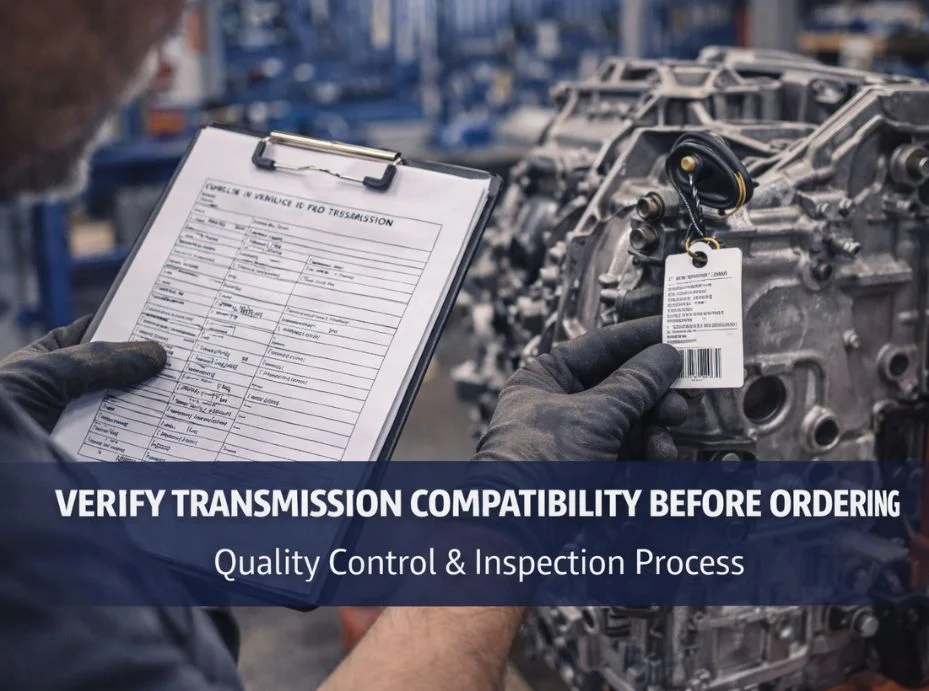
The most important step in inspecting a used transmission actually starts before the unit is taken out of inventory.
Professional suppliers verify:
- VIN 8th digit
- Exact transmission identification code
- Production date range
- Gear ratio specifications
- Drivetrain configuration (FWD, RWD, AWD, 4WD)
- CVT vs automatic vs manual type
Many transmissions look identical externally but differ internally in:
- Valve body configuration
- Solenoid calibration
- Gear ratios
- Torque converter specifications
- Electrical connector layouts
For example, two 6-speed automatic transmissions from the same model year may not be interchangeable if the production month or drivetrain differs.
The National Highway Traffic Safety Administration (NHTSA) explains how VIN identification works and why matching VINs is critical for part compatibility.
At All American Motors Hub, VIN verification is performed before confirming a replacement transmission order to reduce return rates and installation delays.
Step 2: External Case & Structural Inspection
Once compatibility is verified, the transmission undergoes detailed visual inspection.
Technicians examine:
- Housing cracks or fractures
- Bell housing integrity
- Mounting bracket condition
- Threaded bolt hole condition
- Sensor ports and connectors
- Transmission pan condition
- Output shaft integrity
Even minor structural damage can result in fluid leaks under operating pressure. Cracks around mounting points can lead to alignment issues during installation.
A transmission that passes structural inspection is significantly less likely to fail prematurely due to external damage.
Step 3: Fluid Condition & Internal Wear Indicators
Transmission fluid tells a story.
Professional inspectors evaluate:
- Fluid color
- Burnt odor
- Metal shavings
- Debris contamination
- Sludge presence
Burnt fluid usually means the transmission has overheated or the clutches are worn. Finding metal particles can point to damage inside the gears or bearings.
While used transmissions are not disassembled internally before sale, fluid condition gives valuable insight into prior operating health.
Environmental disposal of drained fluids follows guidelines established by the Environmental Protection Agency (EPA).
Step 4: Torque Converter Evaluation
For automatic transmissions, the torque converter plays a vital role in power transfer.
Inspection includes:
- Checking torque converter housing integrity
- Inspecting input splines
- Verifying converter attachment points
- Evaluating fluid residue
In some cases, torque converters are replaced separately. Always confirm whether your used transmission with a warranty includes the converter or requires a separate unit.
Improper torque converter pairing is one of the most common installation-related issues in transmission replacement.
Step 5: Valve Body & Solenoid Inspection
Modern automatic transmissions rely heavily on electronic solenoids and valve body assemblies.
Inspectors check:
- Electrical connectors
- Solenoid harness condition
- External wiring damage
- Connector corrosion
Electronic failures can cause erratic shifting or limp mode operation.
For buyers planning to buy a used transmission online, verifying electronic connector integrity is critical.
Step 6: CVT-Specific Inspection Considerations
Continuously Variable Transmissions (CVTs) require additional scrutiny.
CVT inspection focuses on:
- Belt and pulley housing condition
- Fluid condition consistency
- Sensor connectors
- Transmission case integrity
CVTs are more sensitive to fluid contamination and overheating. Proper evaluation reduces risk significantly.
If you are searching for a low-mileage used transmission, confirm whether the unit is a traditional automatic or CVT — inspection standards differ.
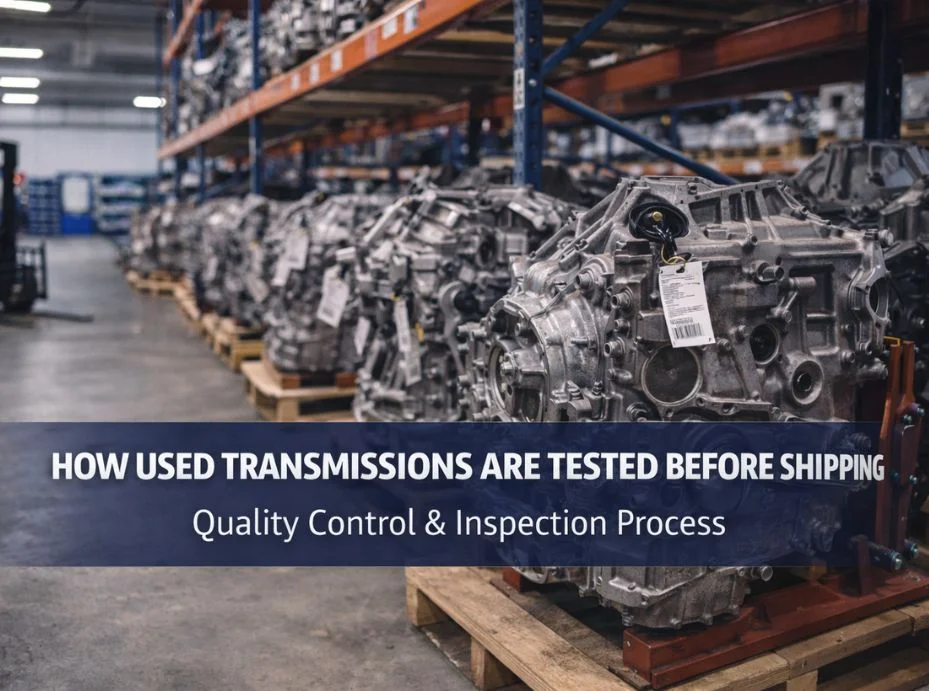
Step 7: Draining, Sealing & Freight Preparation
Once inspection is completed, professional preparation for shipping begins.
Suppliers:
- Fully drain remaining fluids.
- Seal all openings
- Cap the input and output shafts
- Securely mount the unit to a heavy-duty pallet.
- Wrap with industrial-grade protective film.
- Label identification information
Most transmissions weigh between 150 and 300 pounds. Improper palletizing can cause housing damage during transport.
All shipments should move via an insured freight carrier with tracking and documented delivery confirmation.
Why Professional Inspection Protects Repair Shops & Dealerships
For independent repair facilities and dealerships, time is critical. Installation delays can:
- Increase labor costs
- Disrupt scheduling
- Impact customer satisfaction
A properly inspected OEM used transmission reduces:
- Compatibility issues
- Installation downtime
- Return processing complications
- Financial risk
Based on industry experience, compatibility mismatch causes more problems than internal failure. That is why VIN verification and code matching must occur before shipment.
Realistic Pricing & Quality Correlation
Used transmission pricing typically ranges:
- Automatic: $800 – $2,500
- Manual: $600 – $1,800
- CVT: $1,200 – $3,500
- Heavy-duty truck units: $2,000 – $5,500
Units priced dramatically below market range may lack documentation, warranty coverage, or proper inspection.
If evaluating an automatic transmission for sale, prioritize inspection transparency over the lowest price.
Transparency Builds Buyer Confidence
At All American Motors Hub, our process focuses on:
- VIN-based compatibility confirmation
- Transmission code verification
- Inspection transparency
- Written warranty documentation
- Secure payment processing
- Insured nationwide freight shipping
Whether you are a vehicle owner or a professional repair facility, proper inspection and compatibility confirmation should always precede purchase.
Need Help Verifying Transmission Compatibility?
If you are currently searching for a reliable replacement transmission, our team can assist with VIN verification and availability confirmation before you order.
When you give us your VIN, we can confirm compatibility and help lower the risk of installation problems.
Frequently Asked Questions
How are used transmissions inspected before shipping?
Professional suppliers verify VIN compatibility, inspect casing integrity, evaluate fluid condition, check electronic connectors, and secure the unit for insured freight transport.
Is VIN verification required for transmissions?
Yes. Matching the VIN and transmission code ensures the correct gear ratio, drivetrain compatibility, and electronic configuration.
Are torque converters included?
Some units include torque converters; others do not. Always confirm before purchase.
What warranty should a used transmission have?
Reputable suppliers typically provide 30–90 days parts warranty, with extended options available.
Are used transmissions safe to buy online?
Yes, when purchased from a verified supplier that confirms compatibility and provides written warranty coverage.