

Table of Contents
Have you ever opened your car’s hood and noticed a long, winding belt wrapped around multiple pulleys? That’s your belt, and it’s one of the most important parts under your hood. This single belt powers multiple systems in your vehicle, from your alternator to your power steering pump. Without a working serpentine belt, your car simply won’t run properly or at all.
In this comprehensive guide, we’ll explain everything you need to know about the serpentine belt, including how it works, when to replace it, and how to spot problems before they leave you stranded. Whether you’re a DIY mechanic or just want to understand what your mechanic is talking about, this guide will help you keep your car running smoothly.
What is a Serpentine Belt?
The serpentine belt is a long, continuous rubber belt that winds through your engine bay, connecting and powering multiple components. It gets its name from the way it snakes (like a serpent) around various pulleys attached to different engine accessories.
This single belt serpentine system replaced older designs that used multiple individual belts for each accessory. Instead of having separate belts for the alternator, power steering, air conditioning, and water pump, modern vehicles use one belt to drive everything. This design is more efficient, requires less maintenance, and takes up less space in the engine bay.
The serpentine belt is made from durable rubber reinforced with strong fibers. The inner surface has ribs (grooves) that grip the pulleys, while the smooth outer surface slides against a flat pulley called the serpentine belt tensioner. This ribbed design provides excellent grip and prevents the belt from slipping during operation.
When your engine runs, the crankshaft pulley turns the serpentine belt, which then rotates all the accessory pulleys. This powers your alternator (which charges your battery), power steering pump (which makes steering easier), air conditioning compressor (which cools your car), and often your water pump (which prevents overheating). Without a functioning belt, none of these systems work properly.
How Does a Serpentine Belt Drive Work?
Understanding how the serpentine belt drive system operates helps you appreciate why this component is so critical. The process starts when you turn on your engine.
The crankshaft, which is connected to your engine’s pistons, begins rotating. Attached to the front of the crankshaft is the largest pulley in your engine bay the crankshaft pulley. This pulley grabs the serpentine belt and starts pulling it around the system.
As the serpentine belt moves, it passes over several smaller pulleys connected to various accessories. Each pulley is attached to a specific component:
The alternator pulley converts mechanical energy from the belt into electrical energy, charging your battery and powering your car’s electrical systems.
The power steering pump pulley drives a pump that makes steering effortless, especially at low speeds or when parking.
The air conditioning compressor pulley operates the AC system, keeping you cool on hot days.
The water pump pulley (on some vehicles) circulates coolant through your engine, preventing dangerous overheating. Some modern cars use electric water pumps instead.
The serpentine belt tensioner plays a crucial role in this system. This spring-loaded pulley automatically adjusts the belt’s tension to keep it tight enough to grip the pulleys without slipping, but loose enough to prevent excessive wear. As the serpentine belt stretches slightly over time, the serpentine belt tensioner compensates by moving to maintain proper tension.
The entire serpentine belt drive system must work in perfect harmony. If the belt is too loose, it slips and squeals. If it’s too tight, it wears out prematurely and puts excessive strain on bearings in the accessory components. That’s why the serpentine belt tensioner is so important it maintains the perfect balance automatically.
Understanding Your Serpentine Belt Diagram
Every vehicle has a unique serpentine belt diagram showing exactly how the belt routes through the engine bay. This diagram is usually located on a sticker under your hood, often near the radiator or on the hood itself.
The belt diagram looks like a simple line drawing showing circles (representing pulleys) connected by a continuous line (representing the belt path). Each pulley is typically labeled with what component it drives: ALT for alternator, PS for power steering, AC for air conditioning, and so on.
Why is the serpentine belt diagram important? Because if your belt breaks or needs replacement, you need to know the exact routing to install the new one correctly. Installing a belt wrong can cause it to fail immediately or prevent accessories from working properly.
Some belt diagrams are simple, with the belt making a basic loop around just a few pulleys. Others are quite complex, with the belt making multiple twists and turns around eight or more pulleys. Sports cars and trucks often have more complicated routing because they have additional accessories and larger engines.
If you can’t find your serpentine belt diagram under the hood, don’t worry. Your vehicle’s owner’s manual should include it. You can also search online for your specific make, model, and year many websites and forums have photos and diagrams posted by other owners and mechanics. Before removing your old serpentine belt, take a clear photo with your phone showing the routing. This gives you a reference if you lose track of the pattern.
Understanding your belt diagram helps you inspect the belt more effectively. You can trace the entire path to check for wear, cracks, or damage at each pulley. This knowledge also helps you communicate better with mechanics and understand what they’re doing during service, similar to understanding other maintenance procedures like a propercar maintenance checklist.
What is a Serpentine Belt Tensioner?
The serpentine belt tensioner is a critical component that many car owners don’t understand until it fails. This clever device automatically maintains the correct tension on your belt throughout its life.
A typical serpentine belt tensioner consists of a spring-loaded arm with a smooth pulley attached to the end. The spring applies constant pressure, pushing the pulley against the flat (non-ribbed) side of the belt. This pressure keeps the belt tight enough to grip all the other pulleys without slipping.
As your belt gradually stretches from heat, age, and normal wear, the serpentine belt tensioner automatically compensates. The spring extends slightly, moving the tensioner pulley to take up the slack. This happens so gradually that you never notice it until the tensioner starts failing.
Signs of a failing belt tensioner include:
Squealing noises that come and go, especially when you first start the engine or turn on the air conditioning. This indicates the belt is slipping because the tensioner isn’t maintaining proper pressure.
Visible wobbling of the tensioner pulley when the engine runs. A healthy tensioner stays steady, while a worn one bounces or shakes.
Belt wear patterns showing uneven wear or shiny spots where the belt has been slipping against pulleys.
Battery warning lights appearing because the alternator isn’t spinning fast enough due to belt slip.
Most mechanics recommend replacing the serpentine belt tensioner whenever you replace the belt, especially if your car has over 60,000 miles. The tensioner experiences the same wear and stress as the belt, and replacing both together prevents having to do the job twice when the tensioner fails shortly after a new belt installation.
The serpentine belt tensioner also makes belt replacement much easier. Most tensioners have a square or hexagonal socket built into the arm. You can insert a wrench or serpentine belt tool into this socket and rotate the tensioner arm, releasing pressure on the belt. This allows you to slip the belt off without removing any pulleys. When installing a new belt, you simply compress the tensioner again, route the new belt according to the serpentine belt diagram, and release the tensioner to apply proper tension automatically.
Essential Serpentine Belt Tools
Changing a serpentine belt doesn’t require a garage full of expensive equipment, but having the right serpentine belt tool makes the job much easier and safer.
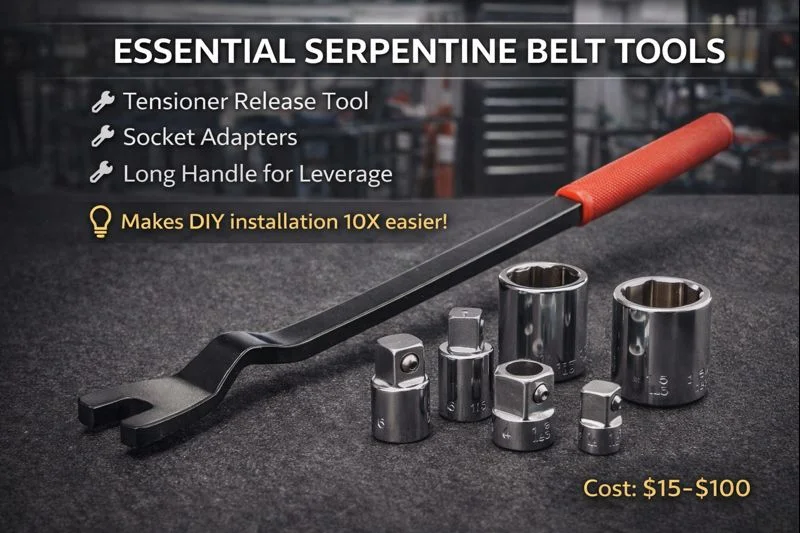
The most important serpentine belt tool is a serpentine belt tool set or tensioner release tool. This is typically a long-handled wrench or special socket tool designed specifically for rotating the serpentine belt tensioner. The extra leverage makes compressing the tensioner’s spring much easier and safer than using regular wrenches.
Some serpentine belt tools are universal, fitting most vehicles, while others are designed for specific makes and models. The best serpentine belt tool sets include multiple adapters to fit different tensioner designs. You can find basic serpentine belt tool kits for $15-30 at auto parts stores, or professional-grade sets for $50-100.
Other helpful tools include:
A flashlight or work light to see the serpentine belt diagram and routing clearly in the dark engine bay.
Your smartphone for taking reference photos before removing the old belt.
A socket set because some vehicles require removing plastic covers or other components to access the belt.
Safety glasses to protect your eyes from debris when working under the hood.
Gloves to keep your hands clean and protected from sharp edges.
Many DIYers successfully replace serpentine belts using just a standard wrench set, but a dedicated serpentine belt tool makes the job significantly easier. The long handle provides better leverage, and the special design fits the tensioner perfectly without slipping. If you plan to change engine belts regularly or work on multiple vehicles, investing in a quality serpentine belt tool set is worthwhile.
For professional mechanics, pneumatic or electric serpentine belt tools are available that compress the tensioner at the push of a button. These tools save time and reduce fatigue when changing car belts multiple times daily, but they’re overkill for most home mechanics.
Serpentine Belt vs Timing Belt: Understanding the Difference
Many car owners confuse the serpentine belt with the timing belt, but these are completely different components with very different functions. Understanding the serpentine belt vs timing belt distinction is important for proper vehicle maintenance.
The serpentine belt is external and visible when you open your hood. It drives accessories like the alternator, power steering, and air conditioning. If your serpentine belt breaks, your car will lose power steering, the battery won’t charge, and the engine may overheat, but the engine itself continues running (at least for a short time).
The timing belt is internal, hidden behind protective covers attached to the engine block. It synchronizes the crankshaft and camshaft(s), ensuring valves open and close at precisely the right time as pistons move up and down. If your timing belt breaks, the engine stops immediately and may suffer catastrophic internal damage on interference engines.
Here’s a detailed serpentine belt vs timing belt comparison:
Location: The serpentine belt is external and easy to see. The timing belt is internal and requires disassembly to inspect.
Function: The serpentine belt powers accessories. The timing belt controls valve timing.
Replacement interval: Serpentine belts typically need replacement every 50,000-100,000 miles. Timing belts usually last 60,000-105,000 miles but vary significantly by manufacturer.
Failure consequences: A broken serpentine belt causes inconvenience and potential overheating. A broken timing belt can destroy your engine, requiring thousands of dollars in repairs or complete engine replacement.
Replacement cost: Changing a belt typically costs $75-200. Timing belt replacement usually costs $500-1,000+ due to the labor involved.
DIY difficulty: Replacing a belt is relatively easy for DIYers. Timing belt replacement requires advanced skills and special tools.
Not all vehicles have timing belts. Many modern engines use timing chains instead, which are metal and typically last the life of the engine. However, virtually all vehicles have a belt or similar accessory belt system.
The serpentine belt vs timing belt confusion is understandable because both are belts that keep your engine running properly. Just remember: belts are outside and drive accessories, while timing belts are inside and control valve timing. Both are critical, but the timing belt is more expensive and catastrophic when it fails.
When maintaining your vehicle, keep track of both belt replacement schedules. Just as you need to maintain other engine components like your Ford F-350 engine or Chevy Silverado engine, regular belt maintenance prevents expensive breakdowns.
Signs Your Serpentine Belt Needs Replacement
Recognizing when your serpentine belt needs replacement can save you from an inconvenient breakdown. Here are the warning signs to watch for:
Squealing or chirping noises are the most common symptom. A high-pitched squeal when you start the engine or turn on the air conditioning indicates the belt serpentine system isn’t gripping properly. This could mean the belt is worn, the serpentine belt tensioner is failing, or the belt is simply loose.
Visible cracks on the belt’s surface indicate the rubber is deteriorating. Small cracks are normal on older belts, but deep cracks that go across multiple ribs mean the belt could fail soon. Inspect your serpentine belt every few months by looking at the ribbed side for cracks, glazing (shiny, smooth areas), or missing chunks of rubber.
Fraying or separation at the belt edges shows advanced wear. If you see fibers coming loose or the belt looks fuzzy at the edges, replacement is urgent.
Dashboard warning lights can indicate serpentine belt problems. A battery light might illuminate because the alternator isn’t charging properly. An engine temperature warning could appear because the water pump (if belt-driven) isn’t circulating coolant effectively.
Loss of power steering makes steering feel heavy and difficult, especially at low speeds. This happens when the belt slips and can’t drive the power steering pump properly.
Air conditioning stops working or blows warm air because the belt isn’t turning the AC compressor pulley consistently.
Battery dies repeatedly because the slipping belt prevents the alternator from charging the battery fully.
Visible belt damage from contact with other components or debris. If you see chunks missing or obvious damage, don’t drive have the vehicle towed to prevent further damage.
Most manufacturers recommend replacing the belt every 60,000-100,000 miles as preventive maintenance, even if it looks fine. Rubber deteriorates over time from heat, ozone, and chemical exposure. A belt that looks okay might still be weakened internally and ready to fail.
Serpentine Belt Replacement Cost and What to Expect
Understanding serpentine belt replacement cost helps you budget for this essential maintenance and recognize fair pricing.
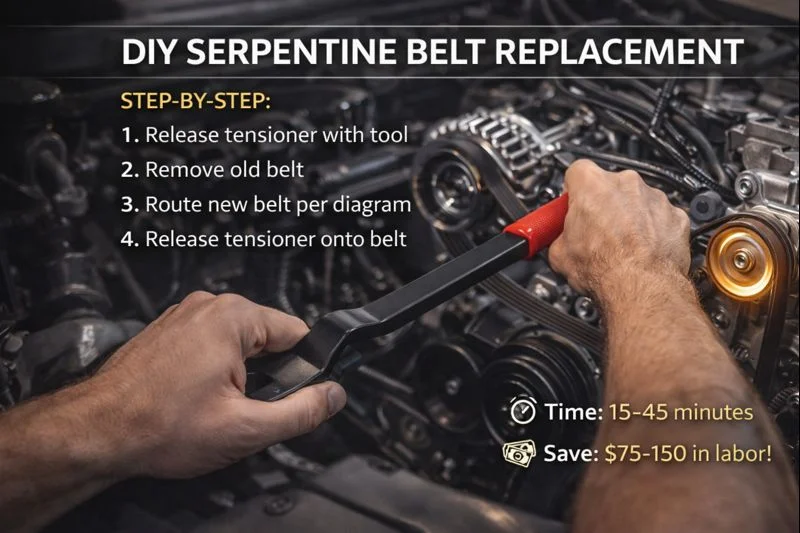
DIY serpentine belt replacement cost is quite affordable. A quality replacement belt typically costs $20-50 depending on your vehicle. Add another $15-30 if you need a serpentine belt tool, and you’re looking at $35-80 total. The job takes 15-45 minutes for most vehicles, making it one of the most cost-effective DIY repairs.
Professional serpentine belt replacement cost ranges from $100-200 at most shops. This includes the belt (usually $25-60), plus labor charges of $75-140. Dealerships typically charge $150-250 for the same service. The job is quick for experienced mechanics usually 30 minutes or less, but shops charge minimum labor rates.
Serpentine belt replacement cost with tensioner increases significantly. If you replace both the belt and serpentine belt tensioner together (which is recommended), expect to pay $150-300 at a shop, or $75-150 if doing it yourself. The tensioner costs $40-100 for parts, plus additional labor.
Serpentine belt replacement cost factors that affect pricing include:
Vehicle type – Luxury cars and some imports require more expensive belts and have higher labor rates. A serpentine belt for a Honda Civic costs less than one for a BMW.
Belt accessibility – Easy-to-reach belts cost less in labor. Some vehicles require removing other components to access the belt, increasing labor time and cost.
Additional repairs – If pulleys are damaged or bearings are worn, expect additional charges for those repairs.
Location – Urban areas and dealerships charge more than rural independent shops.
Urgency – Emergency repairs or mobile mechanics charge premium rates.
When getting quotes for changing car belt services, ask if the serpentine belt replacement cost includes inspecting the serpentine belt tensioner and pulleys. A good mechanic checks all related components during replacement. If pulleys are noisy or the tensioner is weak, replacing them with the belt saves money by preventing another repair job in six months.
Many shops offer serpentine belt replacement as part of major service packages at 60,000 or 90,000 miles, which may reduce the overall cost compared to having it done separately.
How to Change a Serpentine Belt (DIY Guide)
Changing a belt yourself saves money and isn’t difficult with the right approach. Here’s a straightforward guide to change engine belt components safely.
Step 1: Preparation
Park on level ground, engage the parking brake, and let the engine cool completely. Gather your serpentine belt tool, new belt, flashlight, and camera phone. Locate your belt diagram under the hood and take a clear photo of the current belt routing as backup.
Step 2: Inspect the System
Before removing the old belt, examine all pulleys for damage, roughness, or unusual wear. Spin each pulley by hand (with the belt removed) to check for grinding noises or rough rotation. Check the belt tensioner for excessive play or looseness.
Step 3: Release Tension
Insert your belt tool or wrench into the square or hexagonal hole on the belt tensioner arm. Rotate the tensioner to release pressure on the belt. The direction varies by vehicle consult your diagram or manual. Most tensioners rotate clockwise to release, but some rotate counterclockwise.
Step 4: Remove Old Belt
While holding the tensioner in the released position, slip the belt off one pulley (usually the alternator or smooth idler pulley). Slowly release the tensioner back to its resting position. Now you can remove the belt completely from all the other pulleys.
Step 5: Install New Belt
Following your belt diagram (or your reference photo), route the new belt around all pulleys except one typically the last pulley before completing the loop. Make sure the ribbed side of the belt contacts the ribbed pulleys, and the smooth back of the belt contacts any smooth pulleys.
Step 6: Final Tensioner Release
Use your serpentine belt tool to rotate the serpentine belt tensioner again, releasing tension. Slip the belt onto the final pulley, then slowly release the tensioner to apply pressure to the new belt.
Step 7: Verify Installation
Double-check that the belt serpentine routing matches your diagram exactly. Make sure the belt ribs are properly seated in all pulley grooves with no twisted sections.
Step 8: Test
Start the engine and listen for unusual noises. Watch the belt as it runs to ensure it’s tracking properly on all pulleys without excessive vibration or misalignment. Turn on the air conditioning to verify the AC compressor engages properly.
Step 9: Final Check
After a short test drive, recheck the belt alignment and listen for any squealing. Some new belts may squeak slightly for the first few miles as they seat into the pulleys this is normal.
Changing car belt components is one of the easier maintenance tasks, but if you’re uncomfortable working under the hood, professional installation is always an option. Regular maintenance, including replacing worn belts, keeps your vehicle reliable just like following proper how to change oil procedures.
Conclusion
The serpentine belt is a simple but critical component that keeps your vehicle running properly. This single continuous belt powers multiple systems from your alternator and power steering to your air conditioning and water pump. Understanding how your belt drive system works, recognizing warning signs of wear, and knowing when to replace the belt helps you avoid inconvenient breakdowns and expensive repairs.
Regular inspection of your belt every few months takes just minutes but can prevent major problems. Look for cracks, fraying, or glazing on the belt surface. Listen for squealing noises that indicate slipping. Pay attention to dashboard warning lights that might signal belt-related issues.
Frequently Asked Questions
What is the serpentine belt replacement cost at a shop?
The serpentine belt replacement cost at most repair shops ranges from $100-200 for the belt alone, including parts and labor.
How often should I change engine belt components?
Most manufacturers recommend changing your serpentine belt every 60,000-100,000 miles as preventive maintenance, even if it looks fine.
What’s the difference between changing car belt types?
When changing car belt components, it’s important to understand that serpentine belts and timing belts are completely different. Serpentine belts are external, visible, and power accessories like the alternator and power steering.
Can I drive with a damaged serpentine belt?
Driving with a damaged or broken serpentine belt is not recommended and can be dangerous.
How long does serpentine belt replacement take?
For a professional mechanic, serpentine belt replacement typically takes 15-30 minutes on most vehicles.

