
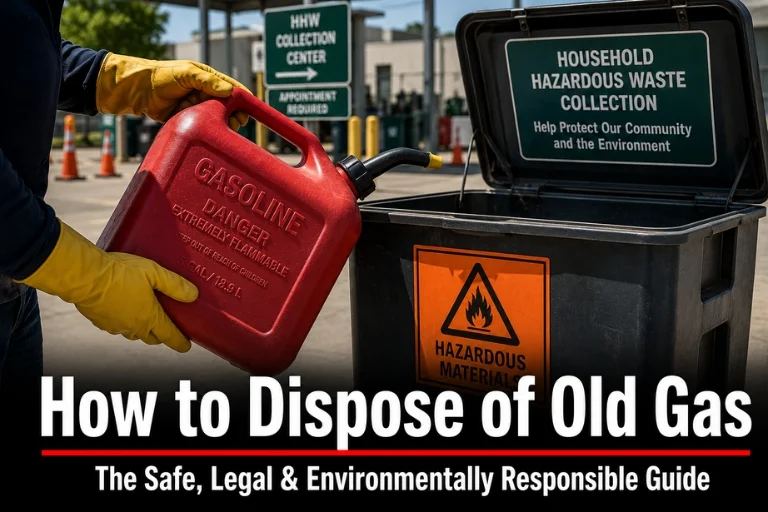

Most drivers and homeowners have encountered the same scenario: a gas can tucked in the back of the garage, a lawnmower that sat through winter without being drained, or fuel that has been sitting in a storage container for far longer than anyone intended. The question that follows is always the same — how do you get rid of this stuff safely? Knowing how to dispose of old gas correctly is not just a matter of convenience. It is a legal obligation and an environmental responsibility, because gasoline is classified as hazardous waste in every single U.S. state.
This complete guide covers everything — how to recognize degraded fuel, exactly where to dispose of old gasoline, how to recycle old gasoline when possible, whether you can dump old gasoline at home, and what you need to know about the critical question of does gas go bad in a gas can.
Does Gas Go Bad in a Gas Can?
Before understanding how to get rid of old gas, it helps to know exactly why old gas becomes a problem in the first place. The answer to the question of does gas go bad in a gas can is an unambiguous yes — and it happens faster than most people expect.
Pure gasoline has a usable shelf life of approximately three to six months under normal storage conditions. Ethanol-blended fuels — which represent the vast majority of gasoline sold at American pumps — degrade even faster, with a practical shelf life closer to two to three months in an unsealed container or tank exposed to air and temperature fluctuation. Premium and high-octane fuels last somewhat longer, up to nine months in some cases, while diesel fuel can remain stable for approximately one year under proper conditions.
The degradation process that makes gas go bad in a gas can involves several simultaneous chemical reactions. Exposure to oxygen causes oxidation that transforms gasoline’s hydrocarbon compounds into gummy, varnish-like substances. The most volatile, easily combustible components of the fuel evaporate first, leaving a heavier, harder-to-ignite residue. Ethanol in blended fuels actively absorbs moisture from surrounding air — a process called phase separation — where the water-ethanol mixture separates from the gasoline and sinks to the bottom of the container, severely degrading the fuel’s combustibility.
The result is fuel that can foul fuel injectors, clog carburetors, cause hard starting, produce rough running, and in severe cases damage engine components. If you cannot remember when you last filled a gas can, the responsible assumption is that the fuel inside it should be tested before use and disposed of if it shows signs of degradation.
How to Tell If Gasoline Has Gone Bad
Before deciding whether to use, recondition, or dispose of old gasoline, inspect it carefully using these straightforward methods:
Visual Inspection
Fresh gasoline is clear with a light amber tint and free of cloudiness or sediment. Old gasoline typically appears darker, cloudier, and may show visible particles or separation layers. If you see a distinct layer at the bottom of a transparent container after the fuel has been allowed to sit still, that layer is likely water from phase separation — a clear sign the fuel is compromised.
Smell Test
Fresh gasoline has a sharp, distinctive odor that most people immediately recognize. Degraded gasoline develops a sour, musty, stale, or varnish-like smell. If you detect any of these off-odors when carefully sniffing from a distance, the fuel has oxidized past its useful life.
Performance Clues
If the fuel is already in an engine and the engine starts hard, runs rough, misfires, stalls repeatedly, or produces unusual exhaust smoke, old or degraded fuel is one of the most likely culprits. If an engine that previously ran well develops these symptoms after sitting unused for a season, suspect the gasoline before anything else.
How to Get Rid of Old Gas — What Not to Do First
Understanding how to get rid of old gas starts with clearly establishing what you must never do, because the consequences of improper disposal range from significant fines to serious environmental contamination and genuine fire hazards.
Never Pour Old Gas Down a Drain
Pouring gasoline down any household drain — kitchen sink, bathroom sink, floor drain, or outdoor drain — is illegal in every U.S. jurisdiction without exception. Gasoline poured down drains reaches the sewer system, water treatment facilities, and ultimately waterways and groundwater. One gallon of gasoline is capable of contaminating up to one million gallons of water.
Never Dump Old Gas on the Ground or Soil
Dumping old gasoline onto soil or grass is equally illegal and equally destructive. Gasoline penetrates soil rapidly, killing vegetation and soil organisms, and migrating downward into groundwater tables where it contaminates drinking water sources for entire communities.
Never Put Old Gas in Household Trash
Old gasoline cannot be placed in regular trash bags or recycling bins under any circumstances. Gasoline is highly flammable, and even trace amounts in a trash container can ignite from a spark during collection or at a waste sorting facility.
Never Mix Old Gas With Other Chemicals
Adding old gasoline to other household chemicals — antifreeze, cleaners, solvents, or used motor oil — does not neutralize it. It creates a hazardous mixture that complicates proper disposal and may increase the risk of fire or toxic vapor release.
The EPA explicitly classifies improper household hazardous waste disposal — including pouring gasoline down drains, onto the ground, into storm sewers, or placing it in regular trash — as a prohibited act that can carry substantial civil and criminal penalties.
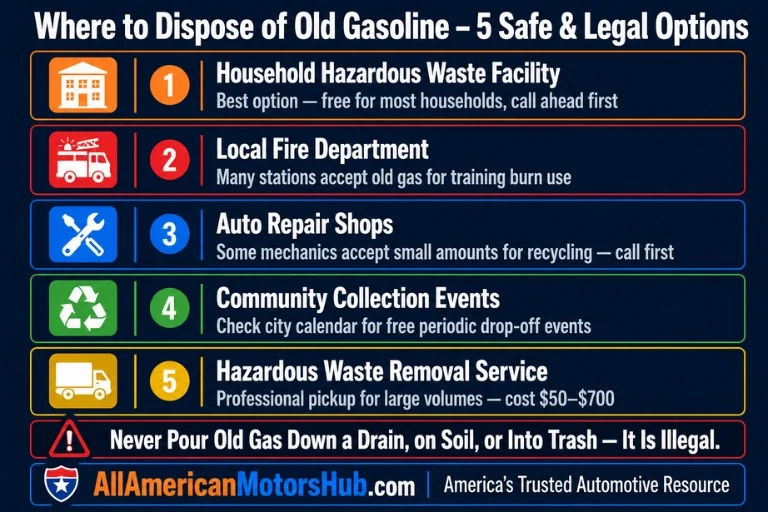
How to Dispose of Old Gasoline — 5 Safe and Legal Options
Now that you know what not to do, here is exactly where to dispose of old gasoline legally and safely:
Option 1 — Household Hazardous Waste Facility
This is the single best answer to the question of where to dispose of old gasoline for the vast majority of homeowners. Household hazardous waste facilities are permanent drop-off locations operated by municipal or county waste management authorities, specifically equipped to handle dangerous materials including gasoline, paints, pesticides, and solvents.
Most household hazardous waste disposal programs are completely free for residential households up to a specified volume limit — typically ranging from 15 to 35 gallons depending on the program. Commercial users may incur fees. Search your city or county government website, or use Earth911.com and search by zip code, to locate the nearest facility. Always call ahead or check online before transporting fuel, because facilities often have restricted hours, appointment requirements, and specific rules about container types.
Option 2 — Local Fire Department
Many local fire departments accept old gasoline as a donation to their fire training programs, where controlled burns are conducted for firefighter education purposes. This is an excellent option for small quantities of old gas and fire stations generally have the equipment to handle fuel safely. Call your local station before showing up to confirm they accept fuel donations and understand their specific requirements.
Option 3 — Auto Repair Shops and Mechanics
Some auto repair shops and independent mechanics accept small quantities of old gasoline, either recycling it for use in shop heaters or sending it to licensed hazardous waste contractors. This is not a universal policy — availability depends heavily on the individual shop and local regulations — so always call ahead before bringing fuel. If the shop cannot accept it, ask whether they can point you toward a facility that does.
Option 4 — Community Hazardous Waste Collection Events
Many municipalities hold periodic household hazardous waste collection events, typically on specific weekends, where residents can drop off gasoline and other hazardous household materials for free. These events are an excellent option if a permanent facility is not conveniently located nearby. Check your city or county government website, local public works department, or community events calendar to find upcoming collection dates.
Option 5 — Professional Hazardous Waste Removal Services
For larger volumes of old gasoline — such as that found in a commercial fleet, a large generator, or a boat storage situation — professional hazardous waste removal services can arrange pickup and transport directly from your location. This option eliminates all handling responsibility from the homeowner or business owner but comes at a cost ranging from approximately $50 for small residential pickups to $700 or more for commercial quantities.
How to Recycle Old Gasoline — When Reconditioning Is an Option
Not every quantity of old fuel needs to be disposed of at a hazardous waste facility. In some cases, it is possible to recycle old gasoline by reconditioning it for reuse — but only when the fuel meets specific conditions that indicate it has not yet fully degraded beyond usefulness.
Reconditioning is only appropriate when the fuel is only slightly degraded — a few months old rather than a year or more — and shows no visible water separation, heavy discoloration, or strong off-odors. The reconditioning process begins by pouring the old fuel through a coffee filter or two layers of clean cloth into a fresh container to remove particulate debris and sediment. Allow the filtered fuel to sit in a clear transparent container so any water layer settles visibly to the bottom, then carefully pour the cleaner gasoline off the top while leaving the water behind.
If reconditioning is viable, mix the reconditioned old gasoline with fresh gasoline at a ratio of approximately one part old fuel to five parts fresh fuel. The higher concentration of fresh fuel raises the overall combustibility and helps compensate for the degraded components in the old gas. Adding a quality fuel stabilizer during this mixing process provides additional protection for the blended fuel.
This reconditioned blend is most suitable for small engines — lawn mowers, generators, pressure washers, and similar equipment — rather than daily-use vehicles. Never attempt to recondition fuel that shows visible water separation, has been sitting for more than 12 months, smells strongly of varnish, or contains visible sediment or discoloration that cannot be filtered out.
For drivers who want to prevent old fuel from becoming a problem in the first place, using a quality fuel stabilizer before storing any vehicle or equipment for an extended period eliminates the degradation problem at its source. Our serpentine belt complete guide is one example of the broader maintenance knowledge that helps drivers avoid costly fuel and mechanical issues before they develop.
Where to Dump Old Gas — Transportation Safety Rules
Once you have determined where to dump old gas and are ready to transport it, following these safety rules protects you, your vehicle, and everyone around you during the trip:
Use Only Approved Containers
Old gasoline must be stored and transported exclusively in containers specifically designed and approved for fuel storage — red gas cans meeting OSHA and EPA specifications for portable fuel containers. Never use milk jugs, glass jars, water bottles, food containers, or non-approved plastic containers. These containers are not designed to withstand gasoline’s chemical properties or pressure.
Seal Containers Completely
Before placing any fuel container in your vehicle, verify that the cap is tightly sealed and the container shows no signs of seeping, cracking, or damage. A leaking container in a vehicle produces fumes that concentrate in enclosed spaces and represent a genuine explosion risk.
Never Transport in the Passenger Cabin
Gasoline containers should never be placed inside a vehicle’s passenger compartment under any circumstances. Even sealed containers produce vapors. Always transport fuel in the open bed of a pickup truck, on an open trailer, or in the trunk of a car with the trunk lid slightly ventilated — and remove the containers from the vehicle immediately upon arrival at the disposal facility.
Secure Containers Against Tipping
Use cargo straps, bungee cords, or cargo nets to prevent fuel containers from tipping, sliding, or rolling during transport. A tipping container that loses its seal in transit creates an immediate fire and contamination hazard.
Do Not Smoke or Use Open Flames
While transporting old gasoline, do not smoke inside or immediately outside the vehicle, and avoid driving past situations involving open flames or extreme heat sources. Gasoline vapors can ignite from a single spark at a surprisingly low concentration in the air.
How to Dispose of Old Gas Cans
Once you have successfully dealt with the fuel itself, the gas can or container also requires proper disposal. Gasoline containers are themselves considered hazardous material items and cannot simply be thrown in household recycling bins.
Empty all remaining fuel completely from the container into an approved hazardous waste disposal vessel. Rinse the inside of the can with a very small amount of fresh gasoline — not water — to remove residual fuel film, then dispose of this rinse fuel along with the old gas at your hazardous waste facility. Allow the empty, rinsed container to air dry completely in a well-ventilated outdoor area away from any ignition sources before handling it further.
Metal gas cans can typically be recycled as scrap metal at most metal recycling facilities once they are clean and dry. Plastic fuel containers are generally considered hazardous waste material themselves and must be taken to a hazardous waste facility rather than placed in standard plastic recycling. Always confirm the specific requirements with your local waste authority before transporting empty containers, as documentation may be required in some jurisdictions for bulk or commercial disposal situations.
For drivers dealing with fuel-related engine damage caused by old gasoline — degraded fuel in fuel injectors, fouled carburetors, or contaminated fuel systems in a stored vehicle — our fuel pressure regulator guide explains how the fuel delivery system works and helps you diagnose problems caused by degraded gasoline exposure.
Does Dumping Old Gasoline Carry Legal Consequences?
Yes — and the penalties are significant. In most U.S. states, illegal dumping of gasoline on soil, into storm drains, or into household trash carries civil fines ranging from several hundred to several thousand dollars per violation. In states with stricter environmental enforcement — including California, which has some of the most comprehensive hazardous waste regulations in the country — penalties for illegal gasoline disposal can escalate substantially for repeat violations or larger volumes.
Beyond individual fines, improper gasoline disposal that contaminates soil or groundwater can trigger environmental remediation liability, meaning the responsible party may be legally obligated to fund the cleanup of contaminated land or water. This liability can apply to homeowners, businesses, and landlords alike and can far exceed the cost of proper disposal.
The legal framework is straightforward: every U.S. state classifies gasoline as hazardous waste, and the consequences of treating it otherwise are real, enforceable, and disproportionately expensive compared to the minimal cost or inconvenience of legal disposal.
Preventing Old Gas From Becoming a Problem
The most effective approach to old gas disposal is preventing unnecessary accumulation in the first place. These practical habits eliminate most old gasoline problems before they start:
Only purchase fuel in the quantity you expect to use within the next 30 to 60 days. Add a quality fuel stabilizer to any gasoline you intend to store for more than 30 days — this single habit can extend the usable life of stored gasoline from months to over a year. Label every gas can with the date it was filled so you always know exactly how old the fuel inside it is. Use older stored fuel first and rotate your supply regularly rather than allowing cans to sit forgotten in a corner of the garage for an entire season.
For lawn equipment and seasonal machinery, drain the fuel tank completely at the end of every season rather than leaving fuel in the engine or carburetor to degrade over winter storage. This eliminates the single most common cause of seasonal equipment starting problems and removes the need to dispose of a full tank of degraded fuel every spring.
For comprehensive seasonal vehicle storage guidance, our car maintenance checklist covers every preparation step — including fuel system management — that keeps your vehicle ready for reliable service after any period of extended storage.
Conclusion
Knowing how to dispose of old gas correctly is a fundamental responsibility for every vehicle owner, homeowner, and equipment operator in America. Old gasoline is hazardous waste — highly flammable, toxic to soil and water, and illegal to dump in any ordinary trash or drainage system in every state in the country. Whether you choose to take old gasoline to your local household hazardous waste facility, donate it to a fire station, arrange pickup through a professional service, or recondition mildly degraded fuel for reuse in small equipment, the key is that you handle it deliberately, safely, and legally every single time.
The environmental cost of improperly disposing of old gasoline — potentially contaminating millions of gallons of drinking water with a single gallon of dumped fuel — is simply too high for convenience shortcuts to ever be justified. Protect your community, protect the environment, and protect yourself from legal liability by following the guidance in this article every time you need to get rid of old gasoline.
For drivers looking to keep their entire vehicle fuel system — from the tank through the injectors — in top working order after dealing with old or degraded fuel, explore our complete ignition coil guide and understanding p0420 code guide for help diagnosing any engine performance issues that old gasoline may have left behind.
Frequently Asked Questions
How do you dispose of old gas safely?
The safest and most responsible way to dispose of old gas is to store it in an approved, sealed fuel container and transport it to your local household hazardous waste facility. Many programs accept old gasoline for free from residential users. Additional options include local fire departments, auto repair shops that accept small amounts for recycling, and community hazardous waste collection events.
How do you get rid of old gasoline if you only have a small amount?
For small amounts of old gasoline, your best options are your local household hazardous waste facility, a nearby fire department that accepts fuel for training burns, or an auto repair shop willing to take it for recycling. Never pour small amounts of gasoline onto the ground or down a drain regardless of how little you have — even a single gallon can contaminate an enormous volume of groundwater.
Where do you dispose of old gasoline near me?
To find where to dispose of old gasoline in your area, search your city or county government’s waste management website, visit Earth911.com and search by zip code for hazardous waste drop-off locations, or call your local public works department or fire station. Always call ahead before transporting fuel to confirm the facility’s hours, volume limits, and container requirements.
What do you do with old gasoline that you want to keep using?
If the old gasoline is only slightly degraded — a few months old, free of visible water separation, and not strongly discolored — you may be able to recondition it by filtering it through a coffee filter, separating any settled water, and mixing it with fresh gasoline at a one-to-five ratio. Adding a fuel stabilizer to the blend helps extend its remaining usable life. This reconditioned fuel is best suited for lawn equipment and small engines rather than daily-use vehicles.
How do you recycle old gasoline?
The most common way to recycle old gasoline is to take it to a household hazardous waste facility, where it is processed, reconditioned, or used for energy recovery rather than being destroyed. Some auto repair shops and mechanics also recycle old gasoline received from customers by blending it into shop fuel or sending it to a licensed processor. Additionally, slightly degraded fuel can sometimes be reconditioned and reused by filtering, water separation, and blending with fresh gasoline.
Where do you dump old gas if there is no facility nearby?
If a permanent household hazardous waste facility is not conveniently located, check your municipal calendar for periodic community collection events where you can drop off old gasoline for free. Alternatively, contact a professional hazardous waste removal service for pickup. You can also check with local fire departments and auto repair shops. What you must never do is dump old gasoline on the ground, into a drain, or in the trash — this is illegal in all U.S. states regardless of the quantity involved.
Does gas go bad in a gas can?
Yes, gas goes bad in a gas can. Pure gasoline degrades in approximately three to six months, while ethanol-blended fuels — the most common type sold at American pumps — can deteriorate in as little as two to three months in a sealed container, and even faster in open or vented containers. Signs of bad gasoline include a darker color, cloudiness, visible water separation, and a sour or varnish-like smell compared to fresh fuel.
Is dumping old gasoline illegal?
Yes. Dumping old gasoline on soil, into any drain or storm sewer, or in household trash is illegal in every U.S. state. All states classify gasoline as hazardous waste, and improper disposal carries civil fines ranging from hundreds to thousands of dollars per violation. In states with stricter environmental regulations, repeat violations or large-volume dumping can result in criminal charges and environmental remediation liability.