
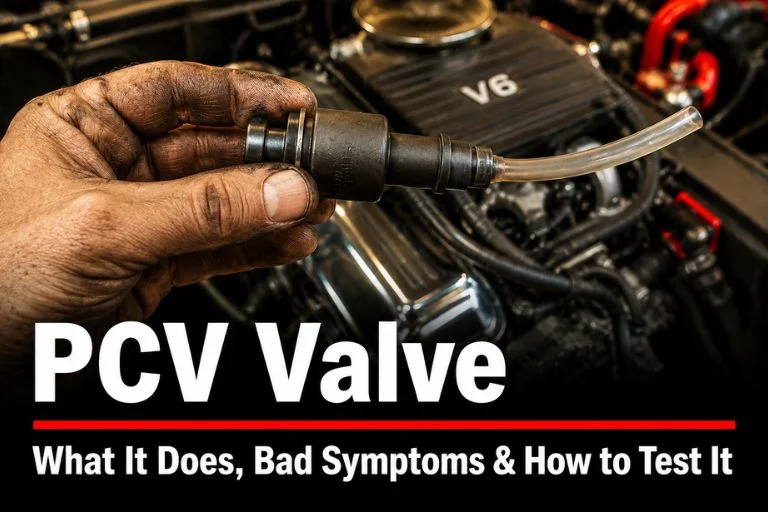

Hidden inside your engine bay, connected by a simple rubber hose, sits one of the most overlooked yet critically important components in your entire vehicle — the PCV valve. Most drivers have never heard of it, never inspected it, and have no idea what it does. Yet when this small component fails, it can trigger a cascade of engine problems that range from spongy idle and oil leaks to serious internal engine damage. This complete guide covers everything you need to know about the PCV valve — what it is, what it does, how the car PCV system works, what happens when it goes bad, PCV delete kit facts, and how to test and replace it yourself.
What Is a PCV Valve?
PCV stands for Positive Crankcase Ventilation. The PCV valve is a small, spring-loaded, one-directional check valve that forms the core component of your engine’s crankcase ventilation system. It is typically the size of a thumb and made from plastic or metal, connected to the valve cover by a rubber hose on one end and routed to the intake manifold on the other.
Its job is deceptively simple but enormously important: the PCV valve controls the flow of blow-by gases from your engine’s crankcase back into the intake manifold, where those gases are burned safely in the combustion cycle rather than being released into the atmosphere or allowed to build pressure inside the engine.
The PCV system was introduced as a mandatory emissions control device in the United States in 1963 and has been standard equipment on virtually every gasoline and diesel passenger vehicle manufactured since. It is one of the oldest and most reliable emissions reduction technologies in automotive history.
What Is a PCV — Understanding Blow-By Gases
To understand why the PCV valve exists, you first need to understand what happens inside a running engine. As the pistons move up and down inside the cylinders during the combustion cycle, small amounts of combustion gases inevitably slip past the piston rings and into the crankcase below. These escaped gases are called blow-by gases, and they consist of unburned fuel vapors, water vapor, oil mist, and exhaust byproducts.
If blow-by gases were left to accumulate unchecked inside the crankcase, the consequences would be severe:
- Crankcase pressure would build rapidly, forcing oil past seals and gaskets
- Moisture and acidic compounds in the gases would contaminate engine oil, accelerating sludge formation
- Internal corrosion would attack bearings, rings, and cylinder walls
- Harmful hydrocarbons would be vented directly into the atmosphere
The PCV system solves all of these problems in one elegant loop. The blow-by gases travel upward through the engine, enter the PCV valve, and are drawn by intake vacuum into the intake manifold — where they mix with the incoming air-fuel charge and are burned during normal combustion. Clean fresh air enters the crankcase through a breather port on the opposite side, completing the ventilation circuit.
Car PCV System — How the Valve Actually Works
The PCV valve is not a passive fitting — it is an active, spring-loaded device that regulates gas flow based on engine operating conditions. Understanding how it behaves in different situations explains why it is so critical to consistent engine performance.
At idle, the engine generates high vacuum in the intake manifold because the throttle is mostly closed. This strong vacuum pulls the PCV valve’s internal plunger partially toward the manifold, restricting flow. Since blow-by volume is low at idle, this restricted flow is appropriate — it prevents too much unmetered air from entering the intake and destabilizing the idle air-fuel mixture.
During Normal Driving Under moderate load and mid-range RPM, vacuum drops slightly and the plunger moves to a more open position, allowing higher blow-by gas flow through the valve and into the intake. This is the normal operating range where the PCV system handles the majority of crankcase ventilation work.
Under Heavy Load or Acceleration At wide-open throttle, intake manifold vacuum drops significantly. The spring inside the PCV valve pushes the plunger fully open, allowing maximum gas flow. If blow-by volume exceeds the valve’s capacity under extreme load, the excess gases are rerouted back through the breather hose toward the air filter housing, preventing crankcase overpressure.
During a Backfire If a backfire occurs — where a spark plug fires out of sequence, sending a pressure spike back through the intake manifold — the PCV valve’s plunger is forced closed immediately by the reverse pressure. This prevents the backfire flame from traveling into the crankcase, where igniting oil vapor could cause catastrophic engine damage.
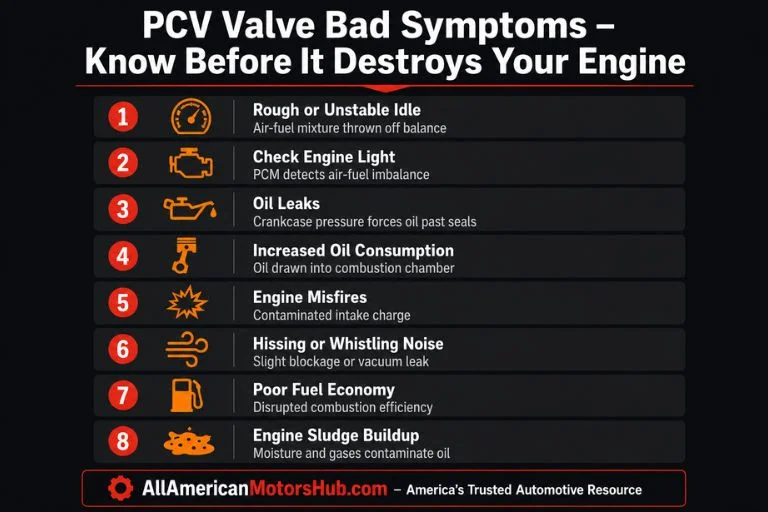
PCV Valve Bad Symptoms — 8 Warning Signs You Cannot Ignore
A failing PCV valve produces a distinct and recognizable set of symptoms. Knowing them early prevents minor valve failure from escalating into expensive engine repairs.
1. Rough or Unstable Idle The most common PCV valve bad symptom. When the valve is stuck open, it allows excessive unmetered air into the intake manifold, creating a lean air-fuel mixture that causes the engine to idle roughly, shake, or hunt for a stable RPM. When stuck closed, crankcase pressure disrupts combustion rhythm, also causing rough idle.
2. Check Engine Light A malfunctioning PCV valve directly affects the engine’s air-fuel ratio. The powertrain control module detects the imbalance through oxygen sensor readings and illuminates the check engine light. Common diagnostic trouble codes triggered by PCV issues include P0171 (system running lean) and P0507 (idle control system high RPM).
3. Oil Leaks When the PCV valve is clogged or stuck in the closed position, crankcase pressure builds with nowhere to escape. That pressure pushes engine oil through the path of least resistance — past valve cover gaskets, rear main seals, and oil pan gaskets. If you notice fresh oil pooling under your vehicle or seeping around the valve cover area, inspect the PCV valve before replacing gaskets.
4. Increased Oil Consumption A PCV valve stuck open draws excess oil vapor from the crankcase directly into the intake manifold. That oil enters the combustion chamber and burns, producing blue or grey exhaust smoke and reducing the oil level between service intervals without any visible external leak.
5. Engine Misfires The disrupted air-fuel ratio caused by a faulty PCV valve can cause individual cylinders to misfire, particularly at idle or during low-load driving. Misfires feel like momentary stumbles, vibrations, or hesitation under light throttle.
6. Hissing or Whistling Noise from the Engine A partially clogged or cracked PCV valve or damaged vacuum hose creates an air leak that produces a hissing, whistling, or whining sound from the engine bay. This noise typically changes or disappears when the PCV hose is temporarily blocked during diagnosis.
7. Poor Fuel Economy A PCV valve failure that disrupts the intake air-fuel mixture forces the engine ECU to compensate by adjusting fuel delivery. This recalibration typically results in a richer mixture than necessary, increasing fuel consumption noticeably over time.
8. Engine Sludge Buildup Without proper crankcase ventilation, moisture, unburned fuel, and blow-by gases remain trapped inside the engine. Over time these contaminants mix with engine oil and form thick, tar-like sludge deposits that clog oil passages, coat bearings, and dramatically accelerate engine wear. Sludge buildup from a neglected PCV system is one of the most damaging — and completely preventable — forms of engine deterioration.
If you are already noticing sludge-related symptoms or any of the issues above, check out the 10 warning signs you need to replace your engine to understand when the damage has progressed beyond simple valve replacement.
How to Test a PCV Valve — 3 Simple Methods
Testing a PCV valve requires no special tools and takes less than five minutes. Here are three reliable methods:
Method 1 — The Shake Test Remove the PCV valve from the valve cover grommet. Hold it in your hand and shake it firmly. A functioning PCV valve contains a spring-loaded plunger that should rattle clearly and distinctly when shaken. If you hear no rattle, the plunger is stuck — likely clogged with oil deposits or carbon — and the valve needs replacement immediately.
Method 2 — The Vacuum Test With the engine running at idle, disconnect the PCV hose from the valve cover and place your finger over the open end of the hose. You should feel a clear, steady vacuum suction pulling against your fingertip. If you feel no suction, the valve or hose is blocked. If the engine RPM drops dramatically when you cover the hose, the valve may be stuck fully open and allowing excessive flow.
Method 3 — Visual Inspection Remove the valve and examine it closely. A functioning valve should look clean internally. Signs of failure include heavy oil coating inside the valve body, carbon buildup visible through the valve opening, a cracked or brittle plastic housing, or hardened and cracked connecting hoses. If any of these are present, replace the valve regardless of how it performs in the shake or vacuum tests.
How to Replace a PCV Valve
Replacing a PCV valve is one of the simplest maintenance tasks a car owner can perform. Most replacements take between 5 and 15 minutes and require no special tools.
The valve is typically located on the valve cover — either snapping into a rubber grommet or threading directly into the cover itself. On some modern engines, particularly turbocharged or direct-injection models, the PCV may be integrated into the valve cover assembly, requiring complete valve cover replacement when it fails. Always verify the location and replacement procedure in your vehicle’s owner’s manual before beginning.
Replacement Steps:
- Disconnect the PCV hose from the valve cover
- Remove the PCV valve by pulling it from the grommet or unscrewing it with a socket
- Install the new valve — ensure it clicks firmly into the grommet or threads fully into position
- Reconnect the vacuum hose securely
- Start the engine and check for vacuum at idle using the finger test
PCV valves are inexpensive components — most cost between $5 and $30 for OEM-equivalent replacements. Always match the new valve to your exact vehicle make, model, engine, and year to ensure correct flow rate specification.
Replacement intervals vary by manufacturer, but a general guideline is every 20,000 to 50,000 miles or during each major service interval. If you drive primarily short trips in cold climates, inspect the valve more frequently, as moisture accumulation accelerates failure in these conditions.
For related engine maintenance knowledge, our conventional oil change guide walks you through everything that should be checked and serviced alongside your PCV valve during routine maintenance visits.
PCV Delete Kit — The Truth About This Controversial Modification
Search any automotive forum and you will find discussions about PCV delete kits — aftermarket parts that remove or bypass the PCV system entirely, typically venting crankcase gases directly to the atmosphere through a breather filter mounted on the valve cover.
The theory behind PCV delete kits sounds appealing on the surface: keep oily blow-by vapors out of the intake manifold, prevent carbon buildup on intake valves in direct-injection engines, and eliminate any restriction the PCV system introduces into the engine.
The reality is considerably less flattering.
What a PCV Delete Kit Actually Does: A PCV delete removes the closed-loop crankcase ventilation system and vents raw blow-by gases — which contain unburned hydrocarbons, oil mist, moisture, and combustion byproducts — directly into the atmosphere through a breather filter or open vent.
The Problems With PCV Deletes:
First, it is illegal on street-driven vehicles in virtually every jurisdiction with emissions regulations. The PCV system is a federally mandated emissions control device under the Clean Air Act. Removing it constitutes tampering with emissions equipment, which carries significant fines if discovered during inspection or after an accident.
Second, modern engine control modules are calibrated to expect crankcase blow-by gases entering the intake. The ECU’s fuel trim calculations account for this known quantity of contaminated air. Remove the PCV system and the ECU receives incorrect air mass readings, causing rough idle, poor throttle response, and fuel trim errors that cannot be fully corrected without expensive custom engine tuning.
Third, a PCV delete does not eliminate blow-by gases — it simply relocates where they go. The crankcase will still accumulate blow-by during every combustion cycle. Without active vacuum ventilation drawing those gases out, moisture and acidic compounds linger in the crankcase longer, potentially accelerating oil contamination and sludge formation rather than reducing it.
The Better Alternative — An Oil Catch Can For performance enthusiasts genuinely concerned about oil vapor entering the intake manifold, an oil catch can is the correct solution. A properly installed catch can is placed inline in the PCV hose between the valve cover and intake manifold. It separates oil droplets and moisture from the blow-by gases before they reach the intake, collecting them in a small reservoir that is periodically drained. The PCV system continues functioning normally, the ECU is unaffected, and oil contamination of the intake is genuinely reduced.
How Much Does PCV Valve Replacement Cost?
Professional PCV valve replacement typically costs between $110 and $220 at most repair shops, covering parts and one to two hours of labor. The valve itself usually costs only $5 to $30 depending on make and model. Labor accounts for the majority of the service cost.
For most vehicles, this is a straightforward DIY job that eliminates the labor charge entirely. The only exception is vehicles where the PCV valve is integrated into the valve cover assembly — these require more labor and part cost increases significantly, ranging from $200 to over $500 in some cases.
Understanding repair costs is essential for maintaining any vehicle affordably. Our used engine price guide by car type gives you valuable context on when engine component repairs remain cost-effective versus when a complete engine replacement makes more financial sense.
Conclusion
The PCV valve is a small, inexpensive component with an outsized impact on engine health, emissions compliance, and long-term reliability. Understanding what the PCV valve does, recognizing the symptoms of PCV valve failure early, knowing how to test it with nothing but your hands, and replacing it on schedule keeps your engine clean, efficient, and protected from the cascade of damage that a neglected crankcase ventilation system can cause.
Skip the PCV delete kit, maintain the system as designed, and consider an oil catch can if intake contamination is a genuine concern. And if your engine has already suffered damage from a long-neglected PCV system, explore our full range of used engines for sale and used transmissions to find the reliable, cost-effective replacement your vehicle deserves.
Frequently Asked Questions
What is a PCV valve?
A PCV valve stands for Positive Crankcase Ventilation valve. It is a small, spring-loaded one-way valve that forms the core of your engine’s crankcase ventilation system. Its job is to redirect blow-by gases — combustion gases that escape past the piston rings into the crankcase — back into the intake manifold where they are burned safely during normal combustion.
What does a PCV valve do for your car?
The PCV valve serves three critical functions simultaneously: it relieves crankcase pressure that would otherwise force oil past seals and gaskets, it removes moisture and contaminants from the crankcase that would degrade engine oil, and it recirculates unburned fuel vapors back into the engine rather than releasing them into the atmosphere.
What are the symptoms of a bad PCV valve?
The most common PCV valve bad symptoms include a rough or unstable idle, illuminated check engine light, oil leaks around valve cover gaskets or rear main seals, increased oil consumption with possible blue exhaust smoke, engine misfires, a hissing or whistling noise from the engine bay, noticeably poor fuel economy, and engine sludge buildup visible when checking the oil or opening the valve cover.
How does a PCV valve work?
The PCV valve uses a spring-loaded internal plunger that opens and closes in response to intake manifold vacuum. At idle, high vacuum partially closes the valve to limit flow. During normal driving, a moderate vacuum opens it further. Under heavy load, the spring pushes it fully open for maximum flow. During a backfire, reverse pressure slams it shut to protect the crankcase from igniting.
What is a PCV delete kit and should I use one?
A PCV delete kit is an aftermarket modification that removes or bypasses the PCV system, venting crankcase gases directly to the atmosphere through a breather filter. While marketed as a performance upgrade, PCV deletes are illegal on street-driven vehicles, cause ECU fuel trim problems, increase emissions, and do not eliminate blow-by gases. An oil catch can installed inline in the PCV system is the correct solution for reducing intake contamination without these drawbacks.
How often should I replace my PCV valve?
Most manufacturers recommend inspecting the PCV valve every 20,000 to 50,000 miles and replacing it as part of major service intervals. Drivers who primarily make short trips in cold climates should inspect more frequently, as condensation accumulation accelerates valve failure in these conditions.
How do I test a PCV valve at home?
Remove the valve and shake it — a functioning valve will rattle clearly as the internal plunger moves freely. Then with the engine running, place your finger over the disconnected PCV hose end — you should feel steady vacuum suction. Finally, visually inspect the valve for heavy oil deposits, carbon buildup, cracked housing, or hardened hoses. Any of these findings indicate the valve needs replacement.

