
Table of Contents
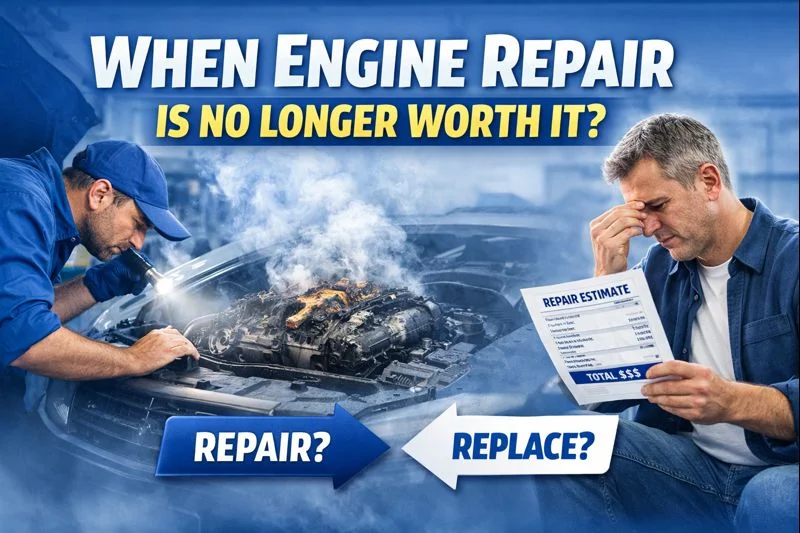
When engine repair is no longer worth it, many vehicle owners feel stuck between paying another expensive repair bill or walking away from a car they still rely on. If your engine problems keep returning and costs continue to rise, understanding when repairs stop making financial sense can save you thousands of dollars. This guide helps vehicle owners make a smart, informed decision not an emotional one. If you’re wondering whether to keep repairing your engine or consider replacement, this article breaks it down clearly and practically.
Why Engine Repairs Can Quietly Drain Your Budget
Many engine issues don’t fail all at once. They fail progressively.
What often starts as a “minor fix” turns into repeated visits to the shop:
- Oil leaks turn into oil consumption
- Overheating leads to head gasket damage
- Timing issues cause internal wear
- Misfires become compression loss
Each repair may seem reasonable on its own, but together they can quickly exceed the value of the vehicle.
The real danger isn’t one expensive repair,iit’s stacking multiple repairs over time. If you’re dealing with ongoing engine problems, this article is part of our Engine Guide, where we break down common engine failures, replacement decisions, and ownership tips for real vehicle owners.
7 Clear Signs Engine Repair Is No Longer Worth It
Repair Cost Exceeds the Vehicle’s Value
If your car is worth $4,000 and the engine repair estimate is $5,000–$7,000, the math doesn’t work. You’re putting more money into the engine than the vehicle is worth.
Repeated Engine Failures
If you’ve already repaired:
- Head gasket
- Timing chain/belt
- Sensors, coils, injectors
If the engine is still unreliable after all that, you’re probably fixing symptoms instead of the real problem.
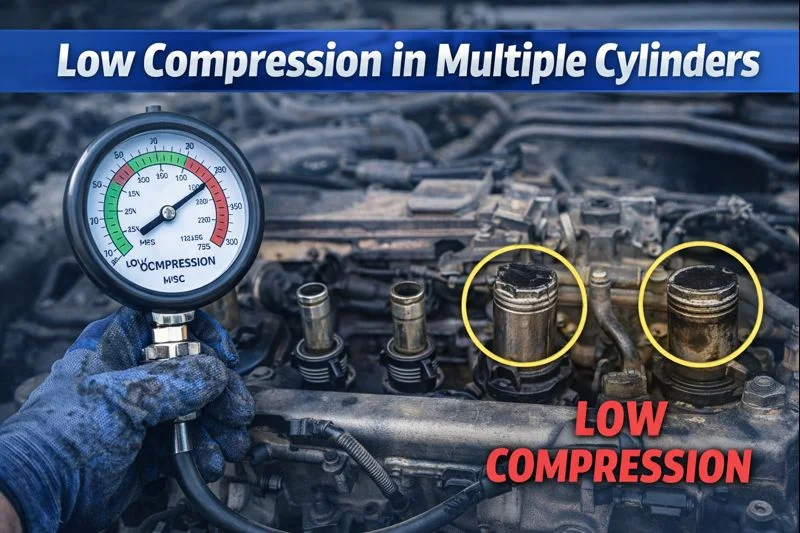
Low Compression in Multiple Cylinders
Low compression usually means internal engine wear. This is not a simple fix and often requires a full rebuild or replacement. At this stage, repair costs climb quickly with no guarantee of long-term reliability.
Excessive Oil Consumption
Burning oil every few hundred miles is a strong sign of worn piston rings or cylinder walls. Topping off oil frequently is not a solution; it’s a warning.
Chronic Overheating Damage
Engines that have overheated more than once often end up with warped heads or damage to the engine block. Even after repairs, these engines usually aren’t reliable in the long run.
Engine Knock or Bearing Failure
Knocking sounds usually mean internal bearing damage. This is one of the most expensive repairs and rarely makes sense on higher-mileage vehicles.
High Mileage With No End in Sight
If your engine has 180,000–250,000 miles and major repairs are piling up, you’re likely paying for very limited remaining lifespan.
Repeated overheating or internal engine damage doesn’t just affect performance — it can also become a safety concern. The National Highway Traffic Safety Administration notes that mechanical failures can increase safety risks, especially in older vehicles.
Engine Repair vs Engine Replacement (Cost & Value Comparison)
| Upfront Cost | Lower (per repair) | Higher initially |
| Long-Term Reliability | Uncertain | More predictable |
| Risk of Repeat Failures | High | Low |
| Time Without Vehicle | Multiple shop visits | One major job |
| Total Cost Over Time | Often higher | Often lower |
| Peace of Mind | Limited | Strong |
Key takeaway:
Repairs might seem cheaper at first, but replacing the engine often saves more money in the long run.
When Engine Replacement Makes More Financial Sense
In many cases, a used engine replacement is the most practical solution, especially when the rest of the vehicle is in good condition.
Owners often choose replacement when:
- Repair estimates exceed $4,000+
- The vehicle body and interior are still solid
- The transmission has already been serviced or replaced
- The car is needed for daily driving or work
A used engine that’s been properly tested can make your car reliable again, without the high cost of buying a different vehicle.
Common Situations Where Replacing the Engine Is the Smarter Move
- Work trucks & delivery vehicles where downtime costs money
- Older vehicles with low payments or no payments
- Cars with new suspension, brakes, or transmission
- Owners planning to keep the vehicle for 3–5 more years
In these cases, replacing the engine usually gives you better value than buying another used car that might have its own problems.
How to Decide What’s Right for Your Vehicle
Ask yourself:
- What is the car worth today?
- How much is the current repair estimate?
- How many engine repairs have I already done?
- Do I rely on this vehicle daily?
- Can I afford repeated breakdowns?
If repairs keep stacking with no clear end, replacement becomes the safer financial decision.
A Practical Alternative Many Owners Choose
Instead of continuing costly repairs, many vehicle owners choose to buy a used engine that has been inspected, tested, and matched to their vehicle. This approach delivers:
- Better reliability
- Lower total ownership cost
- Faster return to the road
- Predictable expenses
It’s not about choosing the cheapest option – it’s about choosing the smartest long-term option.
Conclusion
Knowing when engine repair isn’t worth it can save you thousands of dollars, weeks of stress, and repeated breakdowns. The best choice isn’t always to fix what’s broken, sometimes it’s better to step back and pick a more reliable solution.
For many vehicle owners, engine replacement provides clarity, control, and long-term peace of mind.
Frequently Asked Question
Is it worth fixing an engine with over 200,000 miles?
Usually no, unless the repair is minor. Major engine work at high mileage rarely delivers good long-term value.
How long does a used engine last?
A quality used engine can last many years when properly maintained, especially if installed before catastrophic failure damages surrounding components.
Is replacing an engine cheaper than buying another car?
In many cases, yes. Buying another used car often comes with unknown mechanical issues.
Does engine replacement hurt resale value?
Not necessarily. A documented engine replacement can actually improve buyer confidence.
Can I replace just part of the engine instead?
Partial repairs may work short-term, but they often delay the inevitable rather than solve the core problem.