
Table of Contents
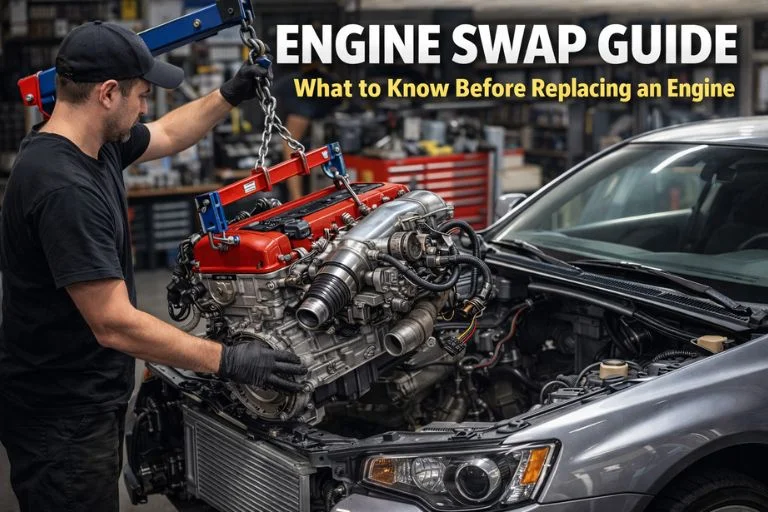
Replacing a car engine may sound intimidating, but it’s often the smartest solution when an engine reaches the end of its life. An engine swap involves removing a damaged or worn-out engine and installing a replacement engine. Drivers typically choose this option when repairing the existing engine becomes too expensive or when they want to improve performance.
Understanding the Motor swap process helps vehicle owners avoid costly mistakes and choose the right replacement. In this complete Motor swap guide, we explain how Motor swap work, when they make sense, legal considerations, compatibility issues, and important factors to consider before replacing an engine.
What Is an Engine Swap?
An Motor swap is the process of removing the original engine from a vehicle and replacing it with another engine. The replacement engine may be identical to the original or a compatible engine from a different model.
Engine swaps happen for several reasons:
- The original engine has failed
- Repair costs are too high
- Drivers want better performance
- The vehicle owner wants to extend the car’s lifespan
Engine replacement is common in both daily driver repairs and automotive performance builds.
Common Reasons Drivers Replace Their Engines
Understanding why engines fail helps drivers decide whether replacement makes sense.
1. Severe Engine Damage
Catastrophic failures such as cracked engine blocks, spun bearings, or internal piston damage often require full replacement.
2. Engine Overheating
Persistent overheating can warp cylinder heads and damage internal components.
3. High Mileage Wear
Many engines eventually wear out after long-term use. Properly maintained engines can last over 150,000–200,000 miles depending on design and maintenance habits.
According to automotive reliability data compiled by the Consumer Reports, regular maintenance significantly increases engine lifespan.
Types of Engine Swaps
Not all Motor swap are the same. Understanding the different types helps you plan properly.
1. Direct Replacement Swap
This is the most common type of Motor swap. The replacement engine is identical to the original engine model.
Advantages:
- Minimal modification required
- Lower installation cost
- Maintains factory compatibility
This option is typically the easiest and most affordable.
2. Compatible Engine Swap
A compatible swap replaces the original engine with another engine from the same manufacturer that fits the vehicle.
For example, many vehicles share engine platforms within the same brand.
However, additional components such as wiring harnesses, engine mounts, or ECU programming may need adjustments.
3. Performance Engine Swap
Performance swaps replace the factory engine with a more powerful engine.
These swaps are common among car enthusiasts and performance builders.
However, they often require:
- Custom mounts
- Upgraded transmission
- Cooling system upgrades
- Electrical modifications
Performance swaps require careful planning and experienced mechanics.
How to Check Engine Compatibility
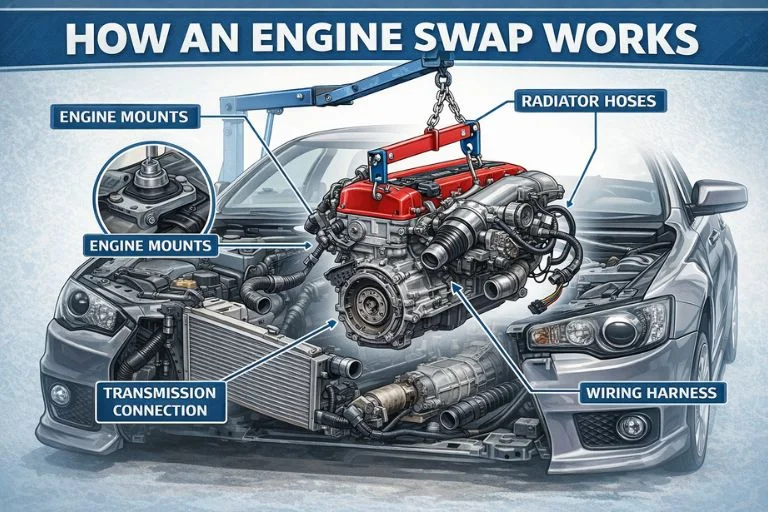
Before replacing an engine, compatibility is critical. Installing the wrong engine can cause mechanical issues or prevent the vehicle from running properly.
Important compatibility factors include:
Engine Mount Locations
Engine mounts must align with the vehicle frame.
Transmission Compatibility
The engine must match the vehicle’s transmission system.
If transmission damage is also present, drivers often consider installing a used transmission alongside the engine replacement to restore drivetrain performance.
Wiring and Electronics
Modern vehicles rely heavily on sensors and electronic control units (ECU). Wiring compatibility is essential for proper engine management.
Emissions Equipment
Vehicles must maintain emissions components to meet regulatory requirements.
Engine Swap Legal Considerations
Motor swaps must follow local laws and emissions standards.
In the United States, emissions regulations are overseen by the United States Environmental Protection Agency.
Typical guidelines include:
- Replacement engines must meet emissions standards.
- The engine should be the same year or newer than the vehicle.
- Emissions equipment must remain functional.
Some states enforce stricter inspection rules.
Always check local regulations before completing an Motor swap.
Steps Involved in an Engine Swap
Understanding the process helps drivers know what to expect.
Step 1: Diagnose the Engine Failure
Before replacing an engine, mechanics confirm that the engine is truly beyond repair.
Common diagnostics include:
- Compression testing
- Leak-down testing
- Internal inspection
Step 2: Choose the Right Replacement Engine
Drivers typically choose between:
- Used engines
- Rebuilt engines
- Remanufactured engines
Each option varies in cost and reliability.
Step 3: Remove the Old Engine
Mechanics disconnect:
- Electrical wiring
- Fuel lines
- Cooling hoses
- Exhaust components
The engine is then lifted out using an engine hoist.
Step 4: Prepare the Replacement Engine
Before installation, mechanics inspect the replacement engine and replace wear items such as:
- Spark plugs
- Belts
- Gaskets
Step 5: Install the Replacement Engine
The engine is mounted in the engine bay and connected to:
- Transmission
- Wiring harness
- Cooling system
- Fuel system
Once installation is complete, technicians test the engine to ensure proper operation.
How Much Does an Engine Swap Cost?
Engine replacement costs vary based on several factors.
Key cost factors include:
- Vehicle type
- Engine type
- Labor costs
- Parts availability
Typical price ranges include:
| Used Engine | $1,500 – $4,000 |
| Rebuilt Engine | $3,000 – $6,000 |
| Remanufactured Engine | $4,000 – $8,000 |
Labor costs can add $1,000 to $3,000, depending on the complexity of the swap.
Benefits of Replacing an Engine
Engine replacement can offer several advantages.
Extending Vehicle Lifespan
Replacing the engine can keep a vehicle reliable for many more years.
Lower Cost Than Buying a New Car
For many drivers, engine replacement is significantly cheaper than purchasing a new vehicle.
Improved Reliability
A properly installed replacement engine can restore factory performance and reliability.
Risks and Challenges of Engine Swaps
While Motor swaps can be beneficial, they also carry risks.
Compatibility Problems
Incorrect engine selection can create installation issues.
Electrical System Conflicts
Modern vehicles depend on complex electronics.
Installation Complexity
Motor swaps require experienced mechanics and specialized equipment.
Planning and research reduce these risks significantly.
Tips for a Successful Engine Replacement
Drivers considering an Motor swap should follow these guidelines:
- Verify engine compatibility before purchasing.
- Choose reputable engine suppliers.
- Inspect replacement engines carefully.
- Replace critical wear components during installation.
- Use experienced technicians for installation.
These steps help ensure the replacement engine performs reliably.
Conclusion
An engine swap can breathe new life into a vehicle with a failing engine. When done properly, replacing an engine restores performance, reliability, and long-term usability.
Understanding compatibility, legal regulations, and installation requirements helps drivers make informed decisions. Whether replacing a worn engine or upgrading performance, careful planning ensures a successful engine replacement.
With the right preparation and professional installation, an Motor swap can extend a vehicle’s life for many more years on the road.
Frequently Asked Question’s
What is an engine swap?
An Motor swap is the process of removing a vehicle’s original engine and replacing it with another compatible engine.
Is replacing an engine worth it?
Replacing an engine can be worthwhile if the rest of the vehicle is in good condition and the replacement cost is lower than buying a new car.
How long does an engine swap take?
Most Motor swaps take between 10 and 20 hours of labor depending on the vehicle and engine type.
Do engine swaps affect vehicle reliability?
If performed correctly using compatible components, an Motor swap can restore or even improve vehicle reliability.
Can any engine fit into any car?
No. Motor swaps require compatibility with engine mounts, transmission systems, wiring harnesses, and electronics.