

Key Takeaways:
- White or blue smoke from the exhaust is one of the most serious engine replacement signs
- A knocking engine, excessive oil consumption, or a seized engine are red flags that repair may not be enough
- Knowing these 10 warning signs can save you thousands of dollars in unexpected repair costs
Your car’s engine is its heart — and just like any vital organ, it can only take so much wear before it gives out entirely. Recognizing the signs you need to replace your engine early can be the difference between a manageable repair bill and a total vehicle loss.This guide is for car owners and drivers who want to know exactly when an engine has crossed the point of no return. Whether you’re dealing with strange noises, excessive smoke, or an engine that simply won’t start, we’ll walk you through the 10 most critical warning signs that indicate it’s time for an engine replacement — not just a patch job.
Table of Contents
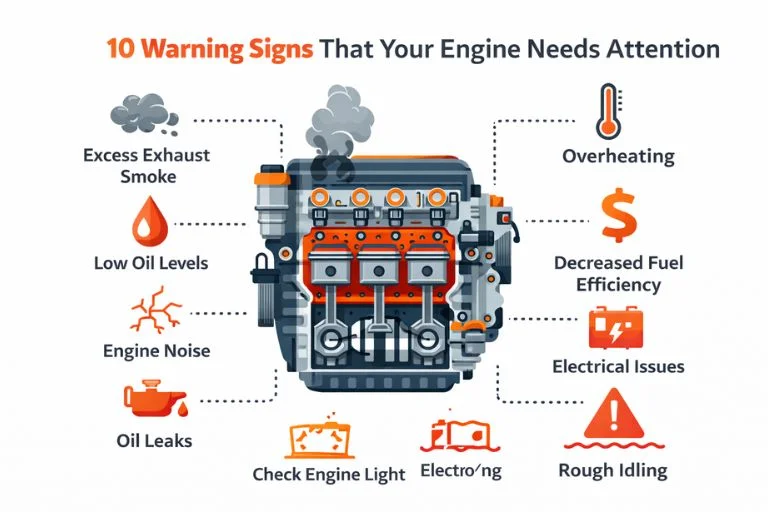
Excessive White or Blue Smoke from the Exhaust
One of the most visible and alarming engine failure warning signs is abnormal smoke coming from your exhaust pipe. Color matters:
- Blue smoke indicates the engine is burning oil, which happens when piston rings or valve seals have failed and oil leaks into the combustion chamber
- White smoke (thick and persistent, not condensation on a cold morning) often signals coolant is entering the combustion chamber due to a blown head gasket or cracked cylinder head
- Black smoke typically points to a rich fuel mixture, which may be less severe but still warrants investigation
According to the National Institute for Automotive Service Excellence (ASE), persistent oil or coolant burning is a sign of internal engine damage that worsens rapidly if ignored. If blue or white smoke appears consistently after a warm-up, you may be looking at engine replacement rather than a simple seal swap.
Knocking or Banging Sounds from the Engine Bay
A deep, rhythmic knocking or “rod knock” noise from the engine is one of the clearest signs you need to replace your engine. This sound typically means the engine’s connecting rod bearings have worn down, allowing the rods to knock against the crankshaft.
Rod knock almost always means the engine internals are critically damaged. At this stage:
- Simply adding oil won’t fix the problem
- Driving further risks catastrophic engine seizure
- A full rebuild or replacement is usually the most cost-effective solution
Lighter ticking sounds may just indicate low oil or a worn lifter — but deep, metallic banging requires immediate professional diagnosis.
Metal Shavings in the Engine Oil
When you change your oil or have it analyzed, finding metal particles or shavings is a serious warning. This indicates that internal metal components — bearings, camshafts, pistons — are grinding against each other and shedding material.
A standard oil analysis (offered by services like Blackstone Laboratories) can detect elevated levels of iron, aluminum, or copper, all of which point to specific internal wear patterns. If a single oil change reveals significant metallic contamination, further driving may turn a repairable situation into a complete engine failure.
Engine Overheating Repeatedly
An engine that overheats once due to a failed thermostat or low coolant may be salvageable. But repeated overheating is an engine replacement sign you should not dismiss.
Chronic overheating causes:
- Warped cylinder heads (cost: $500–$2,000+ to repair)
- Blown head gaskets
- Cracked engine blocks — often irreparable
According to Consumer Reports, heat is the single biggest enemy of engine longevity. Once an engine has overheated to the point of head gasket failure more than once, the cumulative warping and stress often make a full replacement more economical than ongoing repairs.
Significant Oil Consumption Between Changes
All engines consume some oil — but if your vehicle is burning through more than 1 quart of oil per 1,000 miles, this exceeds the threshold most manufacturers consider acceptable. (Most modern engines should consume less than 1 quart per 3,000 miles under normal conditions.)
High oil consumption combined with blue smoke, rough idling, or fouled spark plugs suggests:
- Worn piston rings no longer sealing properly
- Failing valve stem seals
- Compromised cylinder walls
At a certain point, the cost to rebuild the top end of the engine rivals replacement cost, especially on higher-mileage vehicles.
Hydrolocked Engine After Water Damage
A hydrolocked engine occurs when water enters the combustion chamber — often during flood conditions or water crossing. Unlike air, water cannot be compressed. When a piston tries to compress water, it bends or shatters connecting rods almost instantly.
If your vehicle was caught in a flood or you drove through deep water and the engine stalled abruptly, there’s a significant risk of hydrolock damage. Symptoms include:
- Engine won’t crank or turns very slowly
- Loud bang followed by engine shutdown
- Bent or broken connecting rods (confirmed by professional inspection)
Hydrolock damage is extensive and typically requires a complete engine replacement, particularly if multiple rods are affected.
Cracked Engine Block
The engine block is the structural foundation of the entire powerplant. A cracked block can result from severe overheating, freezing (if coolant mix was incorrect), or manufacturing defects. Symptoms include:
- Coolant and oil mixing (milky oil on the dipstick)
- External coolant leaks with no visible hose or gasket source
- Loss of compression in multiple cylinders simultaneously
While minor cracks can sometimes be welded or sealed by specialists, major cracks in critical areas render the block unrepairable. In most cases, a cracked engine block = engine replacement. This is a non-negotiable bad engine symptom that no amount of stop-leak additive will fix.
Complete Loss of Compression
Engine compression is what makes combustion possible. A compression test measures how effectively each cylinder seals during the compression stroke. Healthy readings typically range from 125–175 PSI depending on the engine. Low or zero compression in multiple cylinders indicates:
- Severely worn or broken piston rings
- Burnt or bent valves
- Damage to the cylinder walls
A single low-compression cylinder might be fixable with a valve job or ring replacement. But multiple cylinders with zero compression suggests widespread internal wear that makes a full engine replacement the more practical path.
Seized Engine
A seized engine is exactly what it sounds like: the internal components have frozen in place and the engine physically cannot turn over. This is caused by:
- Complete oil starvation (running the engine dry)
- Extreme overheating that fuses metal components
- Extended storage without proper preparation (corrosion locking pistons in cylinders)
When you turn the key and hear a single clunk — or nothing at all — and the engine doesn’t crank, seize is a likely diagnosis. This is one of the most severe engine failure warning signs and almost always results in the engine being replaced rather than rebuilt, especially if the crankshaft, connecting rods, or cylinder walls are permanently damaged.
Repair Costs Exceed Vehicle Value
Sometimes the engine isn’t catastrophically failed — it’s just economically failed. This is the “50% rule” that many mechanics and financial advisors apply: if the repair cost exceeds 50% of the vehicle’s current market value, replacement or vehicle trade-in is usually the smarter financial move.
For example:
- A 2009 sedan worth $4,000 with a $3,200 engine rebuild quote = questionable investment
- A 2019 SUV worth $22,000 with a $3,500 engine replacement = potentially worthwhile
Engine Rebuild vs. Replace: Which Is Right for You?
| Factor | Engine Rebuild | Engine Replacement |
| Cost | $2,500–$4,500 avg | $3,000–$7,000+ avg |
| Best for | Single-system failure | Multiple failures or seized engines |
| Turnaround | 2–5 days | 1–3 days |
| Warranty | Varies by shop | Often 12–36 months |
| Risk | Labor-intensive, more room for error | More predictable outcome |
A remanufactured engine is often the best middle-ground: it’s a factory-rebuilt engine with tested tolerances and a warranty, costing less than a brand-new unit while being more reliable than a field rebuild.
Conclusion
Recognizing the signs you need to replace your engine early gives you the power to make informed decisions — financially and mechanically. From rod knock and blue smoke to seized internals and failing compression, each of these 10 warning signs tells a story about what’s happening inside your engine.
Don’t wait until your car leaves you stranded. If you’re noticing one or more of these symptoms, schedule a professional engine inspection today. The sooner you act, the more options — and money — you’ll have.
Frequently Asked Questions
How many miles does an engine typically last before replacement?
Most modern engines are designed to last 150,000–300,000 miles with proper maintenance. Premature failure is usually linked to neglected oil changes, overheating events, or manufacturing defects rather than mileage alone.
Can a bad engine be fixed without full replacement?
Yes — depending on the issue. Problems like a blown head gasket, worn valve seals, or a single bad cylinder can often be repaired. However, multiple simultaneous failures, a seized engine, or a cracked block typically make full replacement more cost-effective.
Is it worth replacing the engine in a high-mileage car?
It depends on the vehicle’s overall condition. If the transmission, suspension, and body are in good shape, replacing the engine can extend the vehicle’s life significantly. If other major systems are also worn, investing in a newer vehicle may be smarter.
What does engine replacement cost in 2024–2025?
A remanufactured engine installation typically runs $3,000–$5,500 for most passenger vehicles. Luxury and performance vehicles can exceed $10,000. Labor alone is typically 8–15 hours at $100–$150/hr depending on your region.
What is the first thing I should do if I suspect engine failure?
Stop driving immediately. Continuing to run a failing engine dramatically increases damage. Have the vehicle towed to a trusted mechanic for a full diagnostic — including compression test, oil analysis, and visual inspection.